 Cow Shelter/Donation

Aadi Month: Why Tamil Tradition Pauses New Beginnings and Turns to Amman
September 03, 2026
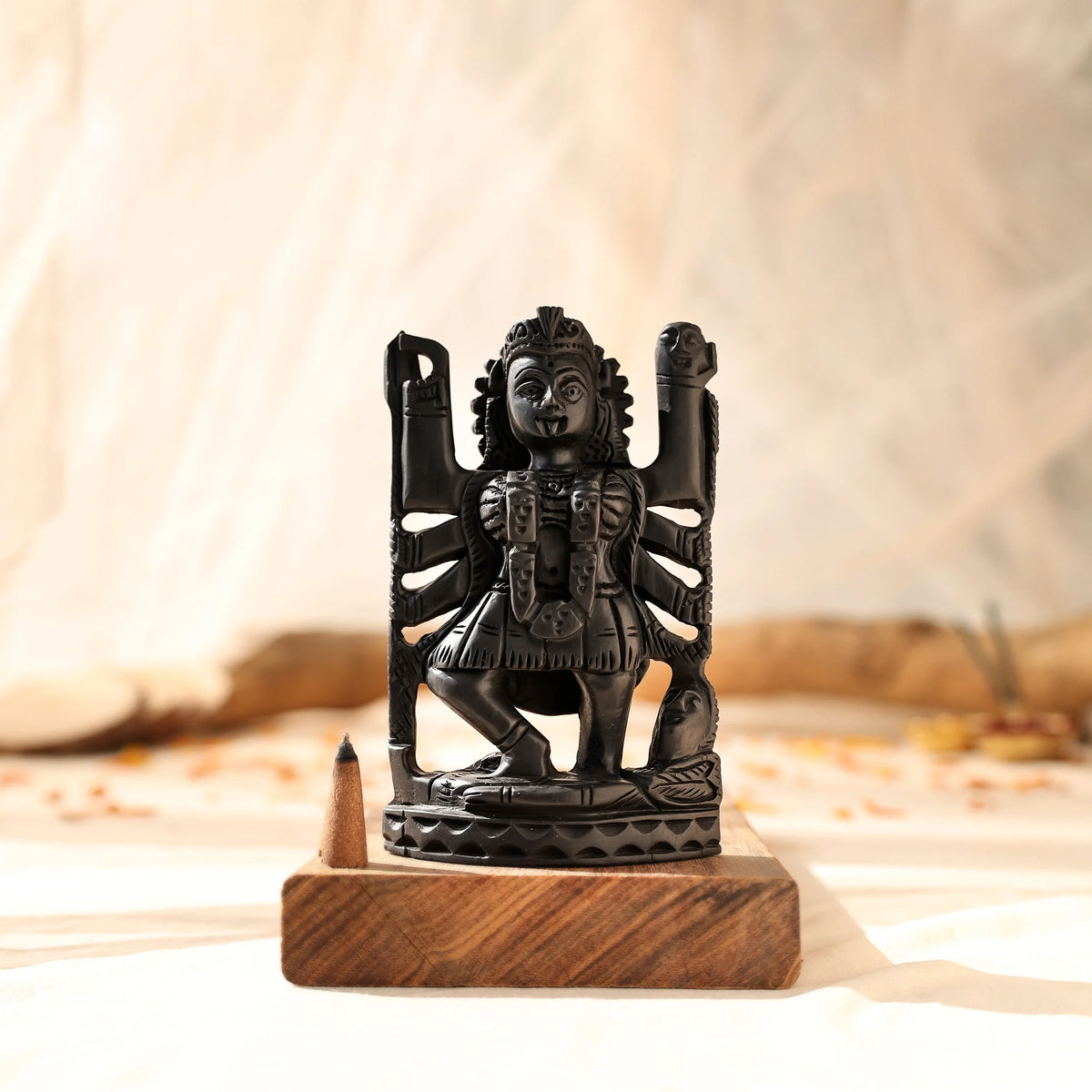
Aadi is the fourth month of the Tamil solar year, running roughly from mid-July to mid-August, and it opens Dakshinayana — the sun's southward course. It is traditionally avoided for weddings, housewarmings and business inaugurations. That is not because the month is unlucky in itself, but because auspicious muhurtham are conventionally held back for the northward half of the year. What Aadi is emphatically for is Amman worship. Fridays and Tuesdays are kept for the Goddess, Aadi Perukku honours the rivers on the eighteenth day, and Amman temples across Tamil Nadu hold their largest festivals of the year. Confirm any specific date against a current panchang.
Is Aadi actually inauspicious?
This is the question most people arrive with, and the honest answer is that the word is doing too much work.
What tradition holds is narrower than “inauspicious”. Aadi marks the beginning of Dakshinayana, and in the conventional reckoning Uttarayana — the northward half — is preferred for undertakings that are meant to begin something and last. So the muhurtham calendar simply thins out. Priests will generally not fix a wedding date in Aadi, and families avoid griha pravesh and business openings in the month.
That is a scheduling convention, not a verdict on the month. Aadi is one of the busiest devotional months in the Tamil year, and no one treats a month full of temple festivals as inauspicious. If you are looking at muhurtham for a housewarming, our griha pravesh guide covers how dates are selected.
The explanations traditionally offered
Several reasons are given in Tamil households, and it is worth separating them by kind.
The calendrical one. Dakshinayana is conventionally the less favoured half for new undertakings. This is the reason a priest will actually give you.
The agricultural one. Aadi is sowing season in much of Tamil Nadu, and the southwest monsoon brings the strong winds that the language itself records in the phrase Aadi kaathu. A farming household in that month has neither the hands nor the money for a wedding.
The folk-practical one. A widely repeated explanation holds that newly married couples were traditionally kept apart during Aadi so that a birth would not fall in the hottest months of the following year. This is a folk rationale rather than a textual one, and we pass it on as that rather than as doctrine.
There is a modern footnote too. Because household spending drops through Aadi, Tamil Nadu's retail trade has for decades run Aadi thallupadi, the Aadi discount season. It is a commercial response to a religious calendar, and it is now as much a part of the month as anything else.
What the month is for: Amman
Aadi belongs to the Goddess. Mariamman, Draupadi Amman, Angalamman, Kali and the many local Amman shrines all hold their principal festivals in this month, and in villages across Tamil Nadu the Aadi festival is the single largest event of the year.
The observances that recur are these.
| Observance | When in the month | What it involves |
|---|---|---|
| Aadi Velli | Every Friday | The principal Amman day. Temple visits, lamps, offerings of koozh or kanji, and in many households a Friday fast until the evening lamp |
| Aadi Sevvai | Every Tuesday | Also kept for Amman in many families, particularly for Mariamman |
| Aadi Pooram | On the Pooram star | Observed at Srivilliputhur as the appearance of Andal, and kept as an Amman festival at many Devi temples |
| Aadi Perukku | The eighteenth day | Padinettam Perukku, honouring the rivers. Offerings made on riverbanks, especially along the Kaveri |
| Aadi Amavasai | The new moon | Kept for ancestral offerings and tarpanam, with large gatherings at coastal and river tirthas |
| Aadi Krithigai | On the Krittika star | Kept for Murugan, as the Krittika day is in every month |
Practice around Amman worship varies enormously between villages, communities and lineages — far more than in temple Shaivism or Vaishnavism. Local custom governs, and what one village does may have no counterpart in the next.
Aadi Perukku, the eighteenth day
Aadi Perukku is kept on the eighteenth day of the month, which is why it is also called Padinettam Perukku. Perukku means rising or swelling, and the day marks the point in the monsoon when the rivers — the Kaveri above all — come up in flood and the irrigation channels fill.
It is a thanksgiving to water. Families go to a riverbank, a tank or an irrigation channel, offer flowers, turmeric, kumkum and cooked rice preparations to the flowing water, and eat there. Newly married couples are traditionally taken along, and in the Kaveri delta the day carries a strong agricultural weight that it does not have in the cities. Where there is no river within reach, households keep the day at home with the same foods and a lamp.
The dishes associated with the day are the mixed rice varieties — coconut rice, lemon rice, tamarind rice, curd rice — prepared together and shared.
How Aadi differs across South India
The same solar month is kept very differently a few hundred kilometres away, and it is worth not collapsing these.
Kerala: Karkidakam. The corresponding Malayalam month is known as the Ramayana month, and the Ramayana is read aloud daily in households through it. It is also the traditional month of Ayurvedic monsoon regimen, with karkidaka kanji, and it has historically been the lean month before the harvest — quite a different mood from the Tamil Amman festivals.
Andhra Pradesh, Telangana and Karnataka: Ashada. The lunar month of Ashada carries a comparable convention against weddings and new ventures. In several communities the newly married daughter-in-law traditionally returns to her mother's home for the month.
These are parallel traditions responding to the same season, not local names for one festival.
Observing Aadi at home
- Keep the Fridays. If you observe nothing else, keep Aadi Velli. Clean the shrine, light a lamp at dusk, offer flowers, and visit an Amman temple if there is one nearby.
- Choose one form of fast and hold it. Most commonly a light vegetarian day until the evening lamp. Do not attempt something severe on the strength of an article. If you are unwell, pregnant or on medication, keep the lamp and skip the fast.
- Cook the traditional foods. Koozh or ragi kanji on Fridays; mixed rice varieties for Aadi Perukku.
- Use turmeric and neem where your family does. Both are strongly associated with Amman worship in Tamil practice.
- Mark Aadi Amavasai if your family performs tarpanam. Our guide to ancestral offerings covers the general form; the specific vidhi should come from your family priest.
- Hold off on new beginnings — registrations, inaugurations, housewarmings — and take them up in the following month if there is no urgency. If something genuinely cannot wait, ask your priest rather than assuming the month forbids it outright.
For the general household sequence see how to do puja at home, and for Devi worship more broadly our Navratri guide and Durga mantras. Lamps and thalis are in the Diyas and Lamps and Pooja Thali collections.
Frequently asked questions
Is Aadi really an inauspicious month?
Not in the way the word suggests. Aadi opens Dakshinayana, and by convention auspicious muhurtham for weddings and new undertakings are held back for the northward half of the year. That thins the muhurtham calendar. It does not make the month unlucky, and Aadi is in fact one of the busiest devotional months of the Tamil year.
Why are weddings avoided in Aadi?
Because priests generally do not fix wedding muhurtham during Dakshinayana. Two further reasons are commonly offered in Tamil households: Aadi is the sowing season and the monsoon month, when families have neither the hands nor the money, and a folk explanation about the timing of births in the following year. The first is calendrical, the second practical, the third folk rather than textual.
What is Aadi Perukku?
Aadi Perukku is kept on the eighteenth day of the month and honours the rivers, particularly the Kaveri, at the point in the monsoon when they rise. Families gather on riverbanks or beside irrigation channels, offer flowers, turmeric, kumkum and cooked rice to the flowing water, and share mixed rice preparations there.
What is observed on Aadi Velli?
Aadi Velli is the Friday of the month, the principal Amman day. Households clean the shrine, light lamps, offer flowers and often koozh or kanji, and visit an Amman temple. Many families keep a light vegetarian fast until the evening lamp. Practice varies a great deal between communities.
Can a house be bought or possession taken during Aadi?
Purchase and paperwork are not generally treated the same way as a formal griha pravesh, and many families complete transactions in Aadi while deferring the housewarming ceremony to a later month. Conventions differ, so ask your family priest rather than relying on a general rule.
What is Aadi Pooram?
Aadi Pooram is kept on the Pooram star of the month. At Srivilliputhur it is observed as the appearance of Andal, and many Devi temples keep it as an Amman festival with their own local customs. As with much of Aadi, the form the day takes depends heavily on the temple.
Is Aadi the same as Ashada or Karkidakam?
They fall in the same season but they are not the same observance. Karkidakam in Kerala is the Ramayana month, with daily reading of the text and a traditional Ayurvedic monsoon regimen. Ashada in Andhra, Telangana and Karnataka carries a comparable convention against weddings. Each has its own character and its own practices.


