 Cow Shelter / Donation

Japa Mala: Rudraksha, Tulsi, Karungali and Navratna Malas
A japa mala is a string of beads used to count a mantra, traditionally 108 times. This page lists Rudraksha, Tulsi, Karungali, Navratna and other malas. Check the bead count and size on each listing.
 6mm
 8mm
 2 Round

 Black
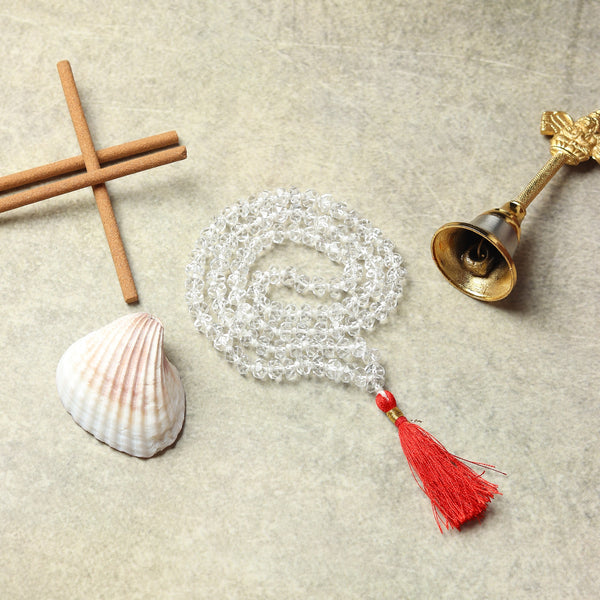
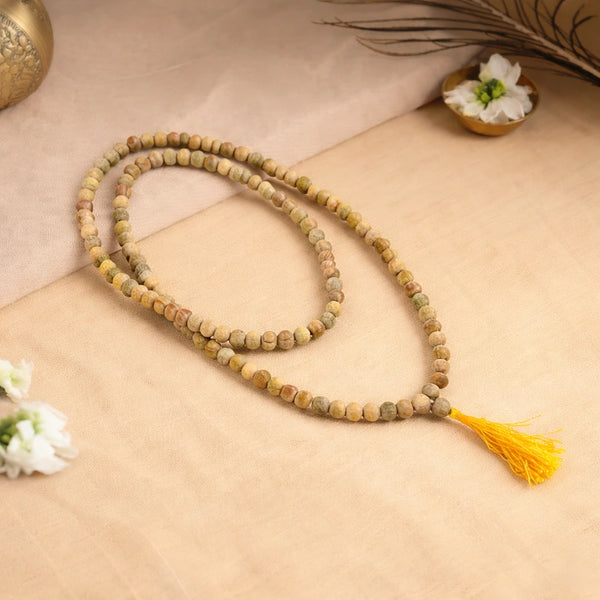
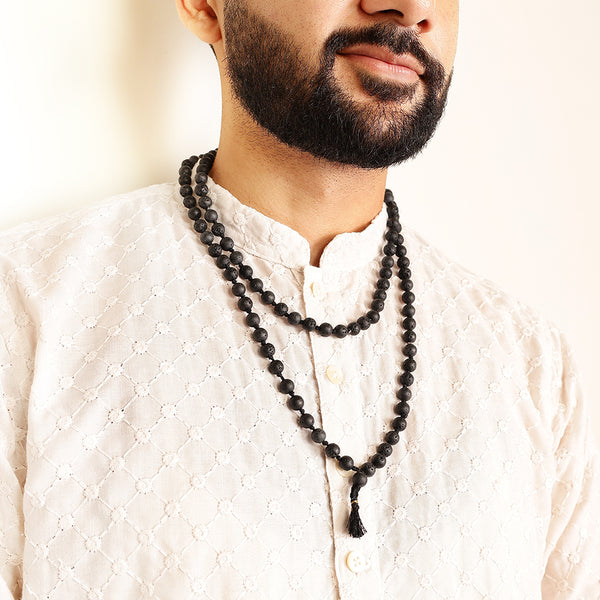
About Authentic Japa Mala
A japa mala helps you keep count as you repeat a mantra. This selection brings together Rudraksha, Tulsi, Karungali and Navratna designs, including both counting malas and pieces made to be worn.
Decide how you will use the mala before choosing its appearance. Check the bead count on the individual listing, then compare the bead size and construction. A pendant necklace or a shorter kanthi should not be assumed to have the same count as a 108-bead japa mala.
Explore Karungali jaap malas or Tulsi malas.
- Product type
- Japa malas, kanthi malas and wearable mala necklaces
- Materials named
- Rudraksha, Tulsi, Karungali, Navratna, Sphatik, Chandan, pyrite, lava stone
- Traditional count
- 108 beads for one round of japa
- Check on each listing
- Bead count, bead size and construction
Mala types on this page
Each mala is listed by its bead material. Here is what the product titles name.
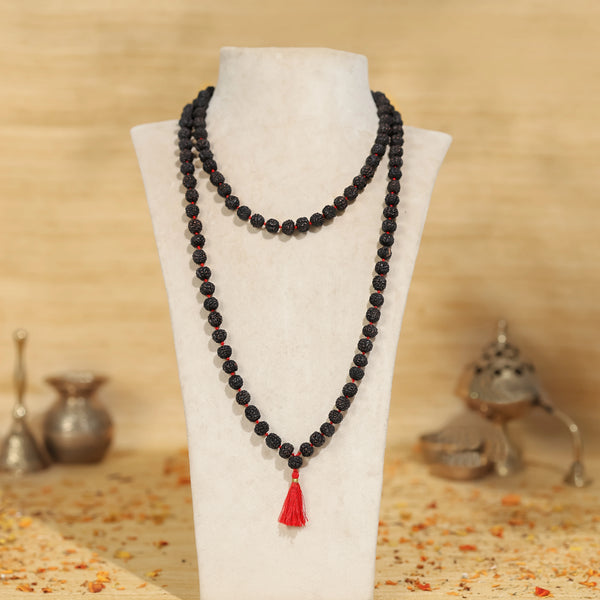
- 108 Beads Rudraksha Jaap Mala and Pure Black Rudraksha Mala.
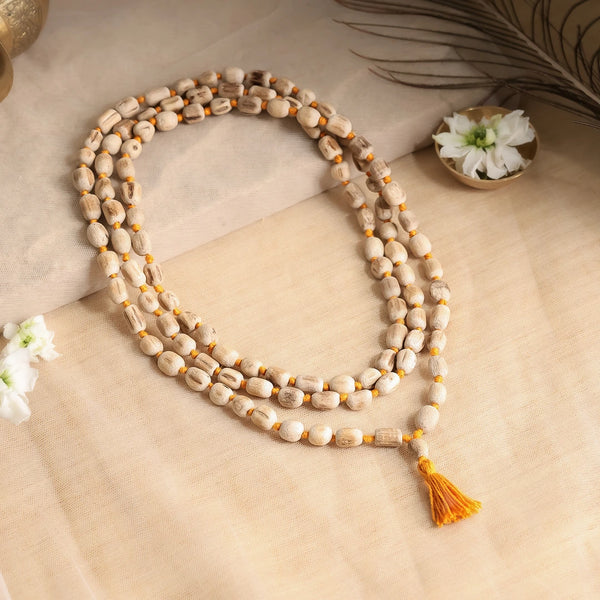
- Tulsi Kanthi Mala and Tulsi 108 Beads Mala.
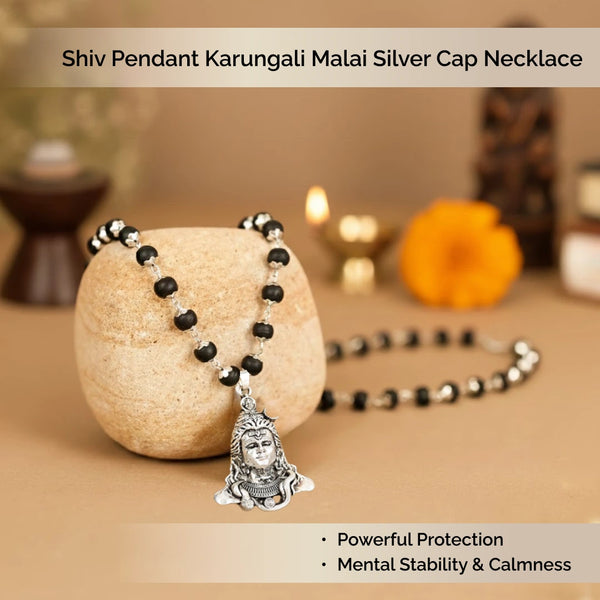
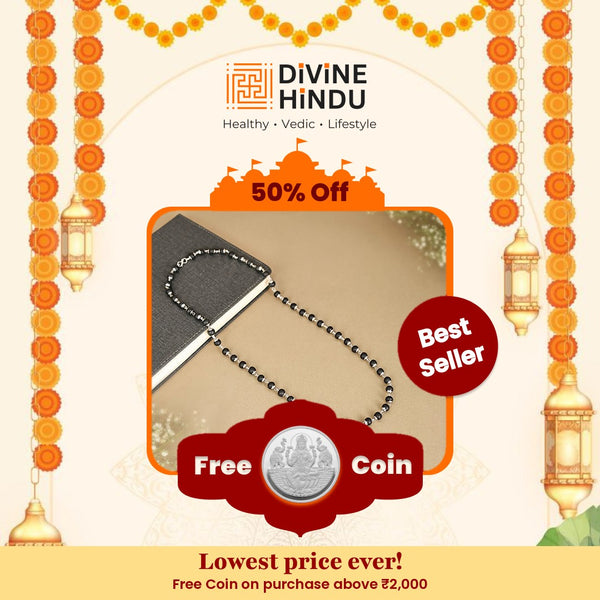
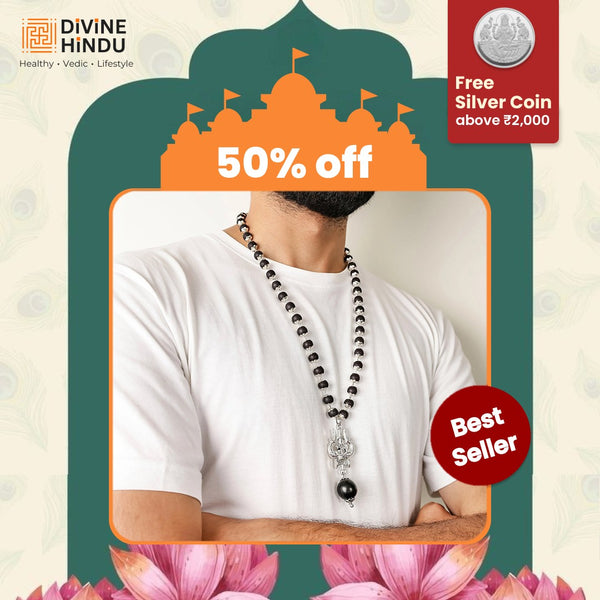
- Karungali Malai 108-Bead Ebony Wood Mala, with silver-cap necklace and combo styles.
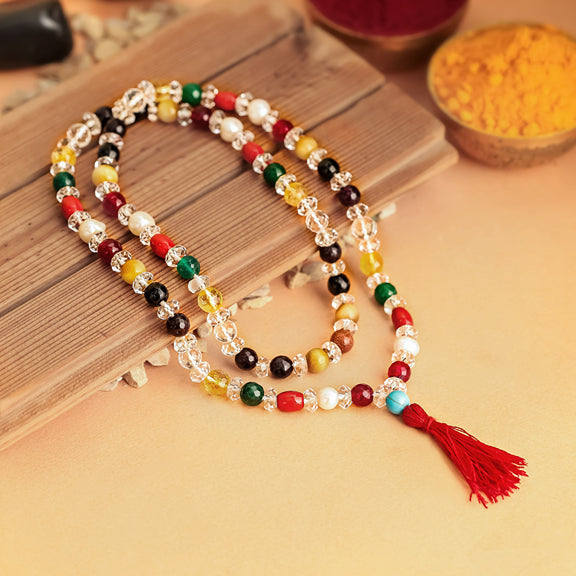
- Navratna Mala, Sphatik Mala, Chandan Jaap Mala and Kapoor Mala.
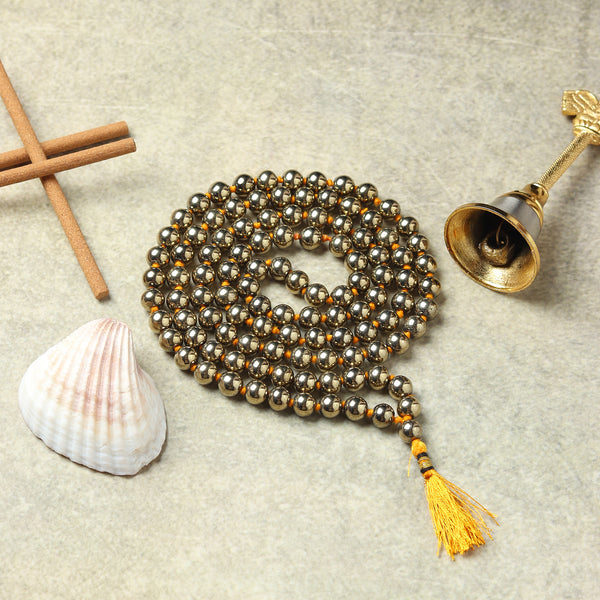
- Stone malas in Golden Pyrite and Lava Stone.
How to choose a japa mala
Decide first whether you want a counting mala or a mala to wear. Then compare these points on the product page.
- Bead count: a traditional japa mala has 108 beads, while a kanthi or necklace may have fewer.
- Bead size, which affects how the mala feels in the hand or on the neck.
- Construction, as described on the listing.
For example, the 5 Mukhi Rudraksha Kantha Mala is listed with 54+1 beads, so it is not a 108-bead mala.
Which mala for which mantra
In Hindu tradition, Rudraksha is associated with Lord Shiva. Many devotees use a Rudraksha mala for mantras such as Om Namah Shivaya.
Tulsi is associated with Lord Vishnu and Lord Krishna. A Tulsi mala is often used for mantras such as Om Namo Bhagavate Vasudevaya.
Follow the mantra and mala given by your family or guru. If you have no guidance yet, pick the deity you feel closest to.
How to use a japa mala
Hold the mala in your right hand. Move one bead at a time with your thumb and middle finger as you repeat the mantra. Many devotees avoid using the index finger.
One round is 108 repetitions. On a traditional mala, the larger guru bead (Sumeru) is not counted. Turn the mala around at that bead instead of crossing it.
Follow your own family custom for where you keep the mala between sessions.
Care, and more malas to compare
Keep wood, seed and Tulsi malas dry, and wipe them gently with a soft cloth. Store the mala in a pouch so the beads do not knock together.
To compare one material in depth, see Karungali jaap malas, Tulsi malas, Chandan malas or crystal and gemstone malas. The Rudraksha page lists beads and malas together.
If you are buying a mala as a gift, ask which deity and mantra the person follows.
Frequently asked questions
How many beads are in a japa mala?
How do I use a japa mala for a mantra?
Which mantra can I chant on a japa mala?
Can women use a japa mala?
How do I check that a japa mala is original?
What is the price of a japa mala?
Can I order a japa mala online?
Related pages
- Tulsi Kanthi Mala and Tulsi Japa Malas
- Karungali Mala for Japa: 108-Bead, 54-Bead and Pendant Styles
- Karungali Mala Designs: Plain, Capped, Copper-Wire and Pendant
- Karungali Malai (Ebony Wood Mala)
- Chandan Mala Sets: Sandalwood Mala with Bracelet or Jaap Bag
- Sphatik (Sfatik) Mala and Other Stone Malas
- 108 Beads Mala: Jaap Malas in Rudraksha, Tulsi, Chandan and More
- Rudraksha Mala, Beads, Necklaces and Bracelets
Updated on 20 October 2026

Top picks for you
 6mm
 54 Beads
 8mm
 Small 7*7 inch


