All Pyrite

Shop by All Pyrite

Raw Pyrite Stone Online100gm
Raw Pyrite Stone
★★★★★★★★★★ 4.8 (6)
44% OFF ₹ 999.00₹ 559.00
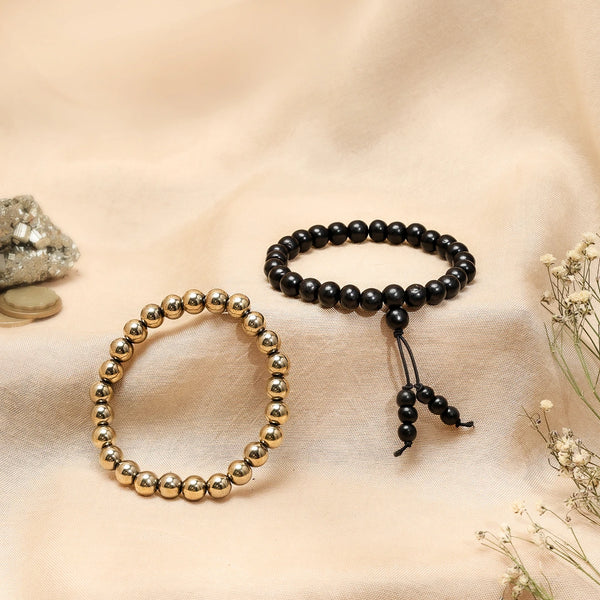
Tiger Pyrite Combo set
★★★★★★★★★★ 4.8 (11)
52% OFF ₹ 2,499.00₹ 1,199.00
Karungali Pyrite Radiance
★★★★★★★★★★ 4.9 (9)
52% OFF ₹ 2,499.00₹ 1,199.00

Top picks for you

Pyrite: one mineral, and everything that follows from it

Almost every other page in our stone range covers a spread of materials. This one covers a single mineral, and it is worth doing properly, because pyrite is both the most bought stone in Indian homes and shops for prosperity-related custom and the one most often ruined by its owner within a year. Understanding what it actually is explains both the appeal and the problem.

Pyrite is iron sulphide. Iron and sulphur, nothing more, arranged in a cubic lattice so regular that the mineral routinely grows as near-perfect cubes with flat faces and sharp edges, sometimes with fine parallel striations ruled across each face. It has a genuine metallic lustre, not a shiny mineral surface but the reflectivity of metal, and a brassy yellow colour that has fooled enough prospectors over the centuries to earn it the name fool's gold. It is also heavy for its size, noticeably so when you first pick a piece up.

In Indian practice it is traditionally kept and worn in connection with prosperity, drive and confidence, which is why it turns up on cash counters, in office cabins and in Dhan Varsha and wealth selections. The range here runs from bracelets to raw stone, pyramids, trees and framed pieces.

Choosing the right pyrite format

To wear

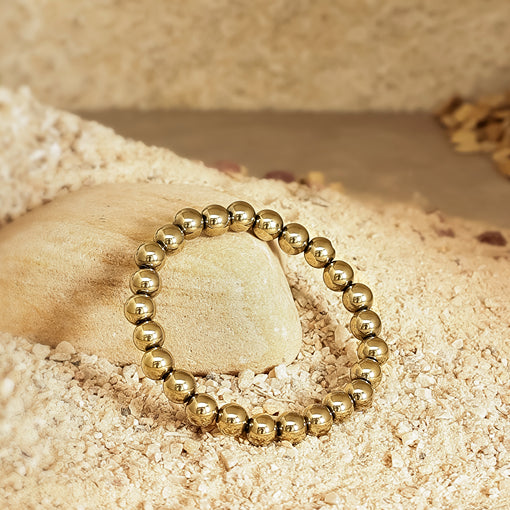
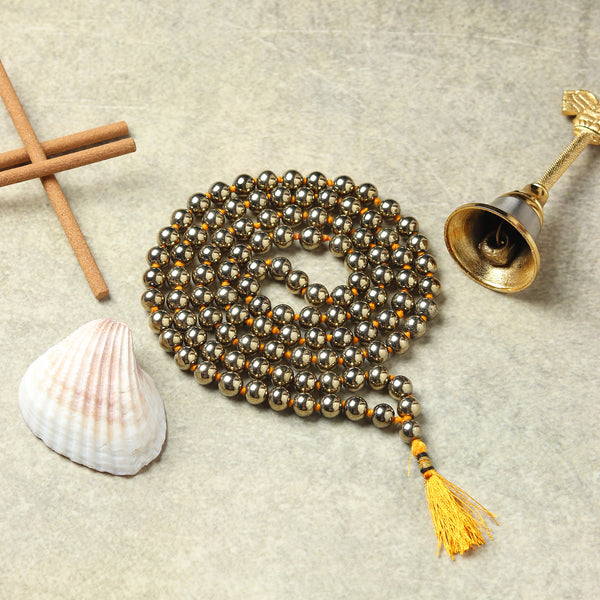
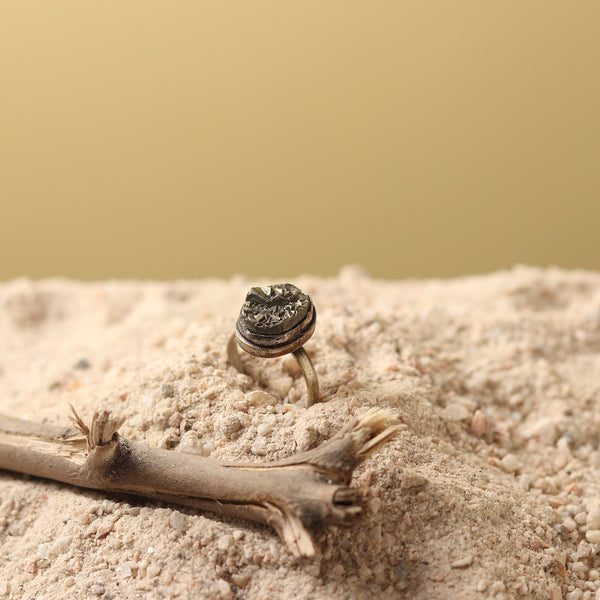
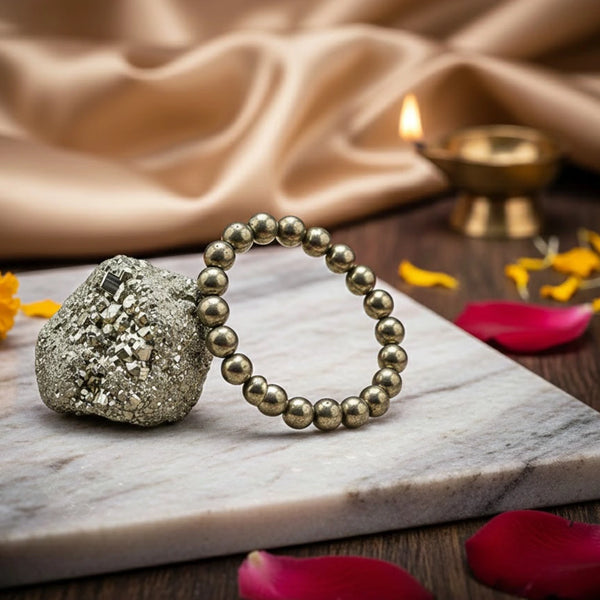
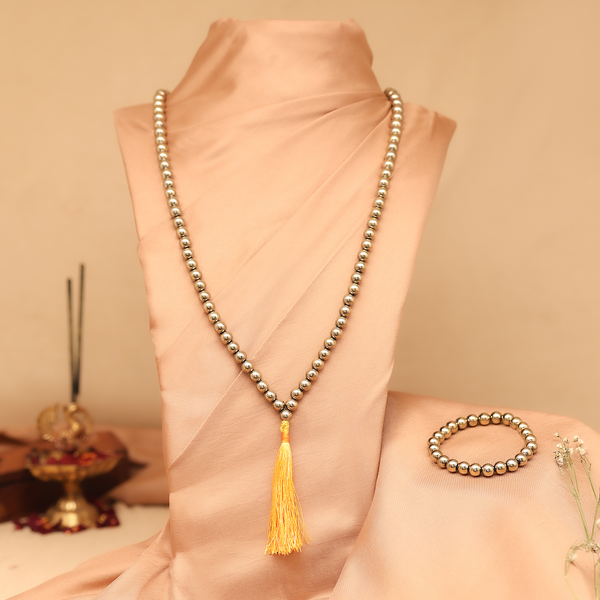
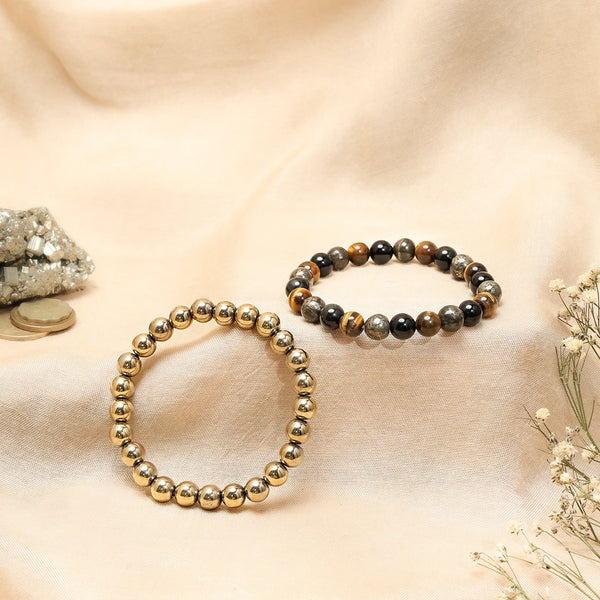
A pyrite bracelet keeps the stone in skin contact through the day. Raw or rough pyrite chips catch light in a way tumbled beads do not, and read as more textured; polished round beads sit smoother against the wrist and snag less on sleeves. 8mm is the comfortable everyday size, 10mm and above becomes a visible statement. Combination strands pairing pyrite with black tourmaline, citrine or Rudraksha suit people who would rather carry two associations on one wrist than stack two bracelets.

To keep

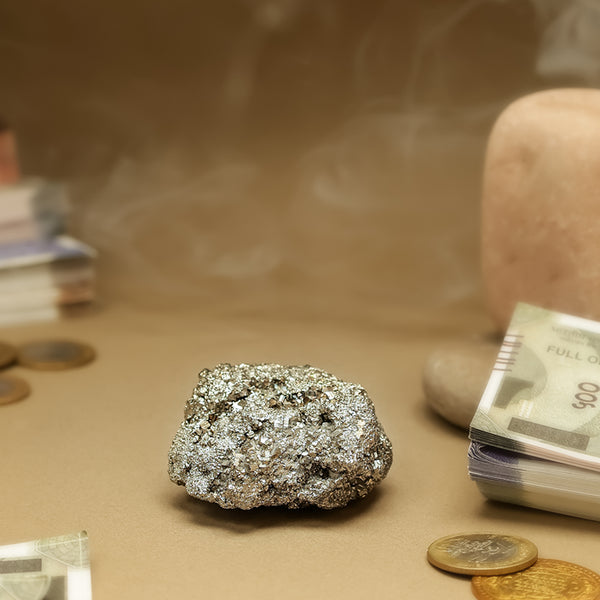
A raw pyrite cluster or a single cube needs nothing from you. It goes in a cash drawer, a locker, a study desk or the office almirah, and requires no sizing, no maintenance and no decision each morning. This is the format most shopkeepers choose.

To place

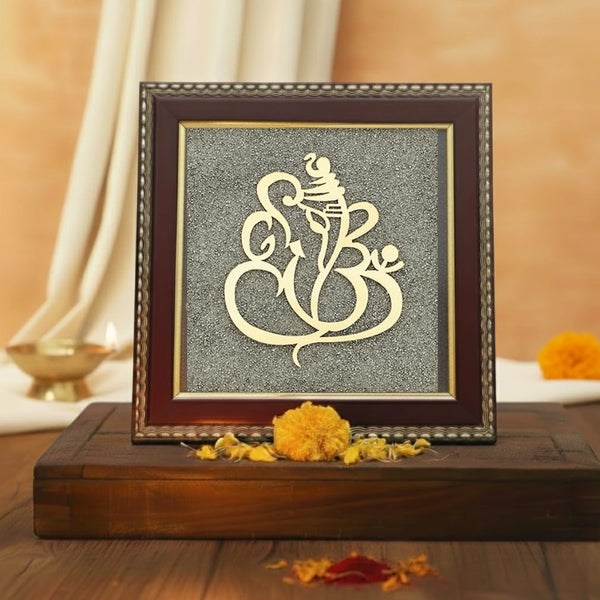
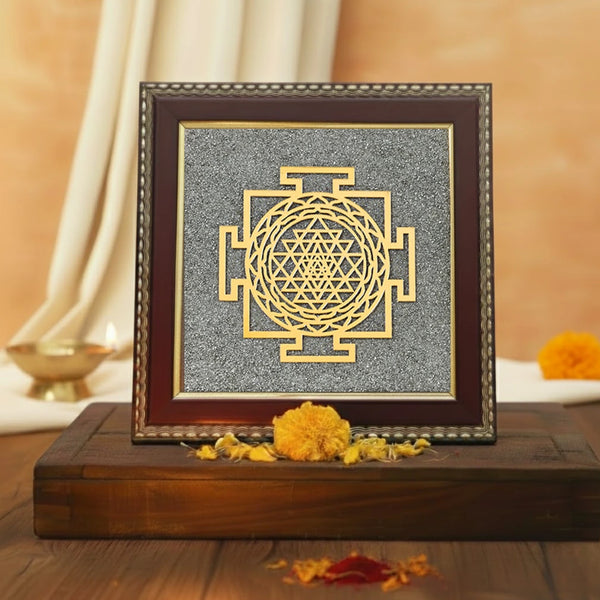
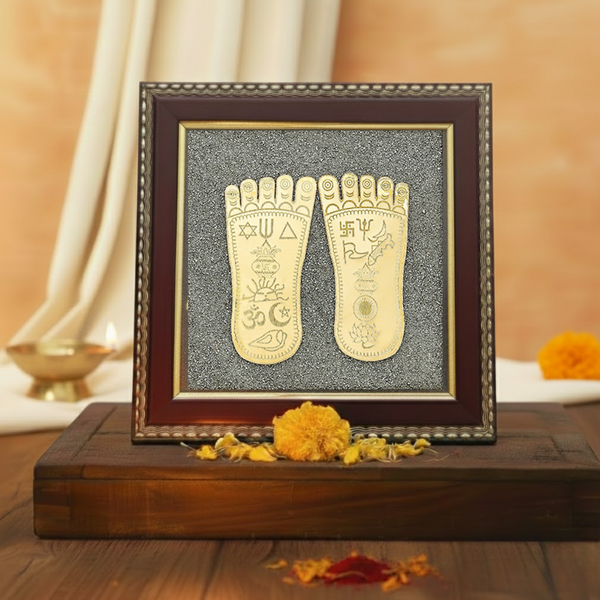
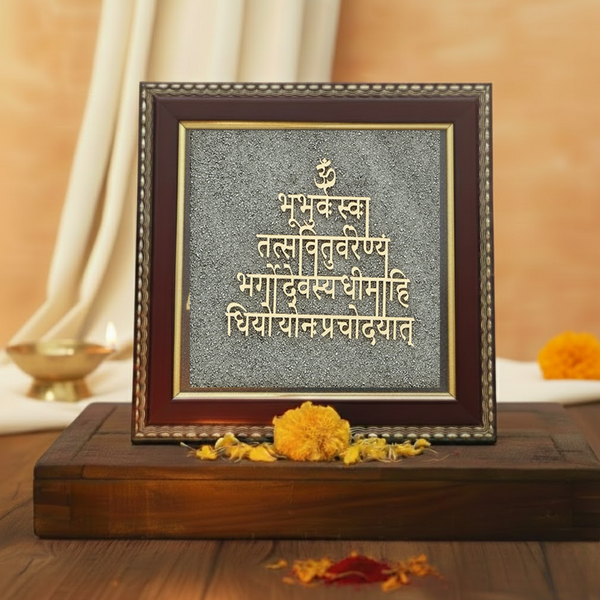
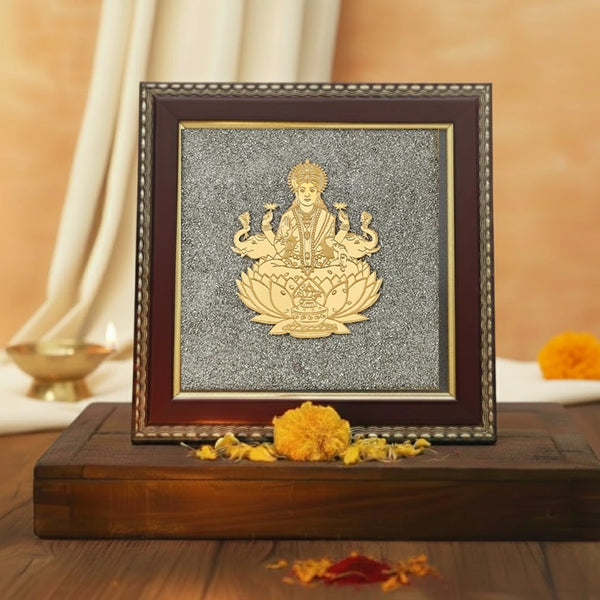
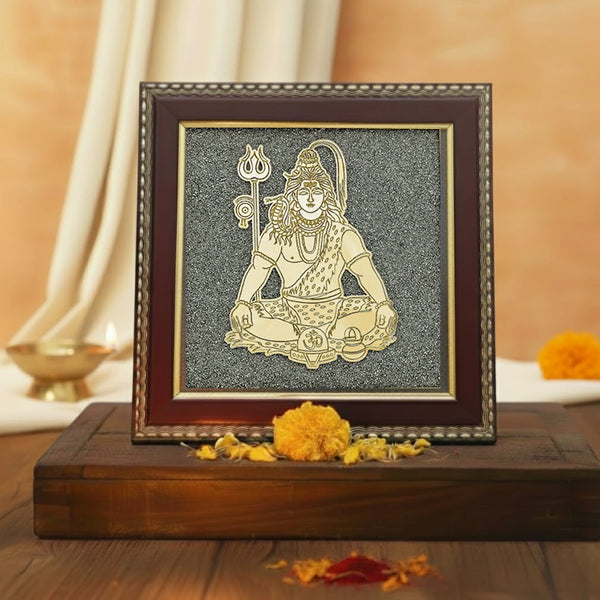
Pyramids, trees and framed pyrite are room pieces. A pyramid or tree suits a desk, a reception table or a shelf. A frame, which sets raw uncut pyrite behind glass alongside a Shree Yantra, seven horses, Kuber or Lakshmi, is a wall piece for an entrance, a cabin or a shop counter. In Vaastu practice these are customarily placed on a north or east wall facing into the room, though this is convention rather than requirement.

How to tell real pyrite from what is sold as pyrite

Look for the cube

This is pyrite's best defence. Very few minerals in this price range grow as cubes with flat faces and crisp edges. On a raw specimen, look for cubic or near-cubic forms nested into the matrix, and for fine parallel lines striated across a face, running at right angles to the striations on the adjoining face. That pattern is difficult and expensive to fake.

Judge the lustre honestly

Real pyrite reflects like metal. Painted resin, brass-coated plastic and gold-sprayed stone reflect like paint, with a slightly soft, even sheen and no depth. Under a strong light, genuine pyrite shows bright specular highlights that shift sharply as you turn the piece; a coating glows more uniformly. Look also at the drill hole on a bead: on real pyrite it exposes the same brassy metallic material all the way through, while a coated bead shows a grey or white core the moment the surface is broken.

Weigh it

Pyrite is dense. A raw piece the size of a matchbox has a heft that surprises people expecting a stone. Resin castings and hollow decorative pieces feel obviously light for their bulk. This is a crude test but a reliable one, and it costs nothing.

Scratch and streak

Pyrite is hard enough that a steel pin will not easily scratch it, unlike softer brassy minerals such as chalcopyrite, which is a deeper, more iridescent brass and marks readily. Drawn across an unglazed ceramic surface, pyrite leaves a greenish-black to brownish-black streak, never a gold one. Gold, by contrast, is soft, leaves a yellow streak and can be dented with a fingernail edge. Do this on a hidden face if you do it at all.

Beware the flawless matched strand

As with every stone, a bracelet in which every bead is identical in colour, sparkle and texture, offered well under the going rate, is the strongest warning sign available. Genuine pyrite beads vary: some faces catch light and others are duller, some carry a trace of matrix, and the brassy tone shifts slightly bead to bead. Perfect uniformity at a low price generally means a coating.

The one thing that ruins pyrite: moisture

This deserves its own section because it is the single most common reason a pyrite piece disappoints. Iron sulphide oxidises in the presence of water and air. In practical terms that means a pyrite bracelet worn in the shower, at the gym, while washing up, or left in a humid bathroom will first lose its shine, then develop dull grey or brownish spots, and eventually show genuine rust-coloured staining and a powdery surface. The process is not reversible and it is not a manufacturing fault.

What follows from that:

  • Take a pyrite bracelet off before bathing, swimming, exercising and any wet work. It is the one piece that should not simply live on your wrist.
  • Wipe it dry with a soft cloth after wear, particularly in summer and through the monsoon, when sweat does the same job as water.
  • Never cleanse pyrite with water, and never with salt water, which accelerates the reaction sharply.
  • Store it dry. A cloth pouch in a drawer is fine; a sealed box in a damp room is not. A silica sachet in the storage box is a cheap and genuinely effective precaution in coastal cities.
  • Keep raw pyrite and frames away from bathrooms, kitchen splash zones and exterior walls that sweat during the rains.

Safe cleansing for pyrite: dhoop, sambrani or camphor smoke, a few hours on dry rice, a night on a selenite plate, or simply a dry cloth. That is the complete list. Anything involving liquid is a mistake.

Pyrite and its usual companions

Stone Traditionally associated with Care note
Pyrite Prosperity, drive and confidence Never water. Wipe dry after wear, store away from damp
Citrine Prosperity and cheer Water-safe and hard-wearing; often heat-treated quartz
Black tourmaline Grounding and protection Robust but splits along its length; avoid sharp knocks
Tiger eye Steadiness and courage Tough; dry cloth, keep away from harsh cleaners
Green aventurine Opportunity and growth Easy daily wear; keep clear of perfume
Hematite Steadiness and focus Also iron-bearing; keep dry, it will rust in time
Clear quartz (sphatik) Clarity Hard and water-safe; the easiest partner stone
Selenite Clearing and stillness Dissolves in water; pairs well with pyrite precisely because neither should be washed

Frequently asked questions

My pyrite bracelet has gone dull. Can it be restored?

Partially, at best. A light tarnish will often lift with dry buffing on a soft cloth, sometimes with a trace of dry baking soda on the cloth. Genuine rust staining and surface pitting are permanent. Prevention is the whole strategy here: keep it dry.

Which wrist should a pyrite bracelet be worn on?

Custom in India generally suggests the right wrist for stones connected with action, effort and output, which is where pyrite is usually placed, though many wearers use the non-dominant hand simply because it takes fewer knocks. Neither is a rule.

Is raw pyrite better than a bracelet?

Neither is regarded as superior. A raw piece needs no care and stays where you put it, which is why shops and offices favour it. A bracelet keeps the stone with you through the day. Many buyers keep one of each.

Where is a pyrite frame or pyramid customarily placed?

Vaastu convention favours the north or east of a room, facing inward, and away from bathrooms and damp walls. Entrances, cash counters and office cabins are the usual positions. Treat this as tradition rather than instruction.

Can pyrite be worn with Rudraksha or Karungali?

It is commonly done, and combination strands exist for exactly that reason. Keep them on separate strands where you can, since Rudraksha and Karungali have their own care requirements and none of the three benefits from being rubbed against the others.

Why does pyrite smell faintly of sulphur sometimes?

Because it contains sulphur. A freshly broken or freshly worked surface can carry a very faint sulphurous note. It is normal, it fades, and it is in fact a small point in favour of the material being genuine.

Does the size of a pyrite piece matter?

Not in any way tradition specifies. Larger raw pieces and frames are chosen for visual presence in a room; bracelets are chosen for daily contact. Buy for the space and the use, not for weight.

The associations described here belong to long-standing Vaastu and Indian tradition and are matters of belief. Nothing on this page claims that pyrite produces wealth or any other outcome, and none of it is a substitute for financial, medical or professional advice.