 Cow Shelter/Donation

Black Obsidian: Volcanic Glass, Why It Chips to a Razor Edge, and Natural vs Manufactured
September 03, 2026
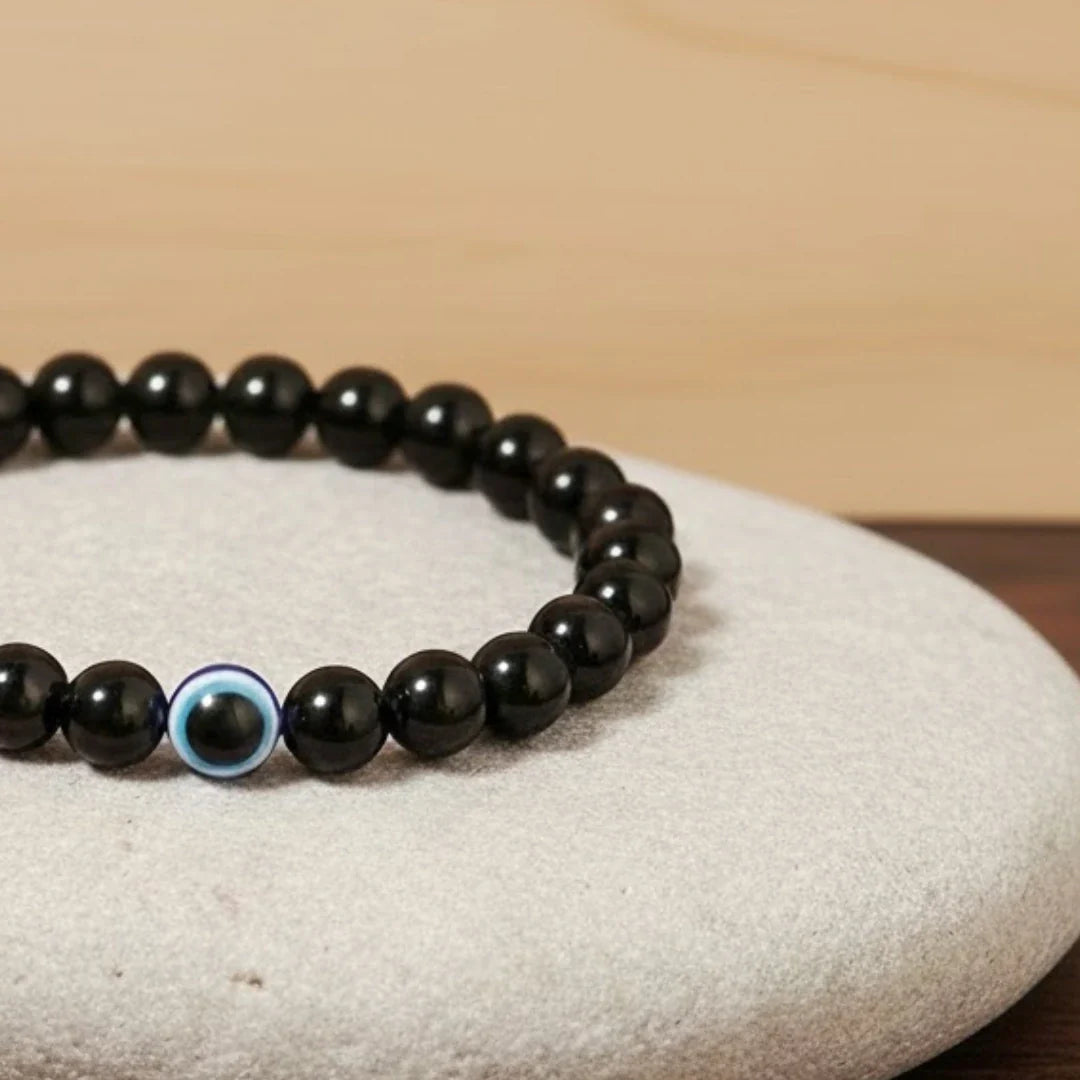
Black obsidian is not a mineral at all. It is natural volcanic glass, formed when high-silica lava cools so fast that no crystals get the chance to grow, which leaves an amorphous solid with no internal structure. That is why it behaves like glass: it is about 5 to 5.5 on the Mohs scale, it is brittle, and it breaks with conchoidal fracture, curved shell-like surfaces that can leave an edge sharper than a steel blade. It also means manufactured black glass is very easy to sell as obsidian, and a great deal of it is.
What obsidian actually is
When rhyolitic lava, rich in silica, meets air or water and chills within minutes rather than years, the atoms are frozen in place before they can arrange themselves into a lattice. What you get is a glass: chemically similar to granite, structurally similar to a window pane. Because it has no crystal structure, mineralogists classify obsidian as a mineraloid rather than a mineral, in the same category as opal and amber.
Geologically it is young material. Obsidian slowly takes on water and devitrifies over time, gradually turning into other minerals, which is why very ancient obsidian is uncommon. The black colour comes from finely dispersed iron and magnesium compounds and from microscopic crystallites suspended in the glass. Hold a thin edge of a good piece against a strong light and you will often see it transmit a smoky brown or deep green rather than a dead black.
Conchoidal fracture, and why it chips
Obsidian has no cleavage, which sounds like an advantage until you understand what it does have. Being an isotropic glass, it fractures with equal ease in every direction, and the break propagates as a smooth curve, producing the ripple-and-shell pattern known as conchoidal fracture. Each such break terminates in an edge that can taper to a few molecules across.
This is the reason obsidian was worked into blades and arrowheads across the ancient world, and why it is still used in some specialist scalpel blades today. It is also the reason a dropped obsidian sphere does not simply scuff. It takes a flake out, and that flake and the crater it leaves behind are genuinely sharp. Treat a freshly chipped obsidian piece the way you would treat a broken glass.
Add to that a hardness of around 5 to 5.5, well below quartz at 7, and you have a material that ordinary household dust will scratch. Obsidian is beautiful and it is not durable. Those two facts have to be held together.
The varieties you will meet
| Variety | What produces the appearance |
|---|---|
| Black obsidian | Iron and magnesium compounds with microscopic crystallites dispersed in the glass |
| Snowflake obsidian | Pale spherulites of cristobalite that have begun to crystallise out of the glass |
| Mahogany obsidian | Iron oxide inclusions producing red-brown banding through the black |
| Rainbow and sheen obsidian | Aligned nanoscale inclusions producing an iridescent or silky sheen at certain angles |
| Apache tears | Small rounded nodules of obsidian weathered out of a surrounding matrix |
Natural obsidian versus manufactured glass
This is the hardest authenticity question in the crystal trade, and it is worth being honest about why. With rose quartz or aventurine you are asking whether stone has been dyed. With obsidian you are asking whether one glass is a different glass, because the genuine article is glass to begin with. There is no hardness test, no scratch test and no density test that settles it in a shop. What you have are indicators.
- Bubbles. Manufactured glass typically contains round gas bubbles, evenly distributed and often numerous. Natural obsidian can contain bubbles too, but they are frequently drawn out and elongated by the flow of the lava, and they sit alongside other flow features.
- Flow structure. Real obsidian often shows faint banding, streaking or swirls of slightly different tone where the lava moved. A perfectly featureless interior with nothing but bubbles points to a factory.
- Microlites. Under a loupe, natural material commonly shows tiny needle-like or grain-like crystallites suspended in the glass. Manufactured glass does not.
- Edge colour. Hold a thin edge to a bright light. Many natural black obsidians transmit a smoky brown or green. A hard blue or emerald tinge, or complete opacity, is worth questioning.
- Mould seams and impossible uniformity. A faint seam, perfectly matched pieces in a set, or a large flawless carving offered cheaply all suggest moulded glass.
- Not everything black is obsidian. Black onyx, which is dyed chalcedony, is harder at about 7 and has a waxier lustre. Black tourmaline is crystalline with visible striations. Neither is obsidian, and our guide to black protective stones covers how these are usually distinguished.
The honest conclusion is that provenance and seller candour do more work here than any home test. Ask where the material came from and whether the piece is natural obsidian or glass, and treat a seller who cannot or will not say as having answered the question.
Handling and care
- Treat chips as broken glass. If a piece flakes, do not run a finger over the break to check it. Wrap the fragments, dispose of them safely, and either have the piece re-polished by a lapidary or retire it.
- Never use an ultrasonic or steam cleaner. Glass and thermal shock do not mix, and vibration finds the stresses frozen into the material when it cooled.
- Avoid sudden temperature change of any kind, including hot water after cold, and do not leave a piece on a hot windowsill or dashboard.
- Clean simply. Lukewarm water, a drop of mild soap, a soft cloth, then dry. No abrasive cloths, no scouring powder, no toothpaste.
- No salt. Salt is abrasive and will haze a mirror polish. If you follow a cleansing practice, use one of the gentler methods in our guide to cleansing and charging crystals.
- Store it alone. Wrapped, in its own pouch or compartment. Anything with quartz in it, which is most stones and most dust, will scratch obsidian.
- Choose the form sensibly. A pendant or a tumbled pocket stone survives daily life far better than a ring, a bangle or a thin polished slab. Spheres and pyramids should sit on a stand or a soft mat, not loose on a hard shelf.
- Take it off for the gym, housework, gardening and anything involving a hard surface.
Who wears it, and what is actually being claimed
Obsidian has no place among the navaratna and does not appear in classical jyotish under that name. Its following in India comes almost entirely through modern crystal traditions, in which black stones as a group are associated with grounding and with turning away unwanted influence, and obsidian in particular is described as a mirror stone. Those are beliefs held within a living tradition and they are recorded here as beliefs. No protective, medical, financial or personal outcome is promised or implied by this article.
Households in India more often meet obsidian as a carved object than as jewellery: spheres, pyramids and small figures kept on a shelf rather than worn. If you are choosing a stone for a specific astrological purpose, that is a conversation with a qualified astrologer and your own chart, not a matter of colour; our rashi stone chart sets out the classical associations. For general background on how these stones are used, see our overview of natural stones and our guide to crystal bracelets. Stones and carved pieces sit in our gemstones and stone pendant collections.
Black Obsidian: Frequently Asked Questions
Is obsidian a stone or a glass?
It is natural volcanic glass. High-silica lava cooling too quickly for crystals to form leaves an amorphous solid with no internal lattice, which is why mineralogists class obsidian as a mineraloid rather than a true mineral, alongside opal and amber. Chemically it resembles granite; structurally it resembles a window pane, and it behaves accordingly.
Why does obsidian chip so easily?
Because it is a brittle glass with no cleavage planes, it fractures equally readily in every direction and the break travels as a smooth curve. That is conchoidal fracture, and it produces a shell-like hollow with a very sharp rim. At around 5 to 5.5 on the Mohs scale it is also softer than quartz, so household dust alone will dull a polished surface over time.
How sharp is a broken edge?
Sharp enough to be dangerous. A conchoidal break can taper to an edge only a few molecules across, which is why obsidian was worked into blades across the ancient world and is still used in some specialist scalpels. Treat a freshly chipped piece the way you would treat broken glass: do not run a finger along the break, wrap the fragments, and dispose of them safely.
How do I tell natural obsidian from manufactured glass?
There is no decisive home test, because the genuine article is itself a glass. Look instead for indicators. Manufactured glass usually has round, evenly spread gas bubbles and a featureless interior. Natural obsidian often shows elongated bubbles drawn out by lava flow, faint flow banding, and tiny needle-like crystallites under a loupe. Held to a bright light, many natural pieces transmit smoky brown or green at a thin edge.
What is snowflake obsidian?
It is black obsidian in which pale spherulites of cristobalite have begun to crystallise out of the glass, producing the characteristic white clusters. Mahogany obsidian gets its red-brown banding from iron oxide inclusions, and rainbow or sheen obsidian owes its iridescence to aligned nanoscale inclusions that catch the light at particular angles.
Can obsidian go in water?
Brief contact with lukewarm water and a little mild soap is fine, followed by drying with a soft cloth. What it must not meet is an ultrasonic cleaner, a steam cleaner or a sudden change of temperature, since thermal shock and vibration both exploit the stresses frozen into the glass. Avoid salt entirely, because it is abrasive and will haze a mirror polish.
Is black onyx the same as black obsidian?
No. Black onyx is a chalcedony, a form of microcrystalline quartz, and the black material is usually dyed. It is harder at about 7 on the Mohs scale and has a waxier lustre than the glassy shine of obsidian. Black tourmaline is different again, being a crystalline mineral with visible lengthwise striations. All three are sold as black protective stones and they are not interchangeable.
What is obsidian associated with?
It has no place among the navaratna and does not appear in classical jyotish under that name. Its following comes through modern crystal traditions, where black stones as a group are associated with grounding and obsidian in particular is described as a mirror stone. That is a belief within a living tradition and is recorded here as one. Anyone choosing a stone for a specific astrological purpose should consult a qualified astrologer with their own chart.


