 Cow Shelter/Donation

Corporate & Bulk Diwali Gifting 2026: Budget Tiers, Mixed-Faith Offices & Lead Times
September 03, 2026
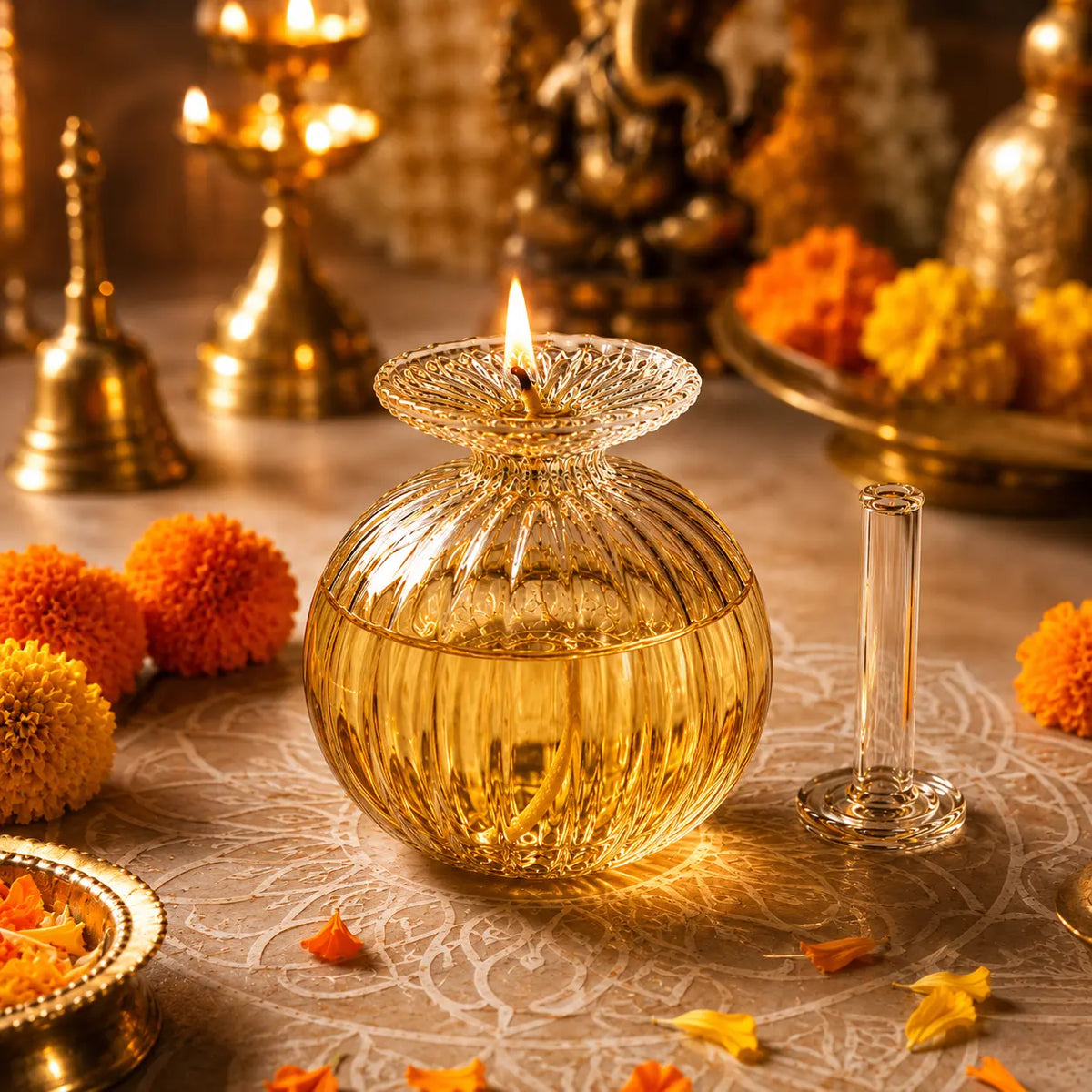
Corporate Diwali gifting gets much easier the moment you decide three things in order: who is receiving (employees, clients or vendors), which budget band each group sits in, and whether the item should read as devotional or simply festive. Diwali falls on 8 November 2026, which means mid to late September is when most teams lock a shortlist. What follows is a working guide rather than a catalogue: budget tiers, what suits a mixed-faith office, packaging and personalisation, and how to sequence the exercise backwards from the festival date.
Start with the recipient, not the product
The most common mistake in corporate gifting is opening a catalogue before anyone has written down who is actually on the list. Three groups behave very differently.
Employees receive a gift from an organisation they belong to, so uniformity matters far more than novelty. Anything that appears to rank people by what lands on their desk creates a conversation you will be having for months. Clients receive a gift from a company they pay or are paid by, so the item is read as a signal about the relationship and is usually more considered and more individual. Vendors and channel partners sit in between: the gesture is about continuity, and a well chosen item that arrives on time does more for the relationship than an expensive one that arrives in December.
Write those three lists and count them before looking at a single product. A forty person company and a four thousand person company are solving completely different problems with the same word.
The mixed-faith office: festive versus devotional
Most Indian workplaces are mixed, and the single most useful distinction in corporate gifting is between items that are festive and items that are devotional.

Festive items reference the season without asking anything of the recipient. Brass diyas and decorative lamps, dry fruit and mithai hampers, desk pieces, torans, candle and fragrance sets, crystal and natural stone objects. Diwali is observed across India as a social and seasonal occasion as much as a religious one, and these items sit comfortably with colleagues of every background. A diya or brass lamp is about as universally welcome as gifting gets in India.
Devotional items ask something of the recipient. In Vedic tradition a murti is installed and cared for rather than simply displayed, a mala is meant to be used for japa, and a yantra is customarily placed with some thought given to direction and position. Sent to a colleague who keeps a home mandir, these are among the most meaningful things you can give. Sent to someone who does not, they become an awkward object that nobody quite knows what to do with.
The position most HR teams settle on is straightforward: default the bulk employee gift to festive, and reserve devotional items for named individuals whose practice you already know. If your list includes colleagues who observe other faiths, a lamp or a hamper requires no explanation from anyone.
Budget tiers at a glance
| Band | Typically used for | What tends to sit here | Practical note |
|---|---|---|---|
| Under 999 | Large headcounts, plant and field teams, wide mailers | Single brass diya, small idol, incense and fragrance sets, natural stone bracelet, small crystal piece | The band where per unit packaging cost matters most as a share of the gift |
| 1,000 to 2,000 | Core office teams, mid sized companies, long standing vendors | Mid size brass idol, lamp pairs, curated combo boxes, puja thali sets | The most used band in Indian corporate gifting, and the easiest to make look considered |
| 2,000 to 3,000 | Managers, project partners, priority vendors | Larger brass pieces, multi item hampers, silver plated articles | Usually a smaller list, so some personalisation becomes practical |
| Above 3,000 | Senior stakeholders, key clients, board members and advisors | Large idols, hallmarked silver, premium multi piece combos | Keep this list genuinely short; it is the one people compare notes on |
If it helps to browse by band rather than by product, the ranges map roughly to gifts under 999, gifts from 1,000 to 2,000 and gifts above 3,000. For lists where you want one recognisable box rather than assorted items, pre-built spiritual combos reduce the number of moving parts considerably, and a build your own box approach is useful when you want the same outer packaging with two or three different fills for different tiers.
Employees, clients and vendors need different things
| Recipient | What usually works | What to think twice about | Presentation |
|---|---|---|---|
| Employees, large headcount | One standard festive item, identically packed | Tiering by grade; anything requiring a size or preference | Uniform box, printed card, no name personalisation |
| Employees, small team | A slightly better single item, or a small combo | Assorted items that invite comparison | Handwritten or hand signed card |
| Clients | Considered single pieces, brass or silver, or a curated box | Anything overtly branded; anything that could read as an inducement | Individual note referencing the year of work |
| Vendors and partners | Reliable mid band items, dispatched early | Wildly different values across a partner set | Consistent packaging across the whole set |
| Senior stakeholders | One substantial piece rather than several small ones | Hampers padded out to look larger | Delivered by hand where possible |
Packaging, personalisation and the card
Where the branding goes. Company branding is customarily kept off the object itself when the item is devotional, and moved to the outer box, the ribbon or the enclosed card. Printing a logo directly onto an idol, a mala or a yantra is traditionally avoided, because the object is treated as sacred rather than as a promotional surface. On festive items such as diyas and hampers, discreet branding on the packaging is entirely normal.
What the card says. Keep it short, keep it human, and avoid claiming outcomes. A line wishing the family a bright and peaceful Diwali reads better than a line promising the recipient prosperity. If a large part of your list observes other faiths, a season and new year framing works for everyone.
How it survives transit. Brass is heavy and marks easily against other metal; glass and terracotta diyas travel badly in bulk. If your list is spread across many pin codes, weight and fragility will shape your shortlist more than taste will. Ask for one sample packed exactly as it will ship, not a photograph of it.
Working backwards from 8 November
Diwali is on 8 November 2026, and Dhanteras falls a couple of days before it. Many Indian companies aim for gifts to land on or before Dhanteras rather than on Diwali itself, because the festival week is when offices empty out and courier networks are at their most congested. Our Diwali Lakshmi Puja 2026 guide sets out the sequence of days.
The sequence that tends to keep the exercise calm, rather than any fixed number of days, is worth planning in this order: finalise the recipient lists and lock headcount, shortlist two or three options per band, see and handle a physical sample, confirm final quantities, sign off packaging and card copy, collect and clean delivery addresses, then dispatch in waves starting with the farthest destinations. Address collection is almost always the slowest step, and almost always underestimated.
A practical way to shortlist in one sitting
- Write the three lists and their counts. Employees, clients, vendors. Nothing else happens until these numbers exist.
- Assign one budget band per list, not per person. Splitting a single list across bands is where most internal friction originates.
- Decide festive or devotional for each list. When in genuine doubt, choose festive.
- Pick two candidates per band, one lighter and one heavier, so you have a fallback if weight or availability becomes an issue.
- Sample the shortlist packed as it ships. This catches nearly every problem you would otherwise discover in November.
- Fix the card copy before the gift. It is faster to change, and it is what people actually read first.
A note on what a gift can and cannot be said to do
Spiritual objects are given in Indian tradition as expressions of goodwill, respect and continuity, and the customs around them are long standing and deeply held. Nothing in this guide should be read as a claim that a particular object will produce prosperity, luck, health, business results or any other outcome for the recipient or for your company. Practices around gifting vary considerably by region, community and family, and what is described here reflects widely followed custom rather than any fixed rule. Where a recipient's own tradition differs from what you read here, their tradition is the one that matters.
Frequently Asked Questions
When should a company start planning Diwali gifting for 2026?
Diwali falls on 8 November 2026. Most procurement and HR teams begin shortlisting six to eight weeks ahead, which puts the decision window in mid to late September. Starting early gives you room to see samples, confirm final headcount and sort out packaging without compressing every decision into the last fortnight.
What is an appropriate corporate Diwali gift for a mixed-faith office?
Items that read as festive rather than devotional tend to travel best. Brass diyas, decorative lamps, dry fruit and sweet hampers, desk pieces and crystal or stone items are widely accepted as festival gifts across communities. Deity idols and full puja kits are better reserved for recipients you already know observe the tradition.
Should employees and clients receive the same gift?
Usually not. Employee gifting is typically standardised within a band so that nobody feels ranked by what lands on their desk, while client and vendor gifting is more often tailored to the individual relationship. Many companies run one uniform employee gift plus a smaller, more considered set for external partners.
Is it acceptable to gift a deity idol to a colleague?
In many Indian workplaces it is common and warmly received, but it depends entirely on the person. Traditionally a murti is treated as something to be installed and cared for rather than simply displayed on a shelf, so it is customarily given to someone who will want that responsibility. If you are unsure, a diya, a lamp or a hamper sidesteps the question.
What is a reasonable per head budget for employee Diwali gifts?
There is no standard figure and it varies widely by sector and headcount. In practice Indian companies commonly work in bands: a token under 999 rupees for very large teams, 1,000 to 2,000 rupees for mid sized teams, and 3,000 rupees and above for senior stakeholders or key clients. Set the band by headcount and occasion first, then look at seniority.
Can we add company branding to spiritual gifts?
Branding is usually kept off the object itself when the item is devotional, and moved instead to the outer packaging, the ribbon or an enclosed card. Placing a logo directly on an idol, a mala or a yantra is customarily avoided, because the object is treated as sacred rather than promotional.
How do we handle gifting for remote or distributed teams?
Ship to home addresses and start collecting them early, because address collection is almost always the slowest step in the whole exercise. Allow extra buffer for smaller pin codes, and check whether anyone is travelling during the festival week. A digital greeting sent on the day, with the physical gift arriving separately, is a common and well accepted workaround.


