 Cow Shelter/Donation

Griha Pravesh Gift Guide: What to Give for a New Home and Why
September 03, 2026
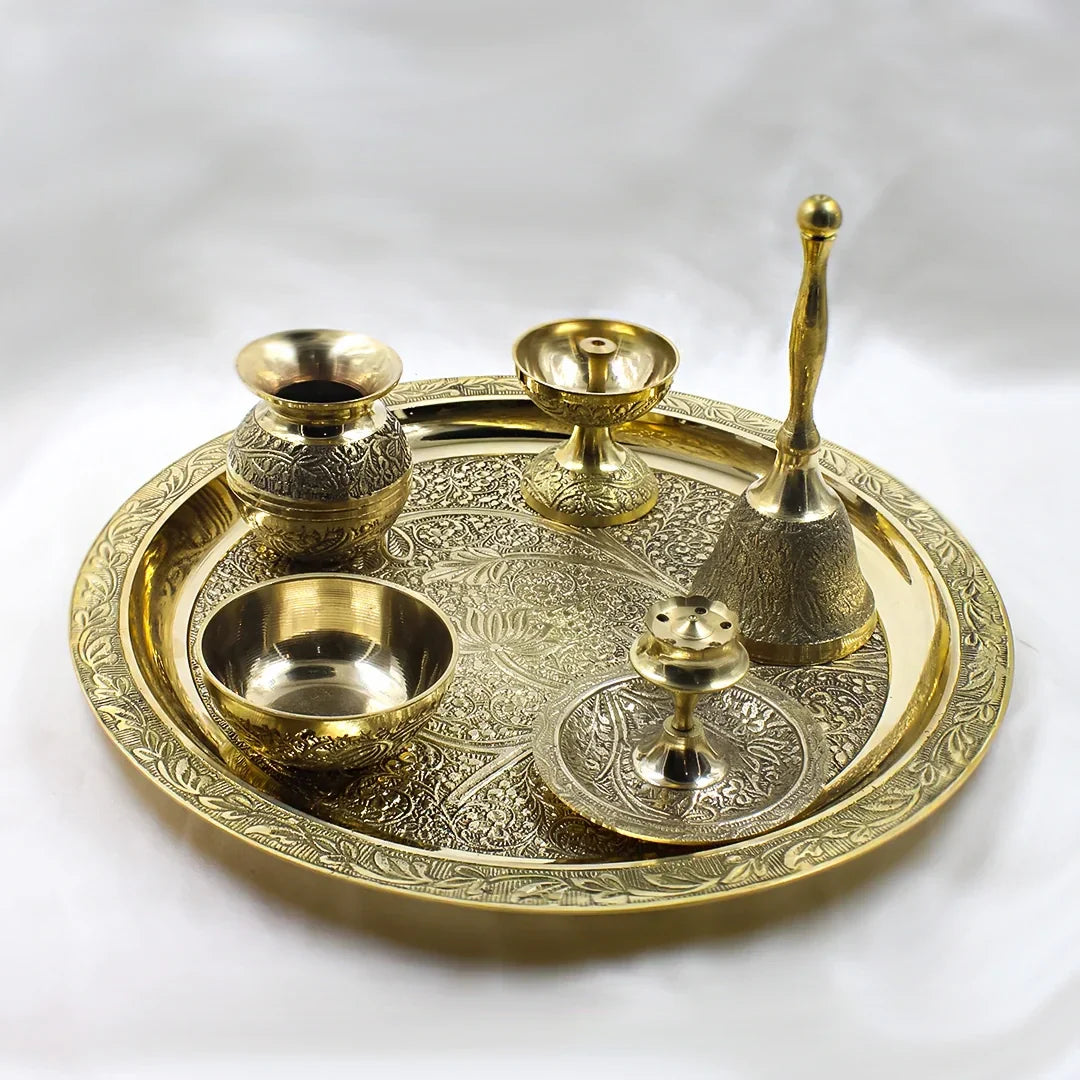
The safest griha pravesh gift is something the family will use in the new home on the very first day. That is why lamps, a kalash, a puja thali set, grains and a Ganesha or Lakshmi murti have been the standard housewarming gifts in Indian households for generations, while decorative objects that simply sit on a shelf are a distant second. Below is what is traditionally given, the reasoning behind each item, what is customarily avoided, and when to hand it over.
The short list, and why each item is on it
| Gift | Why it is traditionally given | Best when |
|---|---|---|
| Brass or silver diya, or a standing lamp | Lighting the first flame is customarily treated as the moment a house becomes a home | Almost always. The default choice if you know nothing about the family |
| Kalash with coconut and mango leaves | Central to the griha pravesh ritual itself, so it gets used the same day | You know the family is performing a formal puja |
| Puja thali set | A new mandir needs its own thali; most families are still using the old one | The family keeps a daily practice |
| Ganesha murti | Traditionally invoked at the start of anything new, and worshipped very widely | You are unsure which deity the family follows |
| Lakshmi murti or Lakshmi charan | Long associated in tradition with the wellbeing of a household | The family has asked for something for the mandir |
| Rice, salt, sugar, jaggery, turmeric | Staples are customarily carried in first so the kitchen is not started empty | Close family, or you are arriving on the morning itself |
| Hallmarked silver coin or small article | Silver is customarily given at auspicious beginnings across many communities | You want something compact and lasting |
| Crystal or stone tree | A modern favourite that reads as decor while still feeling considered | The recipients are young and setting up their first place |
Why light comes first
Across almost every Indian region, the first thing done in a new house is not unpacking. It is boiling milk until it rises over, and lighting a lamp. Both are about the same idea: the home should begin in a state of fullness and light rather than emptiness and dark.
That is why a lamp is the least risky housewarming gift you can carry. It has an immediate use, it needs no explanation, it works whether the family keeps an elaborate mandir or a single shelf, and it does not commit them to anything. A pair of brass diyas, a kuthu vilakku, a hanging lamp or a samai are all customary, and the choice is usually regional rather than religious. If you are choosing between formats, our diyas and lamps range covers the common South and North Indian shapes.
The kalash, the thali and the new mandir
If the family is performing a formal ceremony, the ritual items themselves make unusually good gifts, because they are consumed by the occasion rather than stored for it. A kalash set is used in the sthapana on the day; a puja thali becomes the thali of the new mandir rather than a hand-me-down from the old house.
One practical note. Almost every family setting up a new mandir underestimates the small things: a bell, an incense stand, a small achamani spoon, a container for kumkum and akshata. These are individually inexpensive and collectively the most useful gift you can give, and they are almost never on anyone's list. If you want to understand what the ceremony itself requires before choosing, our guide to griha pravesh muhurat, vidhi and samagri sets out the full samagri list.
Grains, sweets and the custom of never giving something empty
An old and widely followed custom: containers gifted to a new home are filled, not empty. A brass pot goes with rice in it. A silver bowl goes with a few grains or a coin. A jar goes with sugar or jaggery. The reasoning given traditionally is that the vessel should enter the house in the state you wish the house to remain in, and an empty container is customarily thought to carry the wrong idea into a new home.
The same thinking sits behind the staples themselves. Rice, salt, sugar, turmeric and jaggery are carried in on the first day in most Indian households, and turning up with a small, well presented set of them is a genuinely traditional gift rather than a lazy one. Sweets are given for the same reason, and in most families the sweets are eaten before the furniture is arranged.
Idols: when to give one, and which
An idol is the most personal gift on this list, and the one most worth thinking about. In tradition a murti is not decor. It is installed, it is offered to daily, and it carries an ongoing responsibility for the household. That makes it a wonderful gift for a family that keeps a mandir, and an awkward one for a family that does not.

If you know the household worships, ask which deity if you comfortably can. If you cannot ask, Ganesha is the conventional answer, because he is traditionally invoked at the beginning of anything new and is worshipped across almost every region and community. Keep the size modest. A large murti forces the family to redesign a mandir they have just set up, and a small, well finished piece in brass is easier to place and easier to maintain. Avoid giving an idol that is chipped, repaired or damaged in transit, which is why packaging matters more here than for any other gift on the list.
What is customarily avoided
These are long standing customs, not rules, and they vary a great deal between families and regions. Many households ignore some of them entirely. They are worth knowing mainly so that you do not accidentally give something the recipient's family would quietly set aside.
- Sharp objects. Knives, scissors and cutlery sets are customarily avoided as gifts for auspicious occasions in many communities.
- Black items. Black decor and black wrapping are traditionally left out of housewarming gifting, though black stone and Karungali articles are treated separately and are widely given.
- Anything chipped or broken. A damaged object is customarily not offered at an auspicious beginning, so check the piece before wrapping it.
- Empty containers. As above, vessels are traditionally filled before being given.
- Footwear and leather goods. Customarily avoided as gifts in most Indian households, and particularly so for a new home.
- Very large idols or heavy furniture, unasked. Not inauspicious, simply impractical, and it puts the family in the position of having to place it.
Choosing by budget
Under 999 will comfortably cover a good brass diya, a small murti, an incense set or a stone article. The 1,000 to 2,000 band is where most housewarming gifting sits and where a lamp pair, a mid size idol or a proper thali set becomes possible. Above that you move into larger brass pieces, hallmarked silver and multi item sets. If you are attending as a group, pooling into one substantial and genuinely useful piece is almost always better received than five separate small ones.
When to hand it over
Customarily you give the gift on arrival, before the family sits down for the puja, so that anything usable can go straight into the new mandir or onto the thali. If you are sending it ahead, aim for it to reach a day or two before the muhurat rather than on the morning itself, when the house is at its busiest. If you are giving cash, it is traditionally an odd numbered amount ending in one, such as 101, 501 or 1,001 rupees, placed in an envelope rather than handed over loose.
A note on tradition
Everything above describes customs that are widely followed in Indian households, and they differ meaningfully by region, community and family. Nothing here should be read as a claim that a particular gift will bring prosperity, luck, protection or any other outcome to the household that receives it. Where a family's own practice differs from what is described here, their practice is the one to follow.
Frequently Asked Questions
What is the most traditional griha pravesh gift?
A brass or silver lamp is among the most widely given, because lighting the first flame in a new home is traditionally treated as the moment the house becomes a dwelling rather than a building. A kalash, a puja thali set, a Lakshmi or Ganesha murti and household staples such as rice, salt and sugar are also long standing choices.
Should the gift be given before or during the ceremony?
Customarily it is handed over when you arrive, before the family sits for the puja, so that anything usable can be placed in the new mandir or on the puja thali the same day. If you are sending the gift ahead, most families prefer it to reach a day or two before the muhurat rather than on the morning itself.
Is it acceptable to give money for a housewarming?
Yes, and in many families it is the norm. Cash is customarily given in an odd numbered amount ending in one, such as 101, 501 or 1,001 rupees, and placed in an envelope rather than handed over loose. Many people pair a small token gift with the envelope so that something physical enters the home too.
Can I gift a god idol if I do not know which deity the family worships?
Ganesha is the most commonly chosen when you are unsure, because he is traditionally invoked at the start of anything new and is worshipped very widely across regions and communities. If you would rather not guess at all, a lamp, a kalash set or a puja thali suits any household that keeps a mandir.
What should be avoided as a housewarming gift?
Knives, scissors and other sharp objects are customarily avoided for any auspicious occasion, as are items associated with mourning. Black coloured decor, empty containers and anything broken or chipped are also traditionally left out. These are long standing customs rather than fixed rules, and practice varies considerably by family and region.
Do I need to buy something expensive?
No. In tradition the emphasis is on what the object represents and on it entering the home with good intent, not on what it cost. A modest brass diya given warmly is customarily regarded the same way as a far more expensive piece, and most families care more that you came than what you carried.


