 Cow Shelter/Donation

Which Idols Are Traditionally Not Kept at Home: Nataraja, Duplicates & Broken Murtis
September 03, 2026
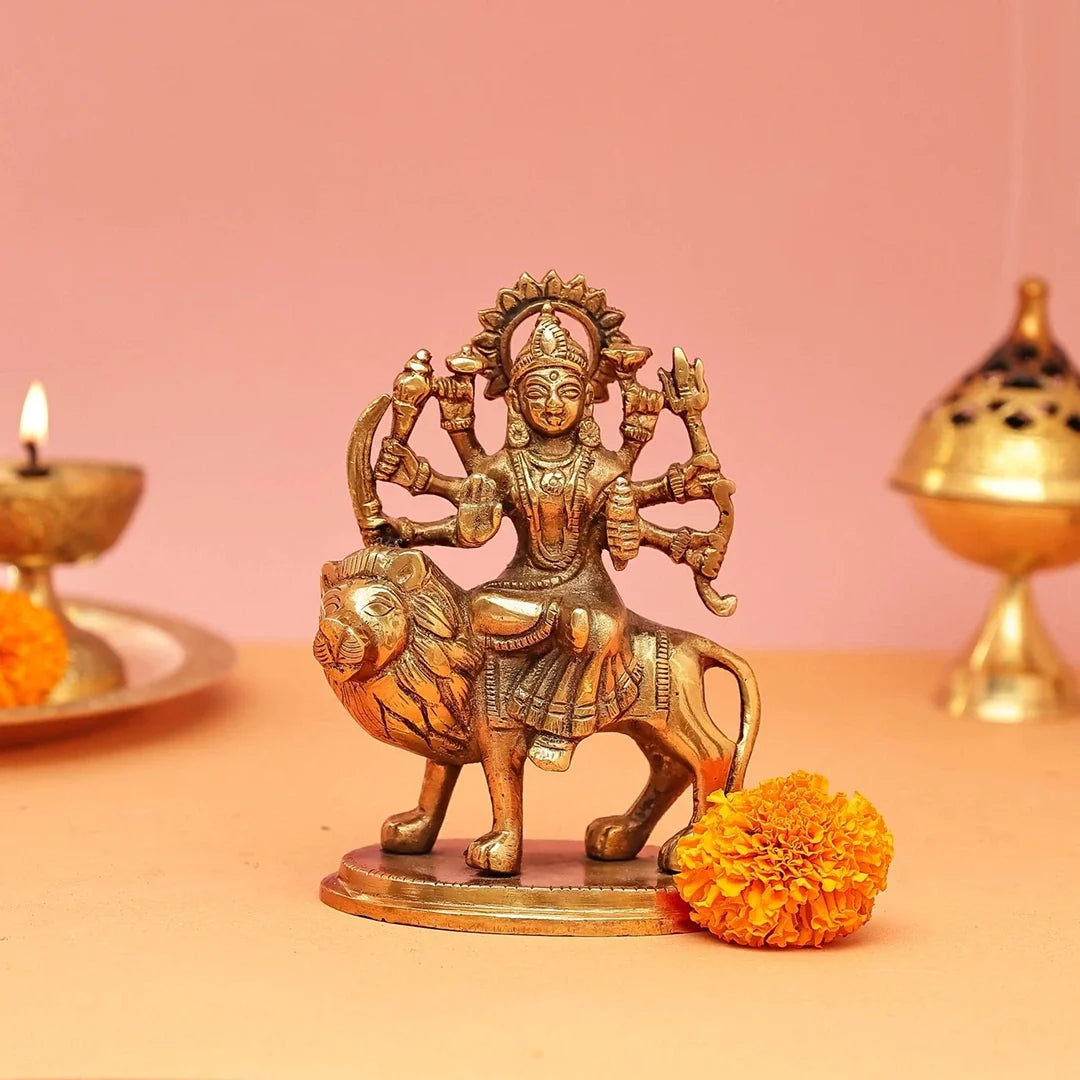
A handful of murtis are traditionally kept out of a domestic shrine rather than in it. The forms most often mentioned are the Nataraja, the fierce or ugra aspects of deities, duplicate idols of the same deity in one mandir, and any piece that is chipped, cracked or repaired. Direction matters too: south facing murtis, idols placed back to back, and shrines sharing a wall with a bathroom are customarily avoided. What follows explains where each custom comes from, and where families differ.
Read this first: custom, not prohibition
Everything below is long-standing household custom drawn from Agama and Vastu convention and from regional practice. It is not a set of prohibitions, and it is not uniform. A family in Thanjavur and a family in Varanasi will give you different answers about the same murti, and both will be correct within their own tradition. Nothing here should be read as a claim that keeping a particular idol will cause misfortune, illness or loss. If your family or your teacher has told you otherwise, that instruction is the one to follow.
At a glance
| What is customarily avoided | The reasoning usually given | Common alternative |
|---|---|---|
| Nataraja in the puja shrine | Treated as a temple form requiring formal daily ritual | Kept as art in a living space, or a seated Shiva in the mandir |
| Ugra and fierce aspects | Associated with ritual customarily learned within a lineage | The gentler form of the same deity |
| Duplicate murtis of one deity | A home shrine is meant to hold one focus for daily worship | One murti in the mandir, others kept as decor elsewhere |
| Chipped, cracked or repaired pieces | Damaged objects are customarily not offered to | Respectful immersion, and a replacement |
| South facing murtis | Standard Vastu convention for shrine orientation | Murtis facing east or west, worshipper facing east or north |
| Mandir under a staircase or against a bathroom wall | Convention on the cleanliness and quiet of the shrine space | North east corner of the home, on a raised platform |
| Ancestor photographs among the deities | Deity worship and ancestor remembrance are kept distinct | A separate wall or shelf, honoured at shraddh |
Nataraja: a temple form more than a household one
The Nataraja depicts the Ananda Tandava, the dance in which creation, preservation and dissolution are shown as a single continuous movement. Because the form includes samhara, dissolution, and because its iconography is unusually precise, tradition has generally treated it as a form for temple installation, where the prescribed daily ritual is maintained by trained priests, rather than for a household shrine where worship is necessarily simpler.
In practice this varies enormously. Countless South Indian homes keep a Nataraja and always have. The common middle path in families that observe the custom is to keep the piece as sculpture in a hall or study, treated with respect but not made the object of daily puja, and to place a seated Shiva or a Shivling in the mandir instead. If you already have one in your shrine and it has been there for years, most acharyas would not ask you to move it.
Ugra forms and lineage worship
Ugra Narasimha, Bhairava, Chamunda and certain aspects of Kali are traditionally worshipped either in temples or by households that belong to a specific sampradaya. The reasoning is practical rather than ominous: the ritual associated with these forms is more demanding, more precise about timing and offerings, and customarily received from a teacher rather than assembled from books. Families within those lineages keep them at home and have for generations. Outside that context, the gentler forms of the same deities are the conventional choice, which is why most household shrines hold a Durga rather than a Chamunda, and a Lakshmi Narasimha rather than an Ugra Narasimha.
How many of one deity?
A Sanskrit verse often quoted on this subject lists combinations customarily avoided in a single place of worship, among them two conches, three Ganeshas, three Shivlings, two Suryas and three images of the Devi. The principle behind it, as it is usually explained, is that a domestic shrine is meant to hold one focus for daily worship rather than an accumulation, and that the count matters because each murti traditionally receives its own offering.
The distinction that resolves most of the confusion: this applies to the mandir, not to the house. A Ganesha above the door, a Ganesha on the desk and a Ganesha in the car are decorative and are not counted. A collection of Ganesha pieces displayed in a living room is not a shrine. What the custom addresses is how many murtis sit in the space where you actually perform puja.
Chipped, cracked and repaired murtis
This is the most consistently observed custom on the list. A murti that has cracked, chipped, lost a limb or been glued back together is customarily retired from active worship rather than restored to it. The reasoning given is that what is offered to should be whole.
Retiring is not discarding. The traditional practice is respectful immersion in flowing water or in a tank designated for it, or handing the piece to a temple that accepts such items. Clay and plaster pieces are now often buried under a tree instead, and metal ones returned to a temple for reuse. A damaged murti is customarily never put out with household waste. If you are choosing a replacement, solid brass idols and Karungali god idols both survive daily handling considerably better than resin or plaster.
Direction, height and what sits nearby
The conventional arrangement places the mandir in the north east of the home, with the murtis facing west or east, so that the person worshipping faces east or north. Murtis facing south are customarily avoided in most traditions. Two murtis are traditionally not placed directly facing one another, nor back to back, and idols are customarily raised on a platform rather than set on the floor.
The placement customs that cause the most trouble in apartments are the structural ones: a shrine under a staircase, directly beneath a beam, sharing a wall with a bathroom, or inside a bedroom are all customarily avoided, and in a two bedroom flat at least one of those is usually unavoidable. The common accommodation is a curtain or a closing cabinet. Our guides to where to place idols at home and to setting up a home temple work through the compromises in more detail.
Ancestor photographs
Photographs of departed family members are customarily kept apart from the deity murtis rather than among them. In most households they sit on a separate wall or in another room, and are garlanded and honoured during Pitru Paksha and at shraddh rather than during the daily deity puja. The distinction being maintained is between deva puja and pitru karma, which tradition treats as separate observances with separate timings. A number of families do keep both together, particularly where space is tight, and no one considers that household less devout for it.
If you already have one of these at home
Nothing here calls for an anxious clear-out. If a murti has been in your shrine for years and has been cared for, the overwhelming view among practising acharyas is to leave it alone; continuity of worship is treated as more significant than a placement rule. If you want to make a change, the usual approach is to move the piece rather than dispose of it, keeping it as sculpture elsewhere in the home. Damaged pieces are the one genuine exception, and even those are retired respectfully rather than urgently. If you are adding to your shrine and want to keep the arrangement conventional, browsing sacred god idols by deity rather than by size is the simplest way to keep one clear focus.
Frequently Asked Questions
Is it wrong to keep a Nataraja idol at home?
Not wrong, and many households in South India do keep one. The tradition most often cited is that the Nataraja depicts the Ananda Tandava, the cosmic dance associated with dissolution and renewal, and that this form is customarily installed in temples where formal daily ritual is maintained rather than in a domestic mandir. Many families keep a Nataraja as art elsewhere in the house rather than in the puja space. Practice varies widely, and several lineages have no such reservation at all.
How many Ganesha idols can be kept in a home mandir?
A widely quoted traditional guideline is one murti of each deity in the household shrine, and specifically that three Ganesha idols are customarily avoided in a single mandir. The reasoning usually given is that a domestic shrine is meant to hold a single focus for daily worship rather than a collection. Decorative Ganeshas kept elsewhere in the house are generally not counted in this at all.
What should be done with a broken or chipped idol?
Customarily a damaged murti is retired from the mandir rather than repaired and returned to daily worship. The traditional practice is respectful immersion in flowing water or in a designated tank, or handing it to a temple that accepts such items. Many families now bury smaller clay pieces under a tree and return metal ones to a temple. It is customarily not put out with household waste.
Which direction should idols face in a home mandir?
The most commonly followed arrangement places the mandir in the north east, with the murtis facing west or east so that the person worshipping faces east or north. Idols facing south are customarily avoided in most traditions. Two murtis are traditionally not placed directly facing each other or back to back.
Can fierce or ugra forms of deities be kept at home?
Fierce aspects such as Ugra Narasimha, Bhairava, Chamunda and certain Kali forms are traditionally worshipped in temples or by practitioners within a specific lineage, because the associated ritual is more demanding and is customarily learned from a teacher. Households that follow those lineages do keep them and have done so for generations. If you have no such background, the gentler forms of the same deities are the conventional choice.
Are photographs of departed family members kept in the puja room?
Customarily not in the same space as the deity murtis. In most families, photographs of ancestors are kept on a separate wall or in another part of the house, and are honoured during Pitru Paksha and shraddh rather than in the daily deity puja. Some households do combine the two, and there is regional variation here as with everything else.
Is there a rule about the size of a Shivling kept at home?
A widely repeated custom holds that a Shivling for domestic worship should be small, often described as no larger than the span of one's own thumb, and that larger ones belong in temples where formal daily ritual is maintained. Another common practice is keeping only one Shivling in a home shrine. As with the rest of this list, families and lineages differ.


