 Cow Shelter/Donation

Kalash Sthapana: Vidhi & Significance
July 18, 2026
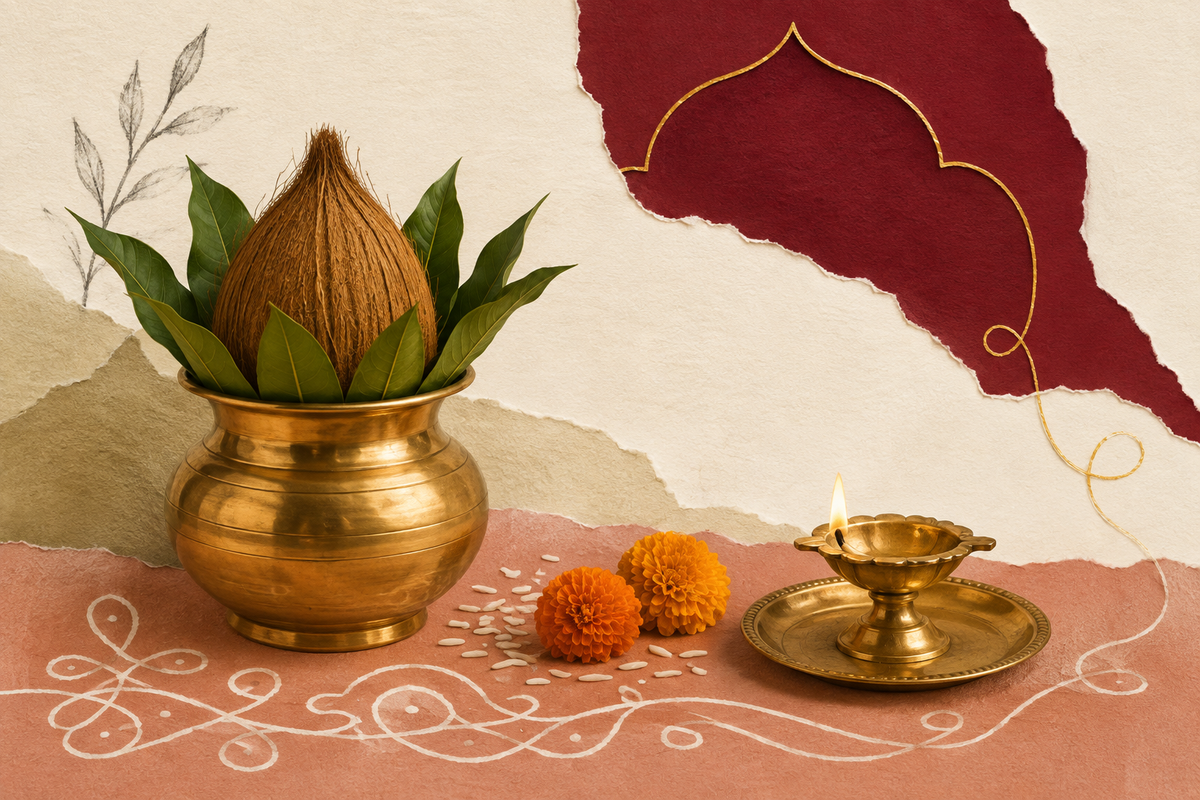
Kalash Sthapana, also known as Ghatasthapana, is the sacred ritual of establishing a consecrated pot (kalash) that invites divine energy into any puja. Whether you are beginning Navratri, a Satyanarayan Puja, a Griha Pravesh or any auspicious ceremony, the kalash acts as the seat of the deities and the cosmic waters. This guide explains the meaning, the complete vidhi, the samagri and the correct placement so you can perform Kalash Sthapana with confidence and devotion.
The Divine Hindu App is here.
Chat free with top astrologers for your first 5 minutes every week, generate your Kundli, book temple Puja & Chadhava, and check today's Panchang — all in one app.
The Significance of Kalash Sthapana
The kalash is a powerful symbol in Hindu tradition. Its rounded body represents the earth and the womb of creation, the water inside symbolises the life-giving cosmic ocean, the mango leaves signify growth and prosperity, and the coconut on top represents divine consciousness. When you perform Kalash Sthapana, you invoke the Trinity (Brahma, Vishnu, Mahesh), the sacred rivers, and Goddess Lakshmi into the pot, making it a living centre of divine energy for the duration of your worship. During Navratri, Ghatasthapana marks the invocation of Goddess Durga and the sowing of barley seeds (jayanti) as a symbol of fertility and abundance.
Kalash Sthapana Samagri
| Item | Significance |
|---|---|
| Copper, brass or clay kalash | The sacred vessel that holds divine energy |
| Clean water / Ganga jal | Represents the cosmic waters and purity |
| Mango or betel leaves (5 or 7) | Placed at the mouth for growth and auspiciousness |
| Coconut wrapped in red cloth | Symbol of divine consciousness, placed on top |
| Kalava (sacred thread) | Tied around the neck of the kalash |
| Roli, akshat, haldi, kumkum | For adorning and worshipping the kalash |
| Coins, supari, durva | Placed inside the water as offerings |
| Soil & barley seeds (for Navratri) | For sowing jayanti during Ghatasthapana |
Kalash Sthapana Vidhi: Step-by-Step
Step 1: Purify and Prepare the Base
Clean the puja area and lay a red cloth. For Navratri, place a wide clay pot with soil and sow barley seeds, then set the kalash upon it. Otherwise, prepare a small heap of rice as the base for the kalash.
Step 2: Fill the Kalash
Fill the kalash about three-quarters with clean water or Ganga jal. Add a coin, a few grains of akshat, durva, supari and a little haldi. Tie the kalava around the neck of the pot while chanting Om.
Step 3: Arrange Leaves and Coconut
Place five or seven mango or betel leaves at the mouth of the kalash so they fan outward. Wrap a coconut in a red cloth and set it firmly on top of the leaves, forming the crown of the kalash.
Step 4: Invoke the Deities
Apply tilak of roli and kumkum to the kalash, offer flowers and akshat, and invoke the deities with a mantra such as Om Apava Sindhu Rajanam or simply by invoking Ganesha, Lakshmi and Varuna (the deity of water) into the pot.
Step 5: Worship and Aarti
Light the diya and incense, offer naivedya, and perform aarti before the established kalash. The kalash now serves as the sacred focal point for the main puja that follows.
Correct Placement and Direction
Place the kalash in the north-east (Ishaan) corner of your puja space, or at the centre of the altar facing east. Keep it undisturbed for the duration of the ritual or festival. During Navratri, water the barley seeds gently each day and observe how they sprout, which is regarded as an auspicious sign of the Goddess's blessings. For a complete nine-day worship plan, read our Navratri 2026 nine-day Devi worship guide, and to understand the other items on your altar, see our daily pooja essentials guide.
Things to Keep in Mind
Use a clean, undamaged kalash, never a cracked or chipped one. Set it up during an auspicious muhurat, which for Navratri is usually in the first third of the day during Pratipada; confirm the exact timing with a panchang. Do not move or empty the kalash until the ritual concludes, and immerse the water and offerings respectfully afterwards.
Frequently Asked Questions
What does the kalash symbolise?
The kalash symbolises the universe and abundance. Its body is the earth, the water is the cosmic ocean, the leaves signify growth, and the coconut represents divine consciousness.
Which metal kalash is best for Kalash Sthapana?
Copper and brass are most commonly used and considered highly auspicious. Clay kalash are traditional for Navratri Ghatasthapana. Avoid iron or steel for this ritual.
What is the right time for Ghatasthapana during Navratri?
Ghatasthapana is usually performed in the auspicious morning hours of Pratipada, avoiding the inauspicious Chitra nakshatra and Vaidhriti yoga. Confirm the exact muhurat with a panchang.
Can I do Kalash Sthapana at home myself?
Yes, with the right samagri and devotion you can perform it at home. The key is cleanliness, correct arrangement and sincere invocation of the deities.
What should I do with the kalash water after the ritual?
After the ritual concludes, the sacred water is sprinkled around the home for blessings and the remainder is immersed respectfully in a river or a clean plant, never discarded casually.
Set up a truly divine kalash with authentic, beautifully crafted vessels. Explore our Kalash & Pooja Accessories collection to perform Kalash Sthapana with grace and tradition.


