 Cow Shelter/Donation

Karungali vs Its Lookalikes: How to Tell Real Ebony from Dyed Rosewood, Black Sandalwood and Black Coral
September 03, 2026
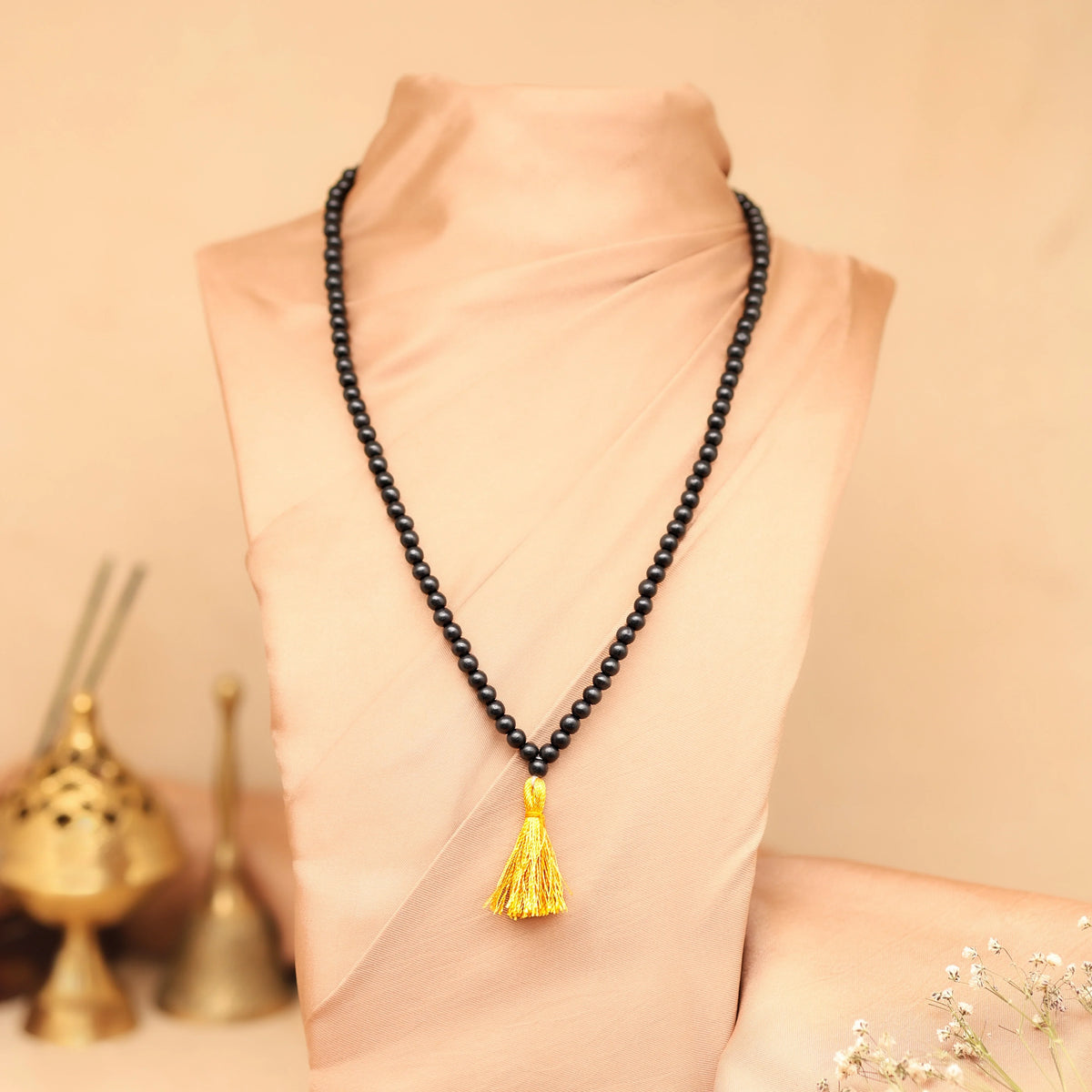
Genuine Karungali is dense black ebony heartwood — heavy for its size, carrying fine natural grain rather than a flat, even black, and it will not leave colour on a damp white cloth. Its four common substitutes — dyed rosewood, so-called black sandalwood, black coral and moulded resin — each fail on at least one of those three points. The popular sink-in-water test is the weakest check of the lot, because plenty of fakes are dense enough to sink as well. Below is what actually separates Karungali from each lookalike, and how to run the checks yourself.
What Karungali is, in plain terms
Karungali (கருங்காலி) is the Tamil name for a very dark, very dense heartwood, sold in English as ebony. Heartwood is the mature inner core of the trunk — the part that has stopped carrying sap and has filled with the extractives that give the wood its colour, weight and durability. Only that core is used. The paler outer sapwood is not Karungali, which is one reason genuine beads cost what they do and are rarely offered in very large sizes.
Botanical naming for this wood varies between regions and sources, and the Tamil name has historically been applied to more than one dark heartwood. That is exactly why identification in the real world rests on how the material behaves in your hand rather than on whatever a label says. Three properties do almost all of the work.
The three properties that actually identify it
Density. Ebony heartwood is among the heaviest commercial timbers. A Karungali bead feels startlingly heavy for its size — noticeably heavier than a rudraksha, tulsi or sandalwood bead of the same diameter. Hold one in each palm and the difference is obvious without any equipment.
Grain. Look at a bead under raking light, tilted towards a window. Real Karungali shows fine, close, natural grain: faint streaking, occasional lighter or browner passages, tiny visible pores. It is dark, but it is not a flat, uniform, featureless black. A bead that looks like it was filled in with a marker is telling you something.
Colourfastness. Karungali is dark all the way through because of what is inside the wood, not because of anything applied to the outside. Rub it firmly with a damp white cloth and the cloth stays white. Any grey, brown or black smear means dye or stain.
Lookalike one: dyed or ebonised rosewood
This is far and away the most common substitute, because rosewood and similar hardwoods are heavy, take a good polish and are cheap by comparison. They are then stained, ebonised or oil-blackened until they read as ebony.
Three things give it away. First, the damp-cloth test: stains sit on the surface and come off under friction, especially at the string holes where the finish is thinnest. Second, the bore hole. Dye is applied to the outside of a finished bead, so shine a phone torch into the drilled channel — a stained bead is often visibly paler or browner inside than out. Third, wear. Look at the bead edges that rub against neighbours on the string; on a dyed mala these go brown or reddish within months while the protected faces stay black. Genuine Karungali wears to a softer sheen, not to a different colour.
Lookalike two: so-called black sandalwood
Black sandalwood is a trade description, not a botanical category. True sandalwood is pale cream to light brown and carries a strong, sweet, persistent fragrance — that fragrance is the whole point of the timber. Beads marketed as black sandalwood are therefore either dyed pale sandalwood, a different species altogether, or ordinary wood carrying an applied perfume oil.
The tell is smell. Warm a bead by rubbing it briskly between your palms for twenty seconds. Karungali smells faintly of dry wood, and only just. A strong sweet perfume means added oil, and applied fragrance fades over a few months, which is why buyers often report that a scented mala smells of nothing by the second year.
Lookalike three: black coral
Black coral is not a substitute for Karungali; it is not wood at all. It is the skeletal material of a marine colonial organism, built up in concentric layers rather than in wood grain, and it polishes to a glassy, slightly translucent surface that no ebony bead will show. Under magnification you see fine growth rings and no pores.
There is a further reason to refuse it. International trade in black coral is restricted under conservation conventions, and it is not part of the Tamil devotional tradition that Karungali belongs to. If a seller offers black coral as Karungali, or uses the two words interchangeably, that alone is sufficient reason to stop the conversation.
Lookalike four: moulded resin and composites
Resin beads and wood-powder composites are the cheapest fakes and, oddly, the easiest to spot once you know what to look for. They are perfect. Every bead is the same size, the same tone, the same weight, with the same surface. Natural heartwood never is. Run a fingernail around the widest circumference and you may feel a faint mould seam. Resin also warms to skin temperature far faster than dense wood, and it may show tiny trapped bubbles under a torch.
Comparison at a glance
| Material | Weight for size | Grain | Colour on damp cloth | Clearest giveaway |
|---|---|---|---|---|
| Genuine Karungali (ebony heartwood) | Very heavy | Fine, natural, slightly varied | None | Heavy, grained, colourfast, faint wood smell |
| Dyed or ebonised rosewood | Heavy | Grain present but muddied by stain | Grey or brown transfer | Bore hole paler than surface; edges wear brown |
| Black sandalwood | Light to medium | Often obscured | Sometimes | Strong sweet fragrance that fades over months |
| Black coral | Medium, oddly light | Concentric layers, no wood pores | None | Glassy polish, no wood grain, trade-restricted |
| Moulded resin or composite | Light and uniform | None, or printed | Sometimes | Identical beads, mould seam, warms instantly |
Why the float test proves nothing on its own
The advice circulating most widely is that real Karungali sinks in water. Genuine ebony usually does sink, so the test is not wrong — it is simply useless as proof. Rosewood sinks. Ironwood sinks. Resin loaded with stone powder sinks. Glass sinks. A test that a majority of the fakes also pass cannot confirm anything.
Worse, soaking beads is not free of cost. Repeated immersion swells and dries the wood, loosens knots and can leave a strung mala misshapen. If you want to run the test out of curiosity, use one loose bead and dry it immediately. Never soak a whole mala. Use the damp-cloth, bore-hole and grain checks instead — all three are non-destructive and all three are far more informative. Our separate guide on how to check an original Karungali malai goes through the same checks in a different order if you want a second pass.
How to check a mala at home, step by step
- Weigh it by hand. Hold the Karungali bead in one palm and any other wooden or seed bead of similar size in the other. Ebony should feel clearly denser.
- Look into the bore. Phone torch into the drill hole. Interior colour should match the outside. A pale or reddish interior points to surface dye.
- Damp white cloth, twenty seconds. Firm pressure, then check the cloth in daylight. It should be clean.
- Raking light for grain. Tilt the bead near a window. You are looking for fine natural figure and small variations between beads — not for perfection.
- Warm and smell. Rub briskly between palms. Dry wood, faint. Not chemical, not sweet.
- Compare beads across the mala. Real heartwood varies slightly in tone and figure from bead to bead. Complete uniformity is a warning, not a mark of quality.
- Check the stringing. Look at the thread, the knotting and the guru bead. Sellers who cut corners on the wood rarely spend on the assembly.
If four or more of those checks pass comfortably, you are very probably holding genuine Karungali. If two or more fail, treat the piece as unverified regardless of what the invoice says.
What a lab certificate does and does not tell you
Karungali is the one line in our catalogue that carries a genuine government lab certificate. That certificate confirms one thing: the material submitted was examined by an accredited laboratory and identified. That is a meaningful thing to have, because material substitution is the single biggest problem in this category — but it is worth being precise about its limits.
A certificate speaks to material identity. It says nothing about outcomes, and no certificate anywhere can. In Tamil tradition Karungali is associated with protection and with the worship of Murugan, Ayyanar and Shiva, and it is worn in that spirit; that is a devotional matter, not a laboratory one. We do not extend the certificate claim to rudraksha, to stones, or to anything else we sell, and you should be sceptical of any seller who does.
Where to go next
If you are choosing a piece for the first time, the complete Karungali mala guide covers types, bead counts and sizes, and the buying guide covers price and seller questions. If you are deciding between materials, Karungali compared with rudraksha is the usual next question. To see current pieces, browse Karungali malai, Karungali bracelets or the full Karungali range.
Frequently asked questions
Does real Karungali sink in water?
Usually yes, because ebony heartwood is denser than water. But this proves very little on its own. Dyed rosewood, ironwood, stone-filled composites and many moulded resins also sink. Treat sinking as one weak signal among several, never as confirmation, and always pair it with the colour-transfer and grain checks.
Will genuine Karungali leave black colour on my skin or clothes?
No. Karungali is naturally dark all the way through, so there is no surface dye to come off. If a damp white cloth picks up grey or brown colour after twenty seconds of firm rubbing, you are almost certainly holding stained or ebonised wood rather than ebony.
Is black sandalwood the same as Karungali?
No. Black sandalwood is a trade description rather than a botanical one. True sandalwood is pale and strongly fragrant, so beads sold as black sandalwood are generally dyed, scented or a different species entirely. Karungali smells faintly woody at most, and never sweetly perfumed.
How can I tell dyed rosewood from Karungali without damaging the bead?
Look into the drill hole with a phone torch. Dye is applied to the outside, so a stained bead is often noticeably paler or browner inside the bore than on its polished surface. Genuine Karungali reads as the same dark tone inside and out.
Is black coral an acceptable substitute for Karungali?
It is not a substitute at all, because it is not wood. Black coral is a marine organism with a concentric, layered structure and no wood grain, and international trade in it is restricted under conservation conventions. If a seller offers black coral as Karungali, walk away.
What does a government lab certificate actually confirm?
It confirms that the material submitted for testing was examined and identified by an accredited laboratory. Among our product lines, Karungali is the only one that carries such a certificate. A certificate speaks to material identity only. It is not a statement about spiritual outcomes, and no certificate should be read that way.
Does Karungali have a smell?
Only a faint one. Rub a bead briskly between your palms for about twenty seconds and warm wood should smell like wood — dry, slightly earthy, quite subtle. A sharp chemical note suggests dye or lacquer, and a strong sweet fragrance suggests added perfume oil.


