 Cow Shelter/Donation

Thread vs Knotted vs Silver-Capped Mala: Durability, Cost & Restringing
September 03, 2026
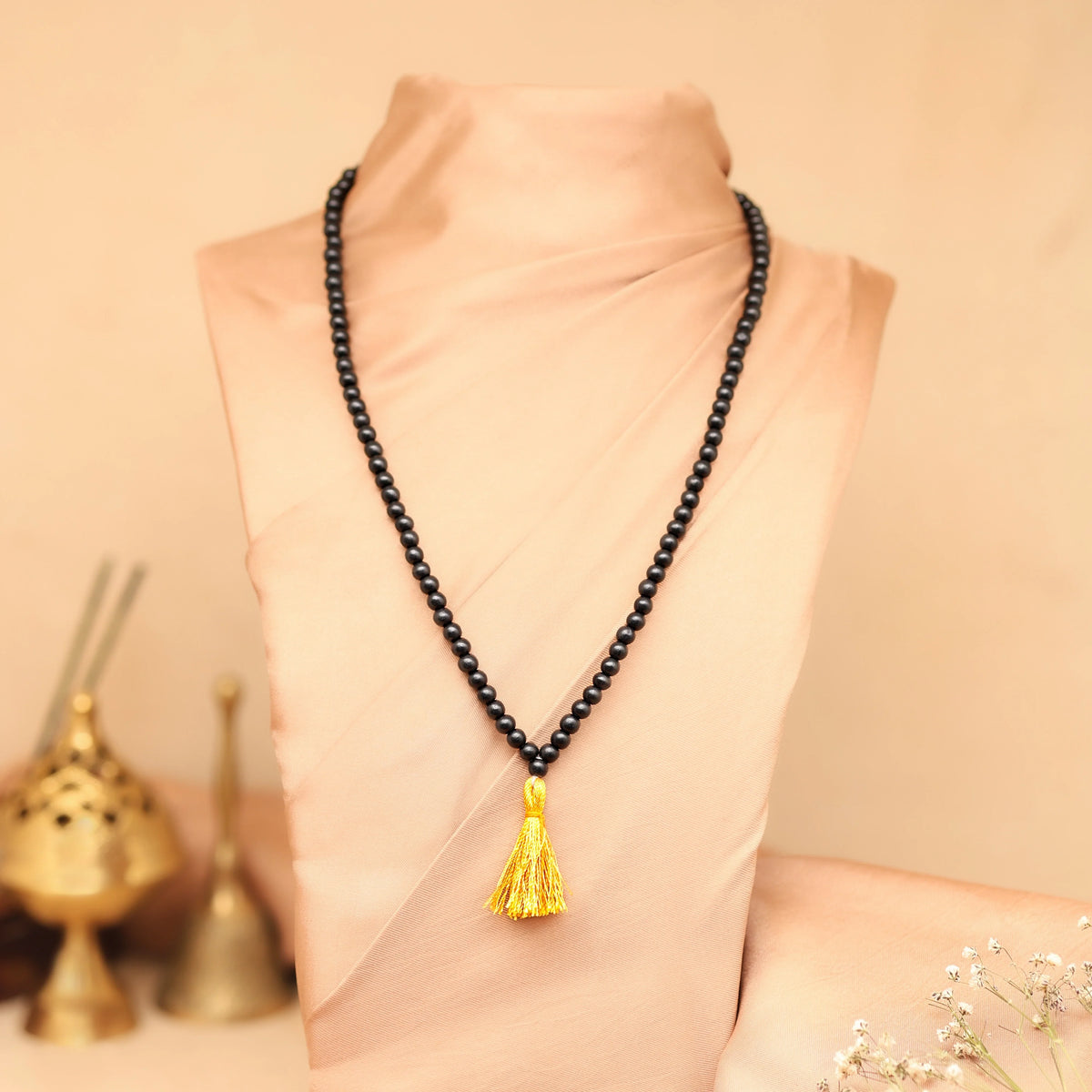
A mala’s stringing and metalwork affect its feel, care and price. Thread-strung malas are light and flexible; knots separate the beads; linked metal caps create a different jewellery style. Choose around how you plan to use the mala, then compare the actual materials, finished length and construction of the individual design.
Choose your Karungali mala
Silver-plated and 925 sterling silver are different materials. “Silver-capped” describes the design, so check what the caps and links are made from before comparing prices.
925 Sterling Silver Karungali Mala
Karungali wood beads with 925 sterling-silver caps and links. Choose 54, 72 or 108 beads; each option has its own price. Bead count is not the same as finished necklace length.
Compare 54, 72 and 108 bead S925 Karungali malas →
925 Sterling Silver Karungali & Rudraksha Mala
Choose the mixed design for the contrast between dark Karungali wood and textured Rudraksha beads, joined with 925 sterling-silver caps and links.
View the mixed Karungali & Rudraksha silver mala →
For silver-plated caps, see the separate silver-plated Karungali mala. You can also browse the 925 silver mala and bracelet collection.
What does 925 sterling silver mean?
The 925 sterling-silver standard means 925 parts silver per 1,000, or 92.5%. On a mala with wood or Rudraksha beads, this describes the specified silver components—not the whole necklace. Silver plating is a surface coating over another material. Read the Birmingham Assay Office explanation of silver fineness.
For an individual purchase, check the product’s material description, finished length, bead dimensions and available purity or hallmark evidence. A wood identification report relates to the wood; it does not establish the silver purity or net silver weight.
Thread-strung: the traditional form
Beads threaded onto a single continuous cord, tied off at the sumeru. This is how malas have been made for a very long time and it remains the most common construction.
What it does well. It is light, quiet and cheap. The beads sit close together and slide smoothly, which is exactly what you want for japa — a thumb can move down a well-strung thread mala quickly and without catching. There is no metal against the skin. And it is the least intrusive form if you wear the mala under clothes.
Where it fails. The cord is the weak point and it is doing all the work. Every time a bead moves, the cord abrades slightly where it passes through the drill hole. Sweat, hair oil and skin oil soak in, and cotton in particular discolours and stiffens. A cord that has gone dark and hard is close to failing. The failure mode is also the worst of the three: when a continuous strand breaks, the beads scatter, and on a 108 mala that means crawling around under furniture.
Lifespan. With daily wear, expect to restring every one to three years. A mala kept in a bag and used only for seated practice can go far longer.
Knotted: a knot between every bead
The same cord, but with a knot tied between each pair of beads. It is a slower, more skilled job, and it changes the object meaningfully.
What it does well. Four things. The beads never touch each other, which matters enormously for softer materials — sandalwood, tulsi and lower-hardness stones all scuff where beads rub. If the cord does break you lose one bead, not all of them, because the knots on either side hold everything else in place. The knots give the thumb a small, definite stop between beads, which many practitioners find helps them keep an even rhythm rather than skidding through a count. And the beads cannot bunch up and slide around the strand.
Where it fails. It costs more, because it is labour. The finished mala is noticeably longer for the same bead count — knots add up over 108 of them — so it hangs lower than you may expect. Knots can work loose over years. And restringing is a bigger job than for a plain strand.
Lifespan. Longer than plain thread in practice, mostly because the beads are not wearing on each other and because a single failure is not catastrophic. Silk is the traditional knotting material and is strong for its diameter, though it degrades with sustained sweat exposure.
Silver-capped: metal at every bead
Each bead is capped in silver at both ends, and the caps are joined bead to bead with rings or links, or the capped beads are hung from a chain. There is no cord at all in the fully linked version.

What it does well. Durability, and specifically durability at the one place beads actually fail. Beads chip and crack at the drill hole, because that is the thinnest part and the point where all the stress concentrates. A metal cap covers exactly that spot. For Rudraksha worn every day this is a genuine benefit — capping protects the natural surface at the hole and reduces the chance of the bead splitting there. There is no cord to perish, so no restringing in the ordinary sense, and the mala reads as jewellery rather than as ritual equipment, which matters to people who want to wear it visibly.
Where it fails. It is the most expensive by a wide margin — you are buying the silver and the labour of capping 108 beads. It is heaviest, which is felt over a long day. The links introduce a new failure point of their own: an individual jump ring can open, and if it does the mala comes apart there. Silver tarnishes and will need periodic cleaning. And for japa it is the least pleasant of the three — the links catch, the metal is noisy against itself, and the smooth continuous travel that a thread mala gives you is gone.
Some people also find silver leaves a dark mark on the skin. This is a harmless surface reaction between silver and sulphur compounds in sweat and cosmetics, not a sign of poor-quality metal.
Side by side
| Thread-strung | Knotted | Silver-capped | |
|---|---|---|---|
| Relative cost | Lowest | Moderate | Highest |
| Weight | Lightest | Light | Heaviest |
| Best for japa? | Yes — smoothest travel | Yes — knots give a natural rhythm | Least suitable — links catch |
| Best for daily wear? | Adequate; cord wears | Good | Best |
| Protects the drill hole? | No | Partly — stops bead-on-bead contact | Yes — the cap covers it |
| If it breaks | All beads scatter | One bead lost at most | Comes apart at one link |
| Restringing needed? | Every 1–3 years with daily wear | Less often; bigger job when due | Rarely; occasional re-linking |
| Ongoing care | Keep dry, avoid oils | Keep dry; check knots yearly | Polish silver; check links |
| Length for same bead count | Shortest | Longest | Longer than plain thread |
What the cord itself is made of
On thread and knotted malas, the cord matters as much as the construction.
| Material | Character |
|---|---|
| Cotton | The traditional choice. Soft and inexpensive, but absorbs oil and sweat readily, discolours, and is the weakest option. |
| Silk | Traditional for knotting. Strong for its diameter and knots beautifully, but expensive and degrades with sustained sweat exposure. |
| Nylon or polyester | The strongest practical option and it does not rot. Less traditional, but the sensible choice for a mala that will be worn every day. |
| Steel wire (tiger tail) | Very strong, but it kinks permanently and holds a curve. Poor for japa, since the strand will not drape naturally. |
| Elastic | Bracelets only. Convenient, but elastic perishes faster than anything else here — often within a year or two — and should be checked regularly. |
Restringing: when to do it
Do not wait for the break. The signs are visible if you look:
- Discolouration. A cord that has gone dark and greasy where it emerges from the beads has absorbed years of oil.
- Stiffness. A fresh cord is supple. One that holds its shape when you set the mala down has hardened.
- Visible fraying at any point, especially at the sumeru where the tension is highest.
- Stretch. If the beads have started to sit loosely with gaps between them, the cord has elongated.
- On elastic bracelets: any visible thinning of the cord between beads means it is due, immediately.
Restringing is not considered to diminish a mala. The beads are the mala; the cord is consumable. Many practitioners take the opportunity to clean the beads and have the strand re-energised afterwards, which is a reasonable custom to follow if it is your regular japa mala.
Which construction suits which use
A dedicated seated japa mala: thread-strung, or knotted if the beads are soft. You want smooth travel and low weight, and it lives in a bag rather than on your body, so cord wear is slow. Our Authentic Japa Mala range is strung for exactly this.
Worn every day, visible, over clothes: silver-capped. It survives the handling, protects the beads at the hole, and looks the part. This is the standard construction for a Rudraksha Necklace intended for constant wear.
Worn every day, discreetly, under clothes: knotted. Light, quiet, and the knots keep the beads from wearing on each other under a shirt all day.
Soft-material beads — sandalwood, tulsi: knotted, more or less always. These materials scuff where beads touch, and knots are the only construction that prevents it. See Chandan Mala and Tulsi Mala.
Hard, dense beads — Karungali, stone: any of the three. These materials are tough enough that bead-on-bead contact is not a concern, so choose on weight and budget. Our Karungali Mala designs come in more than one construction.
A gift, where you do not know how it will be used: knotted is the safest middle. It suits both wear and japa, it survives poor storage better than plain thread, and it costs less than silver.
Whatever you choose, check the same three things: that the drill holes are clean and centred, that the beads are matched rather than visibly graded in size, and that the finish at the sumeru is tidy. Compare across the full range at Jaap Mala and Rudraksha Malas & Beads.
Frequently asked questions
How often should a mala be restrung?
A thread-strung mala worn daily generally needs restringing every one to three years. One kept in a bag and used only for seated practice can last considerably longer. Elastic bracelets are the shortest-lived and should be checked every few months. Do not wait for a break — discolouration, stiffness, fraying and stretch are all signs the cord is due.
Is a knotted mala better than a plain thread mala?
It is more protective and more expensive, not spiritually superior. Knots stop the beads rubbing against each other, mean that a broken cord costs you one bead rather than all of them, and give the thumb a rhythmic stop during japa. Against that, a knotted mala costs more, hangs longer for the same bead count, and is a bigger job to restring.
Are silver caps good for Rudraksha?
For a bead worn every day, yes. Rudraksha beads are most likely to chip or split at the drill hole, and a cap covers precisely that point while also protecting the natural surface there. The trade-offs are weight, cost, and the fact that linked construction is less comfortable for fast japa than a smooth thread strand.
Does restringing a mala reduce its sanctity?
It is not traditionally regarded that way. The beads are the mala and the cord is a consumable part. Many practitioners clean the beads at the same time and have the strand energised again afterwards, which is a sensible custom for a mala used regularly for japa.
Why does my silver mala leave a dark mark on my skin?
That is a surface reaction between silver and sulphur compounds present in sweat and in some cosmetics. It is harmless, it washes off, and it is not an indication that the silver is of poor quality. Keeping the piece dry and cleaning it periodically reduces it.
Which stringing material lasts longest?
Nylon or polyester, by a clear margin — they are strong and they do not rot. Silk is the traditional choice for knotting and is strong for its diameter but degrades with sustained sweat exposure. Cotton is the most traditional and the weakest. Elastic is the shortest-lived of all and belongs on bracelets only.
Can a silver-capped mala be used for japa?
It can, but it is the least suited of the three. The links catch under the thumb, the metal is noisy, and the smooth continuous travel of a thread strand is lost. Many people who wear a capped mala keep a separate thread-strung one for counting.


