Rudraksha

Shop by Rudraksha

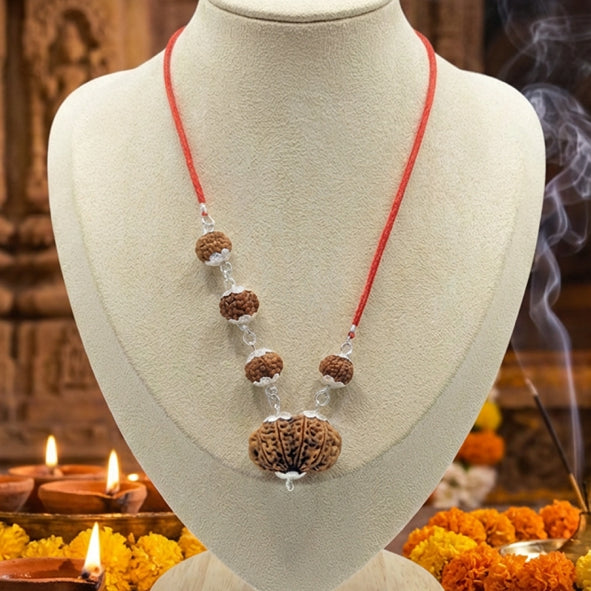
Saraswati Kavach
Saraswati Kavach
★★★★★★★★★★ 4.8 (8)
10% OFF ₹ 4,839.00₹ 4,351.00
Saraswati Bandh
Saraswati Bandh
★★★★★★★★★★ 4.9 (8)
10% OFF ₹ 3,509.00₹ 3,151.00
Vaastu Kavach
Vaastu Kavach
★★★★★★★★★★ 5.0 (9)
11% OFF ₹ 1,399.00₹ 1,251.00
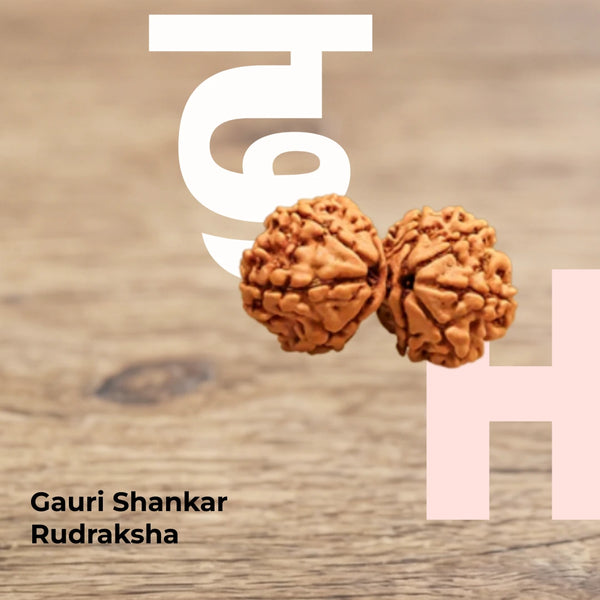
Gauri Shankar Rudraksha
★★★★★★★★★★ 5.0 (10)
60% OFF ₹ 37,479.00₹ 14,999.00
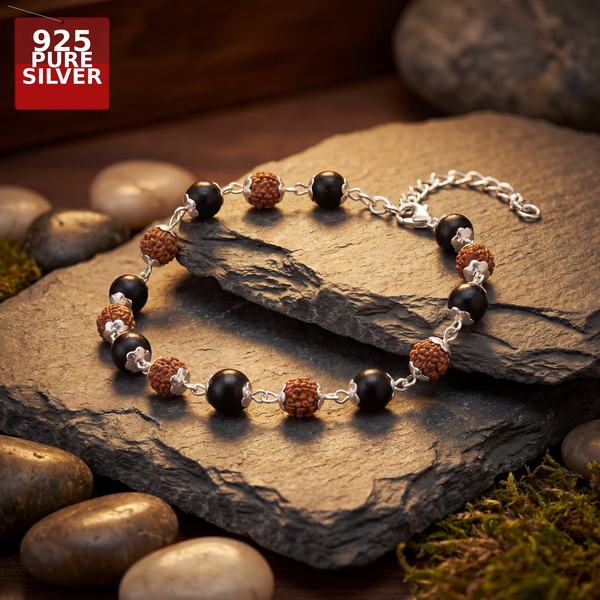
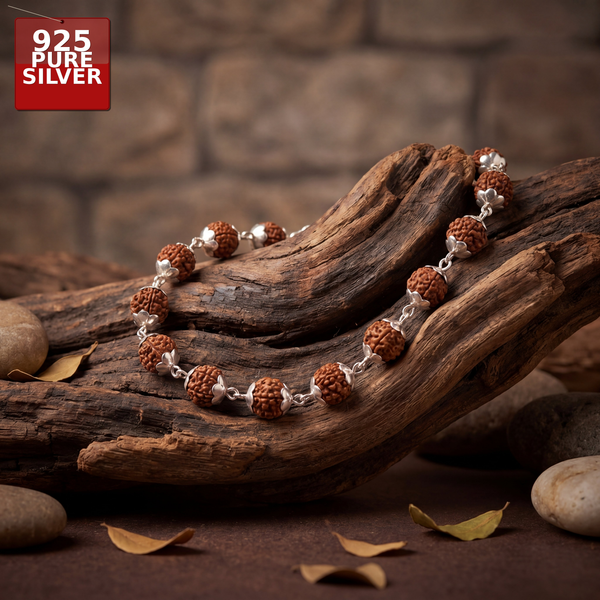
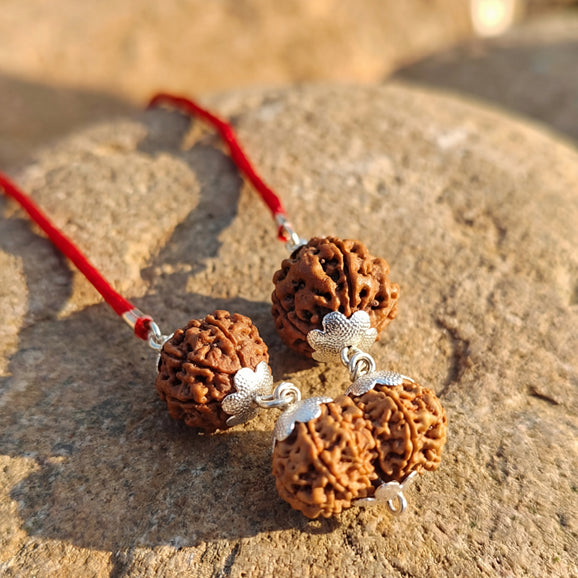
Hallmarked S925 Pure Silver Rudraksha Bracelet
Hallmarked S925 Pure Silver Rudraksha Rakhi Bracelet
44% OFF ₹ 7,999.00₹ 4,499.00
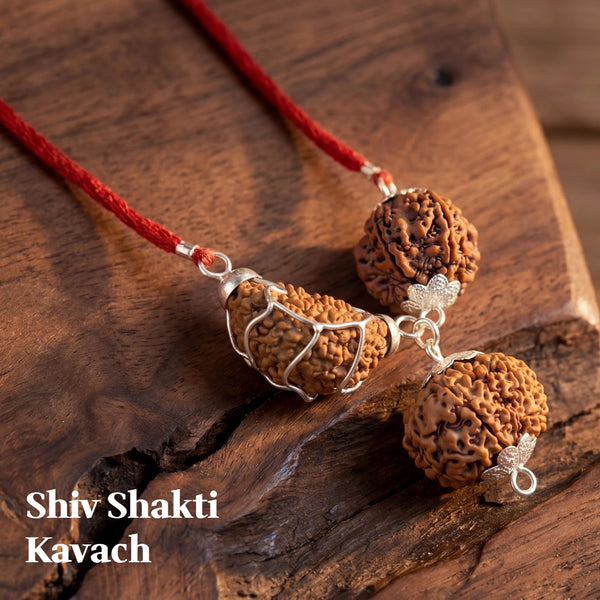
Shiv Shakti Kavach
Shiv Shakti Kavach
★★★★★★★★★★ 5.0 (9)
10% OFF ₹ 23,329.00₹ 20,999.00
Navgraha Kavach 5*9 Mukhi Rudraksha3*11 Mukhi Rudraksha
Hanuman Kavach
10% OFF ₹ 11,999.00₹ 10,799.00
Family Protection Kavach
★★★★★★★★★★ 5.0 (8)
10% OFF ₹ 16,279.00₹ 14,651.00
Durga Kavach
Durga Kavach
★★★★★★★★★★ 4.8 (8)
10% OFF ₹ 17,879.00₹ 16,099.00

Top picks for you

Original Rudraksha — Origin, Grading and Certification

Rudraksha are seeds from the Elaeocarpus ganitrus tree, grown mainly in Nepal, Java and parts of South India. Natural clefts run down each bead, and the number of these mukhi, or faces, determines which bead it is. Rudraksha has been worn in India for centuries by sadhaks and householders alike, and this range covers malas, bracelets, kanthis, pendants and single certified beads.

This page is about provenance — where a bead comes from, how the trade grades it, and what separates one that costs a few hundred rupees from one that costs several thousand. If you want format-by-format buying advice instead, the complete Rudraksha mala and bead guide covers that.

The Tree and the Harvest

The Rudraksha tree is an evergreen that grows tall in humid, well-watered hill country. It fruits once a year, producing a blue-skinned drupe that gives the tree its English name, the blue marble tree. Inside each fruit sits a hard stone, and it is that stone — not the fruit — which becomes the bead.

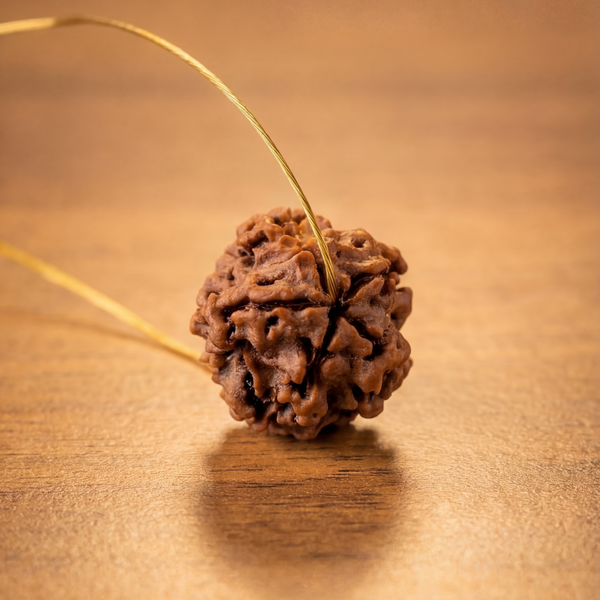
The fruit is gathered after it falls, soaked to soften the pulp, cleaned and then dried. Only after drying do the vertical clefts on the surface stand out clearly enough to count. Those clefts are formed as the seed develops; they are not cut, and each one corresponds to a compartment inside the seed holding a separate kernel. This is the anatomical fact underneath every genuine authenticity test.

A single tree throws overwhelmingly 5 Mukhi seeds. That is why 5 Mukhi beads are inexpensive and available in matched sets, while 1 Mukhi, 14 Mukhi and above are scarce enough to be priced as collectibles. Rarity in Rudraksha is a straightforward function of what the trees actually produce.

Nepali, Java and Indian Rudraksha Compared

Origin is stated on every reputable bead because it governs size, weight, surface and price.

Nepali Java / Indonesian Indian
Typical size Large, often 18 mm and above for higher mukhi Small and compact, frequently under 12 mm Mid-sized, between the two
Surface Deep, sharply defined clefts; heavily ridged Fine, shallow clefts; smoother to the touch Moderately defined
Density Heavy and solid in the hand Lighter for its size Moderate
Price band Highest Most affordable Mid
Best suited to Pendants, capped centrepieces, statement kanthis Slim bracelets, fine 108-bead malas, daily wear General strands

A small bead is not a lesser bead. Java Rudraksha is entirely genuine, is what most well-made bracelets are strung from, and is preferred by many for long japa precisely because it is light. What matters is that the origin is declared honestly and that the price reflects it.

How the Trade Grades a Bead

Beyond mukhi and origin, four things move a bead up or down in value:

  • Size. Measured across the widest point in millimetres. Within the same mukhi and origin, larger beads are consistently dearer, and the jump is steep at the top end.
  • Shape and symmetry. A well-rounded bead with clefts evenly distributed around its circumference grades higher than a lopsided one where three faces crowd together and two stretch wide.
  • Surface condition. Insect holes, chips at the crown, hairline cracks and a worn-flat surface all pull the grade down. Some surface irregularity is natural and expected — a bead with no character at all is more suspicious than one with a little.
  • The drill hole. A clean, centred, narrow bore preserves value. A wide or off-centre hole suggests a bead re-drilled to hide a defect, and it weakens the crown.

Special forms sit outside the ordinary grading scale entirely. Gauri Shankar, where two beads are naturally fused, and Ganesh Mukhi, which carries a natural trunk-like projection, are priced on rarity of form rather than on mukhi count.

Choosing a Mukhi by Intent

Traditional associations vary between texts, regions and lineages, and describe custom rather than guaranteed effect. Grouped by the reason buyers usually give, they fall out roughly like this.

If you are looking for Mukhi traditionally associated Typically chosen by
A first bead for continuous daily wear 5 Mukhi — Kalagni Rudra, a form of Shiva Almost every new wearer
Focus in study or examinations 4 Mukhi — Lord Brahma Students, teachers, those in speech and writing
Harmony within the household 2 Mukhi — Ardhanareeshwar Couples and family elders
A bead associated with trade and enterprise 7 Mukhi — Goddess Mahalakshmi Business owners and householders
Beginning something new 8 Mukhi — Lord Ganesha Those starting a venture or a move
Disciplined personal sadhana 11 Mukhi — Ekadash Rudra Committed practitioners
Deep meditation and renunciate practice 1 Mukhi — Lord Shiva himself Advanced sadhaks; the rarest bead of all

Individual beads across the range are listed in our single certified Rudraksha bead collection, and the full sequence strung together is available as a 1 to 14 Mukhi Siddha Mala.

Verifying Authenticity

Three kinds of fake circulate. The crudest is a different seed altogether — usually Bhadraksha or a similar lookalike — dyed brown and sold cheap. The second is a genuine low-mukhi bead with additional grooves carved into it, most often a 5 Mukhi worked up to look like an 11 or 12. The third is a bead split open, packed with lead or resin to add weight, and glued shut.

What you can check yourself

Hold the bead under strong light and follow each cleft with your eye from the crown down to the base. A natural line is continuous, varies slightly in depth as it crosses the seed's contours, and terminates cleanly at both ends. A carved line is uniform in depth, often stops short of the base, and leaves faint parallel tool marks visible under magnification. Look also at the crown — on a carved bead the extra grooves rarely converge properly where the faces meet.

What only a lab can check

The internal compartments are the definitive marker, because they cannot be faked from the outside. An X-ray reveals how many kernels the seed actually holds and whether the cavity has been packed with anything. Where the internal count matches the external faces, the bead is what it claims to be. This is the test behind the X-ray lab certification we supply.

Tests that do not prove anything

Dropping a bead in a glass of water and watching whether it sinks proves nothing about authenticity. Buoyancy varies with dryness, oil content and storage time; genuine beads float and weighted fakes sink. The copper-coin rotation test is folklore of the same kind. Ignore both and ask for the report.

What a report should contain

Look for the mukhi count, the measured dimensions, the weight, the declared origin, a statement that the bead is natural and untreated, an image, and a reference number that ties the document to your specific bead. Anything less specific is a marketing leaflet.

Wearing and Looking After Rudraksha

Rudraksha is customarily first worn on a Monday, the day associated with Lord Shiva, though Shivratri and Sawan Mondays are also popular. The traditional practice is to rinse the bead, wipe it dry, offer it before Shiva and chant Om Namah Shivaya before wearing; every bead we send is energised in advance, so this is optional. Traditional sources place no restriction on women wearing Rudraksha, and household customs about when to remove it vary from family to family. Some lineages ask wearers to keep a vegetarian diet while wearing the bead and some do not — follow the practice of your own tradition rather than any instruction from a shop.

For care: oil the beads with a little mustard, olive or sandalwood oil every few weeks and wipe off the excess; keep them clear of salt water, chlorine, detergent, sanitiser and perfume; dry them properly if they get wet; and restring a strand before the thread frays rather than after it snaps. Store in cloth, not loose against metal.

Common Questions

Is Nepali Rudraksha better than Java Rudraksha?

Neither is superior. Nepali beads are larger and dearer and suit pendants; Java beads are smaller, lighter and suit bracelets and fine malas. Both are genuine when honestly declared.

Why are some mukhi so much more expensive?

Because the trees produce them rarely. 5 Mukhi seeds dominate every harvest; 1 Mukhi and beads above 14 Mukhi appear in tiny numbers, and price simply follows supply.

Can I mix Rudraksha with other beads?

Yes, and it is common practice — Rudraksha is regularly strung with Karungali, sphatik, tulsi and gemstone beads. If you are following a specific astrological recommendation, take that advice from your own astrologer.

Is a cracked or chipped bead still usable?

Surface marks are cosmetic and normal in a natural seed. A crack running through a cleft or across the drill hole is structural, and such a bead is traditionally set aside rather than worn.

What size bead should I choose?

Match it to the format. Large Nepali beads suit a pendant or a single capped piece; smaller beads are more comfortable in a Rudraksha bracelet or a 108-bead japa mala worn every day.

How do I begin if I know nothing about Rudraksha?

Buy one certified 5 Mukhi bead, wear it, and add to it later. It is the least expensive and the most traditionally forgiving place to start. Our 7 Mukhi Rudraksha range is a common second step for householders.