 Cow Shelter / Donation


For aarti essentials
Brass puja thali set
A 10-inch plate with the listed puja accessories. Check the product contents to complete your family’s preparation list.
₹ 2,999.00
This option is currently unavailable
Pitru Paksha
Prepare for Shraddha with your priest’s ritual list, then choose the reusable thali, diya or japa mala your household needs. The observance and ancestral tithi come first.
27 September–10 October 2026
Explore the selection Read the buying guide ↓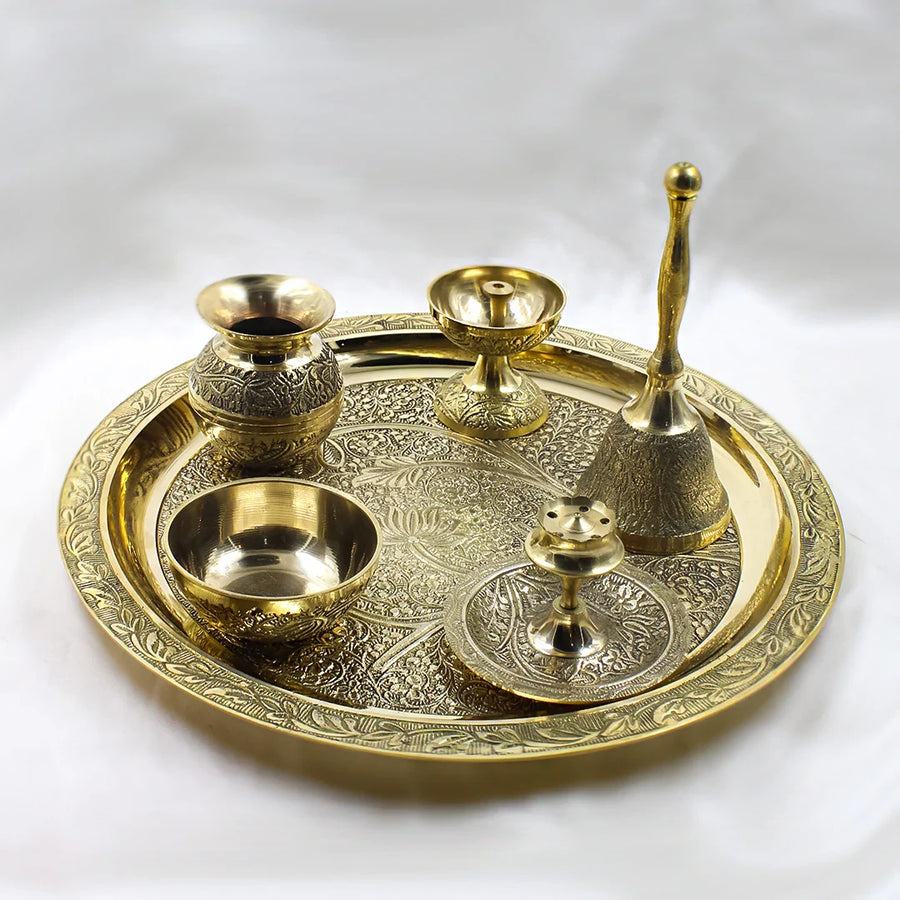
Antique Gold Brass Pooja Engraved Thali (Set of 6)
Begin with your family’s Shraddha requirements. Choose a vessel or mala for its actual use, material and size.
Compare before you choose
For aarti essentials
A 10-inch plate with the listed puja accessories. Check the product contents to complete your family’s preparation list.
₹ 2,999.00
This option is currently unavailable

For daily aarti
A reusable brass lamp for a stable, heat-resistant surface. Review its size, oil and wick requirements before use.
₹ 999.00
View this choice
For personal japa
The 8mm option is selected for comparison. Check bead size and your family’s practice before adding a mala to your preparation.
A practical buying guide
Begin with the ancestral tithi and local panchang. Ask your priest which day and rite apply; the whole fortnight is not interchangeable.
Check whether your ceremony needs specific vessels, darbha, sesame, rice or fresh offerings. Those consumables are not automatically included with a decorative thali.
Compare each vessel’s material, dimensions and intended use. Buy only what your priest’s list and existing home setup require.
For dated rituals, confirm your city, family tradition and priest’s requirements. Delivery dates and booking availability must be checked before purchase. Check the calendar for your city
Read the detailed Shraddha calendar ↗No. These are individual catalogue products. Darbha, sesame, rice, fresh offerings and priest services are separate unless a listing expressly includes them. Confirm your required tithi and list before buying.
No. A utensil purchase is not a rite booking, and general Ayodhya temple pujas should not be treated as Pind Daan or Tarpan. Confirm the specific rite, priest, location and inclusions separately.
Contact the team with your pincode and required date before ordering. Delivery depends on the item and destination; the date of an occasion is not a delivery guarantee.
The product listing is the source for quantity, dimensions and included items. Styling props, fresh offerings, custom packaging and other accessories are not included unless explicitly listed.
A little guidance makes choosing easier.
Talk to Divine Hindu ↗Pitru Paksha is the fortnight in which Hindus remember their ancestors through shraddha and tarpan. This page explains the rituals and helps you compare reusable puja utensils once you know what your rite requires.
In Hindu tradition, Pitru Paksha is the time when families remember three generations of ancestors with gratitude. Water, sesame and food are presented to them through tarpan and shraddha, according to the family's custom.
The fortnight ends with Sarva Pitru Amavasya, observed for ancestors whose tithi is not known. For many families it is a period of quiet remembrance, charity and simple living.
Begin with the ancestral tithi and your local panchang. Ask your priest which day and rite apply, because the whole fortnight is not interchangeable. The Pitru Paksha puja vidhi differs by family and region.
Common elements include tarpan with water and sesame, pind daan where the family follows it, and feeding priests, the needy, crows and cows. Pitru Paksha rituals are usually done under a priest's guidance.
Some families do tarpan at home on the tithi. Pitru Paksha puja at home usually needs a clean space, a seat, water, sesame and the items your priest lists. Do not assume that every rite can be done without a priest.
There is no single Pitru Paksha mantra for every family. The priest teaches the mantras for the rite, and families repeat them in the way taught. For a japa mala, see Jaap Mala.
List the actual supplies first. Check whether your ceremony needs specific vessels, darbha, sesame, rice or fresh offerings. Those consumables are not automatically included with a decorative thali.
Compare each vessel's material, dimensions and intended use. Buy only what your priest's list and your existing home setup require. Ask your priest whether a vessel should be new or reused, and keep a clear list of what the rite needs.
Updated on 20 October 2026

See shipping policy for details

Contact our support team

COD/UPI/CARDS

Products for everyday devotion
Each level is a real Vedic ritual — from sacred mantras to a full temple abhishek.
Energized by the vibration of sacred Vedic mantras.
₹101A group siddhi: touched to the deity, then energized with a Jal Abhishek in your name.
₹501The complete ceremony — for deep devotion & sacred gifting.
₹1,111The name below is chanted during your Sparsh & Abhishek Siddhi.