 Cow Shelter/Donation

How to Clean & Care for Brass Idols and Puja Items: Tamarind, Lemon-Salt and Why Not Polish
September 03, 2026
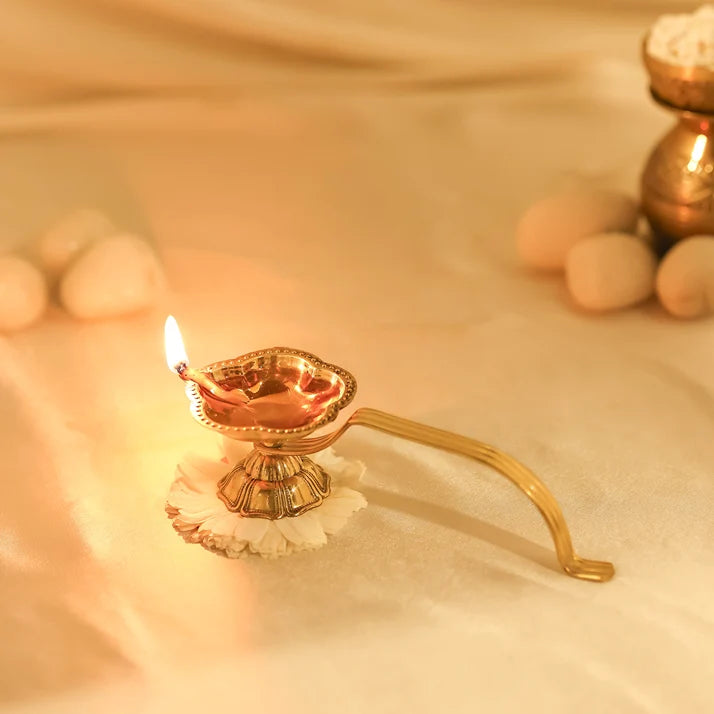
Two household methods do almost all the work on tarnished brass: tamarind pulp, and lemon with salt. Both use a mild acid to loosen the tarnish film and a gentle abrasive to lift it off. Three things matter as much as the cleaning itself: let the piece cool completely before you start, rinse until nothing sticky remains, and dry it thoroughly, because trapped moisture is what produces the green verdigris people find later. Chemical polish is a different tool for a different job, and it is customarily kept away from items used in worship.
What tarnish actually is
Brass is an alloy of copper and zinc. Left in air, the copper at the surface reacts with oxygen and with sulphur compounds and forms a thin dark film. That film is tarnish. It is superficial, it does not weaken the object, and it comes off with very little force once it has been loosened chemically.
Verdigris is the other thing, and it is not the same. The green or blue-green crust that appears in crevices is copper reacting with moisture and acids, and it forms when a piece is put away damp or when an acidic cleaner is left on without rinsing. Verdigris is a maintenance failure rather than normal ageing, and it is entirely preventable by drying.
The methods compared
| Method | Best for | Strength | Watch out for |
|---|---|---|---|
| Tamarind pulp | Detailed murtis, ornate lamps | Gentle, gets into recesses | Stickiness if not rinsed fully |
| Lemon and salt | Thalis, plates, plain surfaces | Fast on heavy tarnish | Salt scratches if the grain is coarse |
| Ash or wood ash | Everyday light cleaning | Very mild, traditional | Slow on heavy tarnish |
| Hot water and mild dish soap | Oil residue in diyas | Removes grease first | Does nothing for tarnish on its own |
| Chemical metal polish | Decorative brass outside the mandir | Fast, high shine | Strips finish, leaves residue, removes patina |
| Steel wool, hard scourers | Nothing | None | Permanent scratching |
The two traditional methods, step by step
Tamarind
Soak a lump of tamarind in warm water until it softens into a pulp. Wipe the piece dry of any oil first. Work the pulp over the surface with your fingers or a soft cloth, pressing it into the recesses where tarnish always sits heaviest. On stubborn areas, leave it on for a few minutes rather than rubbing harder. Rinse under running water until the surface no longer feels tacky at all, then dry immediately and completely with a soft dry cloth. Tamarind is the gentler of the two and is the right choice for a detailed murti.
Lemon and salt
Cut a lemon in half, dip the cut face in fine salt, and rub it over the brass. The citric acid loosens the film while the salt does the abrading. Use fine salt rather than coarse rock salt, which can scratch. This method is quicker and better suited to flat surfaces such as thalis, plates and kalash bodies. Rinse extremely thoroughly, because leftover acid keeps working on the metal and is one of the commonest causes of green spotting a fortnight later. Dry at once.
For either method, an old soft toothbrush is the most useful tool in the house for getting into the folds of a murti without scratching anything.
Why chemical polish is the wrong tool here
Commercial metal polish is designed to strip and re-shine a surface, not to lift tarnish off it. On a puja item that creates three problems. It leaves a chemical residue on an object that is handled during worship and that frequently touches naivedya and prasad. It removes lacquer unevenly, so pieces that were coated at the factory end up patchy. And it flattens the darker tone in the recesses of a detailed murti, which is what gives the face and the ornamentation their definition.
For decorative brass elsewhere in the house, use whatever you like. For the mandir, tamarind and lemon do the job with nothing left behind, which is precisely why they have remained the household standard.
The two mistakes that cause most of the damage
Cleaning brass while it is warm. Let a lamp cool completely before touching it. Warm brass burns, acid acts unevenly on a warm surface and can etch it, and warm oil smears instead of lifting. Extinguish, walk away, come back when the metal is cool to the touch. This one rule prevents most of the surface damage seen on household lamps.
Putting it away damp. Every case of verdigris traces back to moisture. After rinsing, dry the piece completely, including the underside and the inside of any hollow. Air it for a while before it goes back on the shelf. Do not store brass in plastic bags or airtight boxes, which trap humidity; soft cloth or paper is better.
One related point if you perform abhisheka. Milk, curd and honey are mildly acidic and will accelerate tarnish if they sit on the metal, so rinse and dry a brass murti promptly after the bath rather than leaving it to dry on its own.
Patina: what to keep
Not all darkening should be removed. On an older or finely worked murti, the deeper tone that settles into the recesses is what makes the piece readable, and stripping it to a uniform shine tends to flatten the detail. The conventional approach, in temples as much as in homes, is to clean the raised surfaces and leave the recesses alone.
Panchaloha and antique pieces are treated more conservatively still, and many families deliberately never bring them to a full shine. If you are weighing up materials for a new piece, our comparison of brass, panchaloha and marble idols covers how each ages.
Item specific notes
Diyas and lamps. Remove oil residue first with hot water and a little mild dish soap, then treat the tarnish. Skipping the degreasing step is why people conclude that tamarind does not work. Wipe out the oil well after each use while the lamp is cool and the deep cleans become rare.

Thalis and plates. Lemon and salt suits these best. If the thali holds kumkum and haldi containers, take them off first; turmeric stains brass and is much easier to remove immediately than later. Our guide on arranging a puja thali covers what belongs on it.
Kalash and hollow vessels. Dry the inside properly. A kalash put away with water still in the base is the single most reliable way to produce verdigris.
Lacquered and silver plated items. Test on a hidden spot first. Acid strips lacquer unevenly, and lemon and salt should not be used on silver plate at all. Much decorative brass is factory coated, and coated pieces need only a wipe with a damp cloth.
How often
A dry wipe after use handles most days. Lamps get their oil well cleared once cool. A full clean is customarily done before major festivals rather than on a weekly schedule, and the fortnight before Diwali is when most households do the whole mandir at once. Resist over cleaning: repeated acid and abrasion wears a surface far faster than tarnish ever will, and a lamp that has been in daily use for forty years looks the way it does because it was cleaned sensibly, not often.
Frequently Asked Questions
What is the best way to clean a tarnished brass idol at home?
Tamarind pulp and lemon with salt are the two traditional methods, and both work for the same reason: a mild acid loosens the tarnish film while the pulp or the salt provides gentle abrasion. Rub with a soft cloth, rinse very thoroughly in clean water, and dry completely. The rinse and the drying matter every bit as much as the rubbing.
Why should chemical brass polish not be used on puja items?
Commercial metal polish strips the surface finish rather than lifting the tarnish from it, and it leaves a chemical residue on an object that is handled during worship and often touches naivedya. It also removes lacquer unevenly and flattens the darker patina that gives a detailed murti its definition. For decorative brass elsewhere in the house it is a matter of preference; for the mandir it is customarily avoided.
How do I use tamarind to clean brass?
Soak a lump of tamarind in warm water until it softens, then work the pulp over the brass with your fingers or a soft cloth, paying particular attention to the recesses. Leave it a few minutes on heavier tarnish, then rinse under running water until no stickiness remains, and dry immediately with a dry cloth. Tamarind is gentler than lemon and salt, so it suits detailed pieces.
Can I clean a brass lamp while it is still warm?
No. Let the lamp cool completely first. Cleaning warm brass risks a burn, makes the acid act unevenly on the surface, and smears warm oil residue rather than lifting it. Extinguish the lamp, let it stand until it is cool to the touch, and only then clean it.
What is the green deposit that appears on brass?
That is verdigris, which forms when the copper in the alloy reacts with moisture, and it is almost always a sign that the piece was put away damp or that an acidic cleaner was not rinsed off properly. Remove it with lemon and salt or with tamarind, rinse thoroughly, and then dry the piece completely before storing it. Prevention is entirely a matter of drying.
Should I remove the dark patina from an old brass murti?
Usually not entirely. The darkening that settles into the recesses of a detailed piece is what gives the face and the ornamentation their definition, and stripping a murti to a uniform shine tends to flatten it. Most families clean the raised surfaces and leave the recesses alone, which is also the conventional approach in temples.
How often should brass puja items be cleaned?
A dry wipe after use is enough for most days, and lamps benefit from having oil residue wiped out once they are cool. A full clean is customarily done before major festivals rather than every week. Over cleaning wears the surface faster than tarnish ever will.


