 Cow Shelter/Donation

Nirmalya Visarjan: How to Respectfully Retire Old Puja Items, Malas & Broken Idols
September 03, 2026
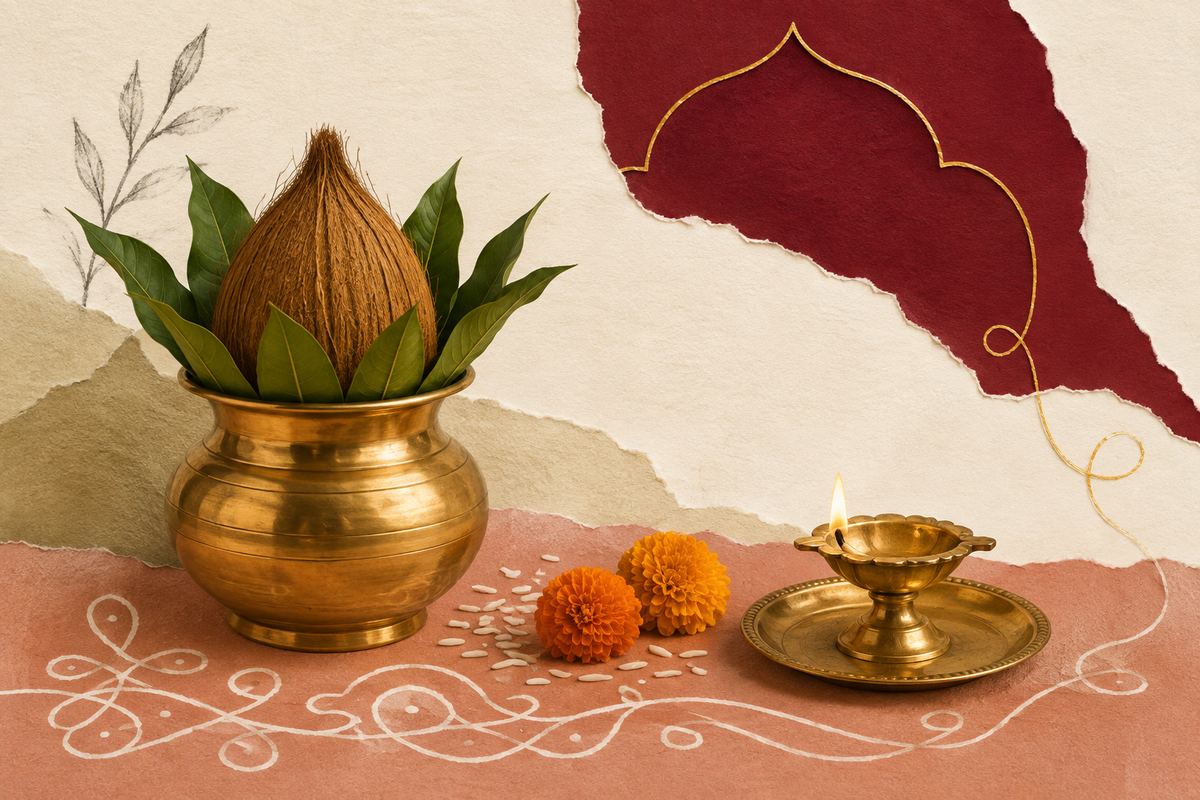
Anything that has been offered in worship is nirmalya, and tradition does not treat it as household waste. Wilted flowers, abhisheka water, used cloth, camphor ash, a mala that has finished its life, a chipped murti: all of it is customarily returned to nature rather than thrown out. The older route was flowing water. Today the widely accepted routes are burial in earth, composting, temple collection and municipal immersion tanks. Here is what applies to each item, and what is customarily never done.
What nirmalya means
Nirmalya is what remains after an offering has been made. The word covers the flowers and leaves taken off the murti, the water from abhisheka, akshata, the cloth that has been used, the ash from dhoop and camphor, and the residue of a lamp. The principle behind the customs is straightforward: these things have already been given, so they are no longer ordinary material to be handled as you would handle rubbish, and the respectful ending is to return them to earth or water rather than to a bin.
One tradition worth knowing if you keep a Shivling. In many Shaiva households, Shiva nirmalya is treated differently from other nirmalya and is customarily not taken as prasad, being offered instead to Chandeshvara. Vaishnava practice differs, and Tulsi offered to Vishnu is treated as prasad. Neither is a rule you have to adopt, but it explains why two devout families will handle the same flowers differently.
Item by item
| Item | Customary practice | Practical route today |
|---|---|---|
| Wilted flowers, garlands, leaves | Immersion or return to earth | Compost, or bury at the base of a tree |
| Abhisheka water and panchamrit residue | Not poured into a drain | Poured at the base of a tulsi plant or a tree |
| Akshata, rice, grains | Returned to living things | Fed to birds, or composted |
| Naivedya and fruit not consumed | Given away rather than discarded | Given to a cow or to birds, never binned |
| Camphor and dhoop ash | Returned to earth or water | Mixed into soil; some keep a little as vibhuti |
| Used mandir cloth, asana | Not reused for household purposes | Washed and given away, or buried if worn out |
| Worn mala, cracked beads | Immersion or burial | Buried under a tree for seed beads |
| Chipped or broken murti | Retired from worship, then immersed | Temple, municipal tank, or burial in earth |
| Old photographs, calendars, posters | Not torn or binned | Frame recycled, paper buried or immersed |
| Spent wicks, oil residue, old diyas | Lamps themselves are cleaned, not discarded | Wicks composted; brass lamps cleaned and reused |
The four routes available today
Flowing water
The oldest and most cited practice, and the one that has become hardest to follow responsibly. Immersion in a river or tank is still done widely, but painted items, plaster of Paris and anything with plastic or metal fittings cause real damage, and central and state pollution authorities have issued guidelines discouraging exactly those materials. If you use this route, it should be unpainted, natural material only.
Earth and tree burial
Now the most practical route for most urban households and entirely traditional in its own right. Flowers, seed beads, clay pieces and paper are placed in a pit at the base of a tree or in a garden bed and covered. Rudraksha and other seed beads are customarily returned this way, which suits them, since a seed going back into soil is a fitting end.
Composting
Flowers, leaves, grains and wick residue compost readily and this is widely accepted as the respectful modern equivalent of immersion. Many temples in Indian cities now run flower composting programmes, and several municipalities collect temple flowers separately. Keep the compost for household plants rather than mixing it into general waste.
Temple and municipal collection
Most temples accept nirmalya, and many keep a designated bin for it. Metal murtis handed to a temple can be recast, which is the cleanest possible outcome for a damaged brass piece. During Ganesh Chaturthi and Durga Puja most municipalities set up artificial immersion tanks, and those tanks accept household items too, not only the festival murtis.
Food offerings deserve a mention of their own. In a great many Indian households the naivedya and leftover fruit go to a cow rather than into any of the above, and gau seva remains the customary route for exactly this. If that is not practical where you live, our cow donation page is one way families contribute to the same tradition at a distance.
What is customarily not done
- Household waste. Nirmalya is customarily never put out with the kitchen bin, and a broken murti least of all.
- Down the drain. Abhisheka water and panchamrit are traditionally poured at the base of a plant rather than into a sink.
- Burning laminated or plastic backed images. Some paper images are burned where local rules permit, but anything laminated or plastic backed should not be, for straightforward safety reasons.
- Burning religious books. Traditionally not done. Books are donated to a temple, a library or a school.
- Tearing photographs. An image is customarily kept whole until it is immersed or buried.
- Leaving it indefinitely. Storing bags of old nirmalya in a cupboard for years is not the respectful option people intend it to be.
When to clear the mandir
Flowers are customarily removed before the next day's puja rather than left to dry on the murti; a fresh offering traditionally goes onto a cleared seat. Cloth is changed on festival days in most households. Ash and residue are cleared daily. The larger clear-out, when malas, cloth, old images and accumulated items are dealt with together, is traditionally done before a major festival, and the fortnight before Diwali is when most Indian families do it. That timing is not accidental: cleaning the shrine before the year's biggest observance is itself part of the observance.
Retiring a mala
A mala that has simply broken its thread does not need retiring at all. Restringing is normal, and the beads carry on; a rudraksha or Karungali mala that has been used for years is customarily valued more, not less. What signals the end is the beads themselves cracking, splitting or losing their form.
When that point arrives, the customary practice is burial under a tree for rudraksha and other seed beads, or immersion. A mala is traditionally treated as personal to the practice of the person who used it, which is why it is not casually passed on, and why families usually retire an elder's mala rather than redistributing it. If you are replacing one, a plain japa mala of the same bead count keeps your counting habit intact.
Metal and brass: usually not disposal at all
Brass rarely needs retiring. A tarnished lamp, thali or bell is cleaned and returned to use, and a hundred year old brass lamp in daily service is completely normal in Indian homes. Only genuine structural damage, a crack, a broken limb on a murti, moves a metal item into the nirmalya category, and then the usual route is a temple rather than immersion. If you are replacing a damaged murti, solid brass idols outlast resin and plaster by a wide margin, and our guide on which idols are traditionally not kept at home covers what makes a piece unsuitable for continued worship.

A note on tradition
These are widely followed customs and they vary by region, community and family, and modern municipal rules vary further still. Nothing here should be read as a claim that a particular method of disposal will bring or avert any outcome. Where your family's practice or local regulation differs from what is written here, follow that.
Frequently Asked Questions
What exactly counts as nirmalya?
Nirmalya is everything that has already been offered in worship: wilted flowers and garlands, tulsi and bilva leaves, the water from abhisheka, akshata, used cloth, ash and camphor residue, and what remains of a lamp. Because these have been offered, tradition treats them as no longer ordinary household material, and they are customarily returned to nature rather than thrown away.
How should dried flowers and garlands be disposed of?
The older practice is immersion in flowing water. Where that is not practical or is not permitted, the widely accepted alternatives are composting them, burying them at the base of a tree, or placing them in a temple's designated nirmalya bin. Flowers are customarily cleared before the next day's puja rather than left to dry on the murti.
What should be done with a worn or broken mala?
A mala whose thread has given way is usually restrung rather than retired, and the beads continue in use. If the beads themselves have cracked and the mala is genuinely finished, the customary practice is immersion in flowing water, or burial under a tree in the case of rudraksha and other seed beads. A mala is traditionally not passed on casually, because it is treated as personal to the practice of the person who used it.
Can a broken idol be thrown away?
Customarily not with household waste. Clay and plaster murtis are traditionally immersed, and are now more often buried in earth or placed in a municipal immersion tank where one is provided. Metal murtis are frequently handed to a temple, which can have them recast. Many temples accept damaged items directly, which is usually the simplest route in a city.
Is river immersion still acceptable?
It is the older practice, but it has become genuinely problematic, and many Indian cities now restrict or prohibit the immersion of painted and plaster items in natural water bodies. Artificial immersion tanks are provided during Ganesh Chaturthi and Durga Puja in most municipalities. Where no tank exists, burial in earth or composting is widely accepted as the respectful modern equivalent.
What about old religious photographs, calendars and books?
Frames and glass are separated first and treated as ordinary recycling. Paper images are customarily immersed, buried, or respectfully burned where local rules permit, and laminated or plastic backed ones should not be burned at all. Religious books are traditionally not burned; they are usually donated to a temple, a library or a school instead.


