 Cow Shelter/Donation

Rudraksha Price Guide: What Actually Drives the Cost of a Bead
September 03, 2026
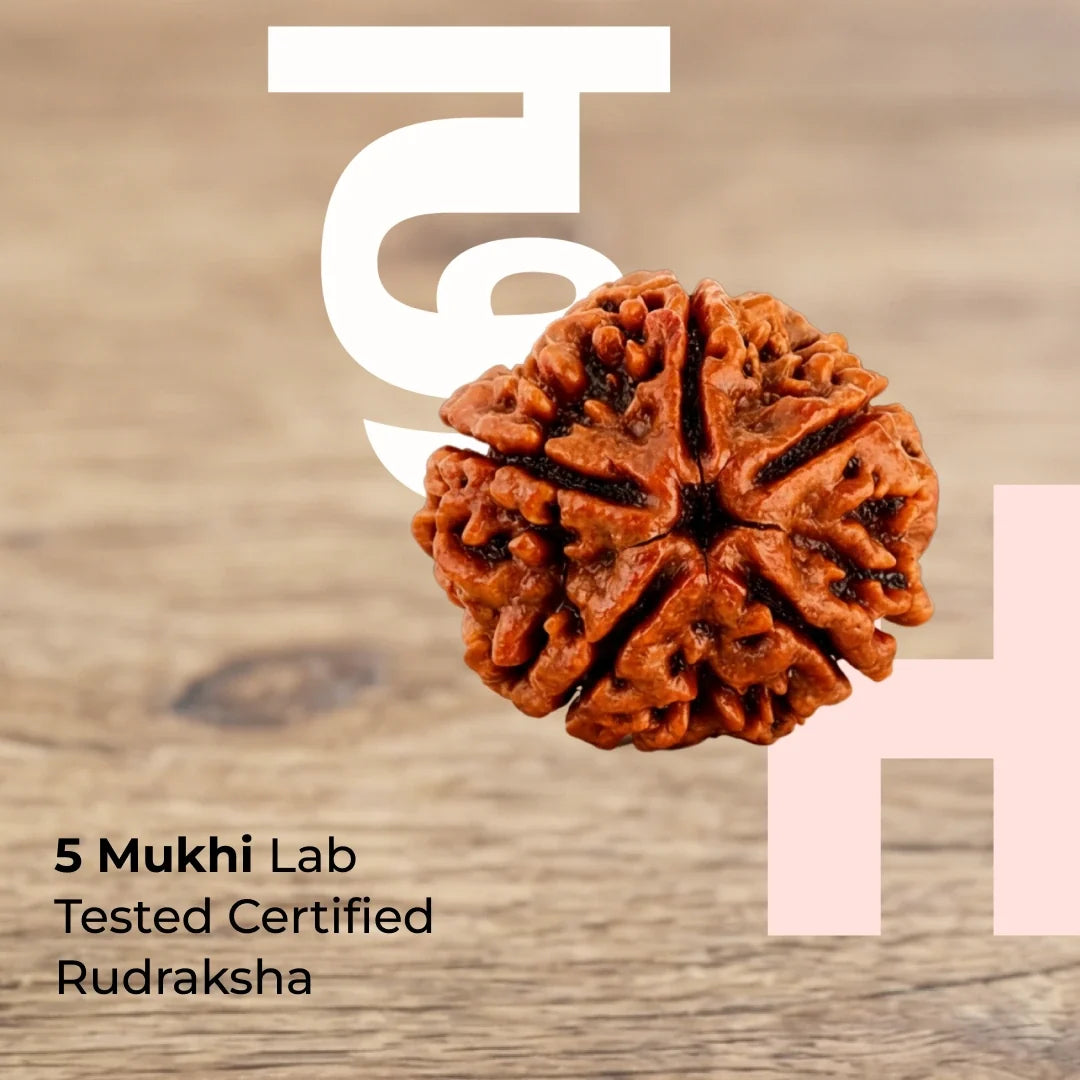
Two Rudraksha beads that look broadly similar can differ in price by a factor of hundreds. Six things account for almost all of it: mukhi count, origin, size, surface condition, testing and certification, and what the bead is set in. Of these, mukhi rarity dominates — a 5 mukhi bead is common and priced accordingly, while a genuine 1, 14 or 21 mukhi is rare enough that scarcity sets the price on its own. This guide explains each driver so you can read a listing properly. We have deliberately not printed rupee figures, because prices move and because a number quoted out of context is worse than no number at all.
The six drivers, ranked by how much they move the price
| Driver | Effect on price | Why |
|---|---|---|
| Mukhi count | Very large | Availability in nature varies by orders of magnitude between mukhi types |
| Origin | Large | Nepali beads are typically bigger with deeper lines and command a premium over Indonesian |
| Size | Moderate to large | Within a mukhi type, large well-formed beads are scarcer than small ones |
| Surface condition | Moderate | Cracks, insect damage and broken mukhi lines all downgrade a bead |
| Testing and certification | Moderate | X-ray testing and lab certification cost money and are priced in |
| Setting and stringing | Moderate | Silver capping, gold, and matched mala assembly are labour and materials |
1. Mukhi count — the dominant factor
The mukhi are the natural clefts running from one end of the bead to the other. Each corresponds to an internal compartment, and the count is what defines the bead in tradition.

Nature does not produce them in equal numbers. Five mukhi is overwhelmingly the most common — it is the bulk of every harvest, which is why it is the default bead in most malas and why it is the cheapest per bead. Move away from five in either direction and availability falls. Two, three, four, six and seven mukhi are less common but still readily obtainable. Beyond about eleven, availability drops sharply. One, fourteen and twenty-one mukhi are rare, and so are the special forms — Gauri Shankar, Ganesh, Trijuti — which are natural fusions or growths rather than higher counts.
One specific point saves a great deal of money and disappointment. The round Nepali 1 mukhi is among the rarest beads there is. What is very widely sold cheaply as 1 mukhi is the Indonesian half-moon or cashew-shaped variety — a different, far more available bead from a different growing region. Both are legitimately sold, but they are not the same thing and should not carry the same price. If a round 1 mukhi is being offered at a price close to a 5 mukhi, the description is doing work the bead cannot support. See our 1 Mukhi Rudraksha and 5 Mukhi Rudraksha pages for the difference in practice, and 7 Mukhi Rudraksha for a mid-availability example.
2. Origin
Rudraksha comes principally from Nepal, Indonesia — mostly Java — and India, and the growing region produces visibly different beads.
Nepali beads are typically larger and heavier, with deeper, more pronounced and more clearly separated mukhi lines. Their surface texture is more strongly contoured. They command the highest prices of the three.
Indonesian beads are typically much smaller and smoother, with finer lines. Because they are small and uniform they are the standard material for bracelets and for fine-bead malas, and they are the most affordable.
Indian beads generally sit between the two in size.
None of these is a lesser bead in tradition. A small Indonesian 5 mukhi is a genuine Rudraksha. Origin is a price driver because of size and appearance, not because one region produces a spiritually superior seed. Be wary of any listing that claims a specific mine or estate origin — that level of provenance is rarely verifiable and is not something we would assert.
3. Size
Within any given mukhi count, larger beads are scarcer and dearer. The relationship is not linear: a bead a few millimetres larger than the common size can cost noticeably more, because large well-formed specimens are a small fraction of any harvest.
Size also drives the price of finished pieces in a way that is easy to miss. A 108-bead mala in large Nepali beads needs 108 large beads, all of which had to be found. The same mala in small Indonesian beads needs 108 of the most abundant thing in the supply chain. That difference alone can account for most of the price gap between two malas of the same mukhi.
4. Surface condition and the drill hole
This is where two beads of the same mukhi, size and origin diverge. Graders look at:
- Unbroken mukhi lines. Each line should run continuously from one end to the other. Lines that break, merge or fade partway down mark a lower grade.
- Cracks. Any crack is a serious downgrade, particularly one running across the lines rather than along them.
- Insect damage. Small round holes in the surface. Common in poorly stored beads and a permanent defect.
- Shape. A well-rounded, symmetrical bead is preferred over a lopsided one.
- The drill hole. A hole drilled cleanly through the natural axis is fine. A hole drilled off-centre, or through a mukhi line, damages the bead and its value.
- Surface treatment. Beads are sometimes polished, oiled or dyed to even out colour. This makes a batch look more uniform and can disguise defects. It is not fraud if disclosed, but it is worth knowing about.
5. Testing and certification
The mukhi count is a claim about the bead, and the honest way to support it is to look inside. The standard method is X-ray, which shows the internal compartments; the number of chambers should correspond to the external line count. Beads sold as lab certified and X-ray tested have been through this, and the process costs money that is reflected in the price.
Two things are worth being precise about here. First, certification confirms the count and internal structure. It is not a guarantee of any outcome, spiritual or otherwise. Second, the government laboratory certification that Divine Hindu carries applies to our Karungali — the ebony wood — and not to Rudraksha or to gemstones. Rudraksha and Karungali are tested in different ways for different things, and conflating the two is a common piece of marketing sleight of hand that we will not repeat. Our Rudraksha is lab certified and X-ray tested; that is the accurate description and we will not stretch it further.
Be equally sceptical of certificates in the other direction. A printed certificate is only as good as the body that issued it, and there are a great many impressive-looking documents in circulation. Treat certification as one input among several rather than as the end of the enquiry, and read our separate guide on where to buy authentic Rudraksha beads for the sourcing side.
6. What the bead is set in
A loose bead and the same bead in a silver pendant are different products. Capping in silver adds the metal, the labour of fitting it, and — genuinely — protection at the drill hole, which is where beads chip and split. Gold multiplies all of that.
Bracelets and malas add another cost that buyers routinely underestimate: matching. Assembling 108 beads of consistent size, colour and mukhi means sorting through a great many more than 108. That sorting is skilled labour, and it is the main reason a finished mala costs more than 108 individual beads priced separately. A mala with visibly mismatched beads is cheaper because that work was skipped. Compare single beads against finished bracelets and you can see the labour component directly.
Why a very cheap bead should stop you
Price is information. When a rare mukhi is offered at a commodity price, something has to give, and it is almost always one of these:
- It is a different seed. Bhadraksha and other cheaper seeds are sold as Rudraksha. So is carved betel nut.
- The lines are carved. A common 5 mukhi can be machined with extra grooves to imitate a rarer count. Carved lines tend to be too regular, run at a uniform depth, and cut across the natural surface contour rather than following it.
- It is two halves joined. Special forms such as Gauri Shankar are faked by gluing beads together. Look for a seam, and look for any place where the surface texture does not continue across the join.
- It is damaged or the lowest grade. Cracked, insect-bored or badly drilled beads are legitimately cheap — and should be described as such.
- The mukhi claim is simply wrong. The round-versus-cashew 1 mukhi confusion is the most common example, but it is not the only one.
None of this means expensive is automatically genuine. It means a price far below the market for that mukhi is a question you should ask the seller before you buy, not after.
How to budget sensibly
Start with what you actually want to do. If you want a bead to wear daily, a well-formed 5 mukhi in good condition is the traditional and entirely respectable choice, and your money is better spent on grade and on a protective setting than on chasing a rarer count.
If a specific mukhi has been recommended to you, buy that mukhi in the best condition you can afford rather than a larger, poorer example. Size is a preference; condition is quality.
For a japa mala, budget for matching. A consistent strand is worth the premium, because mismatched beads are visible for the life of the mala.
Ask three questions before paying: what is the origin, has it been X-ray tested, and has the surface been treated in any way. A seller who answers all three plainly is worth buying from. Browse the range at Rudraksha Malas & Beads.
Everything described here concerns the material qualities of the bead. The traditional associations attached to different mukhi counts are matters of belief and custom, and Rudraksha should not be treated as a remedy for any medical condition or as a route to any material outcome.
Frequently asked questions
Why is 5 mukhi Rudraksha so much cheaper than other mukhi?
Because nature produces far more of it. Five mukhi makes up the bulk of every harvest, so supply is abundant and the price reflects that. Rarer counts such as one, fourteen and twenty-one, and the special forms like Gauri Shankar and Ganesh, occur in tiny numbers by comparison, and scarcity sets their price.
Are Nepali Rudraksha beads better than Indonesian ones?
They are different, not better. Nepali beads are typically larger and heavier with deeper, more pronounced mukhi lines, which is why they cost more. Indonesian beads are smaller, smoother and more uniform, which makes them ideal for bracelets and fine malas. Both are genuine Rudraksha, and tradition does not rank one region above the other.
Does a certificate guarantee a Rudraksha is genuine?
It supports the claim rather than settling it. X-ray testing shows the internal compartments, which should match the external mukhi count, and a lab certificate records that. But a certificate is only as good as the body that issued it, and a great many impressive-looking documents circulate. Treat it as one input alongside the seller, the price and the physical bead.
Why does a Rudraksha mala cost more than 108 individual beads?
Because of matching. Assembling 108 beads of consistent size, colour and mukhi count means sorting through many times that number, and that sorting is skilled labour. Add stringing, and any silver capping, and the finished piece carries real work that loose beads do not. A mala with visibly mismatched beads is cheaper precisely because that step was skipped.
Should I avoid very cheap Rudraksha?
You should ask why it is cheap before buying. A price far below the market for that mukhi usually means one of a few things: it is a different seed such as bhadraksha or carved betel nut, the lines have been machine-carved onto a common bead, two halves have been glued to fake a special form, the bead is cracked or insect-damaged, or the mukhi claim is simply inaccurate. Cheap 5 mukhi is normal; cheap 1 mukhi is a question.
Is Divine Hindu Rudraksha government certified?
No, and we would not claim it. Our government laboratory certification applies to our Karungali, the ebony wood. Our Rudraksha is lab certified and X-ray tested, which is a different thing tested in a different way. Anyone extending a government certification across every category in a catalogue is overstating it.
Does a bigger Rudraksha bead work better?
Size is a matter of availability, appearance and price rather than of tradition ranking one bead above another. Within a given mukhi count, larger well-formed beads are scarcer and therefore dearer. If you are choosing between a large bead of poor grade and a smaller one in good condition, condition is generally the better use of the money.


