 Cow Shelter/Donation

How to Wear & Care for a Karungali Mala
June 05, 2026
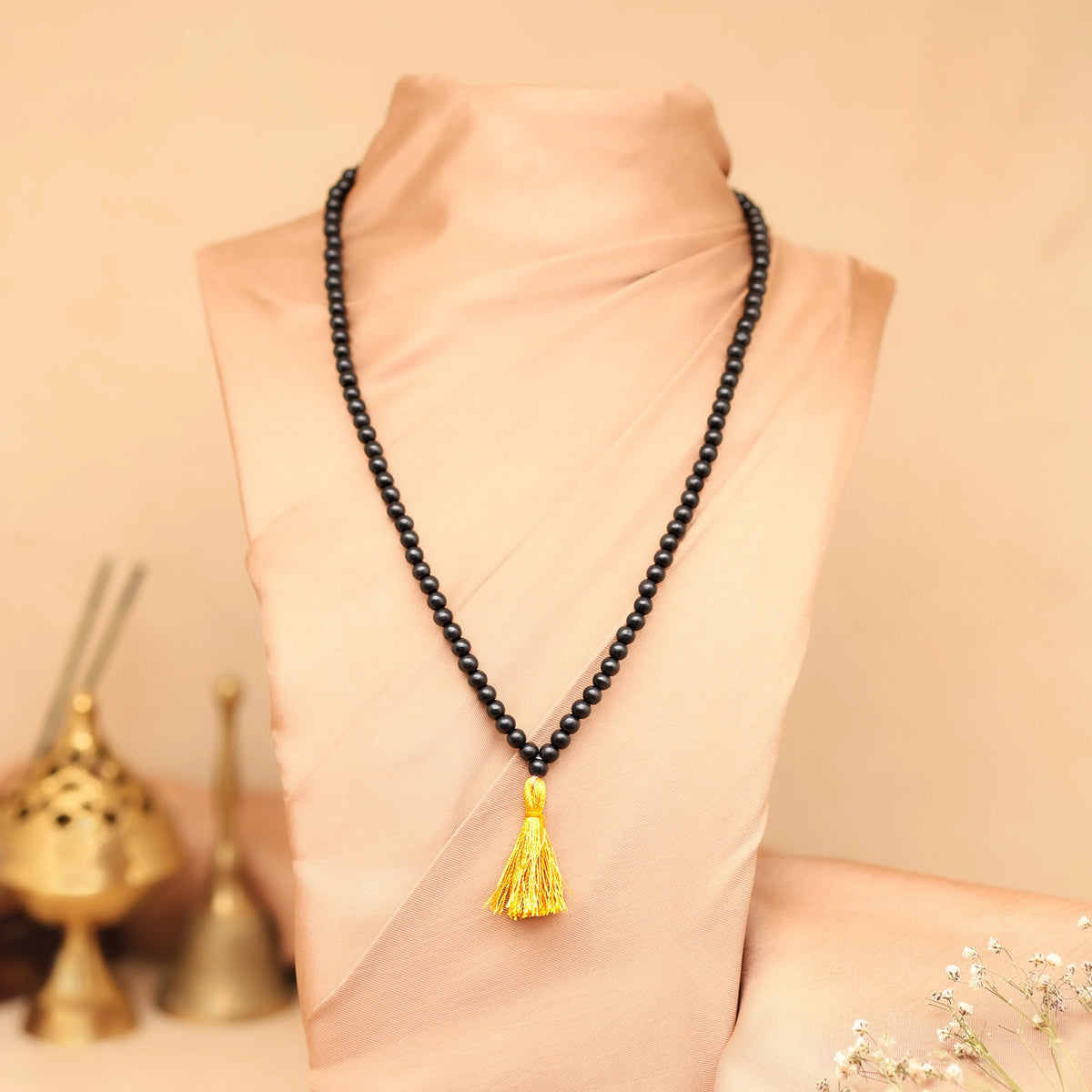
This guide is about the mala itself — how to hold it for japa, how to use a 108-bead strand properly, and how to keep genuine ebony in good condition for decades. Two companion guides answer the questions this one deliberately leaves alone: which hand and which day to start on, and how a karungali bracelet differs in fit and daily wear.
The Divine Hindu App is here.
Chat free with top astrologers for your first 5 minutes every week, generate your Kundli, book temple Puja & Chadhava, and check today's Panchang — all in one app.
(New to Karungali? Start with the complete guide.)
Using a 108-bead Karungali mala for japa
A japa mala is a counting instrument before it is an ornament, and the technique is worth getting right once.

- Drape, do not grip. Let the mala hang over the middle finger of the right hand. The hand stays relaxed and roughly at the level of the heart.
- Move with the thumb. Draw each bead towards you with the thumb, one bead per repetition of the mantra — Om Namah Shivaya, or a Murugan mantra in the Tamil tradition.
- Avoid the index finger. Tradition treats the index finger as the finger of the ego and keeps it away from the beads.
- Do not cross the Guru bead. When you reach the meru (the larger head bead), you have completed 108. To continue, turn the mala around and go back the way you came rather than stepping over it.
- Keep the mala off the floor. Held up, or resting on a clean cloth — not on the ground and not dangling against the feet.
Japa mala or kanthi — use them differently
Many devotees keep two strands and it is worth understanding why. A japa mala stays at the puja sthal and is used only for counting, which keeps it ritually clean. A kanthi is worn continuously against the skin and goes everywhere with you. Using one strand for both is entirely acceptable; keeping them separate is simply the more careful practice.
Your first sitting with a new mala
- Rinse your hands and keep a clean, calm space.
- Hold the mala, take a few deep breaths, and set a positive intention.
- Optionally chant a short mantra (e.g., Om Namah Shivaya) 3, 9, or 11 times.
- Wear it with respect and gratitude.
(At Divine Hindu you can also add an optional Siddhi / energising to your order so it arrives prayer-ready.)
Karungali can be worn by men and women of all ages, and tradition places no strict restrictions on it. For the auspicious day to begin and the purification vidhi, see the which hand and which day guide.
How to clean and care for Karungali (ebony wood)
Genuine ebony is dense and durable, but it is still a natural wood, and a mala that is worn every day is in contact with sweat, soap and sunlight constantly. Gentle care is what separates a mala that lasts five years from one that lasts thirty.
- Keep it dry. Avoid soaking; wipe off sweat or moisture with a soft, dry cloth. Remove it before long baths or swimming.
- No harsh chemicals. Perfume, sanitiser, deodorant and detergent all strip the natural oils out of ebony. Apply scent before putting the mala on, not after.
- Oil it occasionally. Every few weeks, work a tiny amount of coconut or sandalwood oil in with a soft cloth. A drop is enough for a whole 108-bead strand — excess oil attracts dust and darkens the thread.
- Store it properly. Keep it in a clean pouch or box when not worn — ideally a Jaap Mala bag — away from direct heat and sunlight. A car dashboard is the single most common way a mala gets damaged.
- Handle with care. Ebony is dense but the thread and metal caps wear before the wood does.
Restringing: when and why
The thread is always the first thing to fail on a 108-bead mala, usually at the meru where the strain concentrates. Check it every few months by holding the mala up and looking for gaps opening between beads, fraying near the knot, or beads that have started to rotate loosely. Restring before it breaks rather than after — a strand that snaps in a crowded place tends to lose beads permanently. Traditional practice is to keep every bead and have the same beads restrung, rather than replacing the mala.
Signs your mala needs attention
- The thread feels loose or frayed → restring before it breaks.
- The wood looks very dry or dull, or feels chalky → a light oiling restores it.
- Silver or gold caps tarnish → polish gently with a soft cloth, keeping polish off the wood.
- Beads sound hollow or feel unusually light → worth verifying the wood is genuine ebony.
Get a mala worth caring for
Care only pays off on genuine ebony. Every Karungali at Divine Hindu is government lab-certified original wood with a downloadable certificate — built to last and energised for daily wear. (Not sure if a mala is real? See Original vs Fake Karungali.)
→ Shop certified Karungali malas.
Frequently Asked Questions
How do you hold a Karungali japa mala correctly?
Drape the mala over the middle finger of the right hand and draw each bead towards you with the thumb, one bead per mantra. Tradition keeps the index finger away from the beads, and asks that the mala is not allowed to touch the floor while you chant.
What happens when I reach the Guru bead?
Reaching the meru or Guru bead means one full round of 108 is complete. Tradition asks that you do not cross it: turn the mala around and count back the way you came for the next round.
Should I keep a separate mala for japa and for wearing?
Many devotees do, keeping the japa mala at the puja sthal so it stays ritually clean and wearing a separate kanthi or bracelet outside. Using one strand for both is also accepted; two is simply the more careful practice.
How often should a Karungali mala be oiled?
Every few weeks is enough. Work a very small amount of coconut or sandalwood oil in with a soft cloth — a single drop covers a whole 108-bead strand, and excess oil attracts dust and darkens the thread.
When should a Karungali mala be restrung?
Restring at the first sign of wear rather than after a break. Check every few months for gaps opening between beads, fraying near the meru, or beads rotating loosely. Traditional practice is to have the same beads restrung rather than replacing the mala.


