 Cow Shelter/Donation

Karthigai Deepam: The Tamil Festival of Lights, Arunachala and How It Is Observed at Home
September 03, 2026
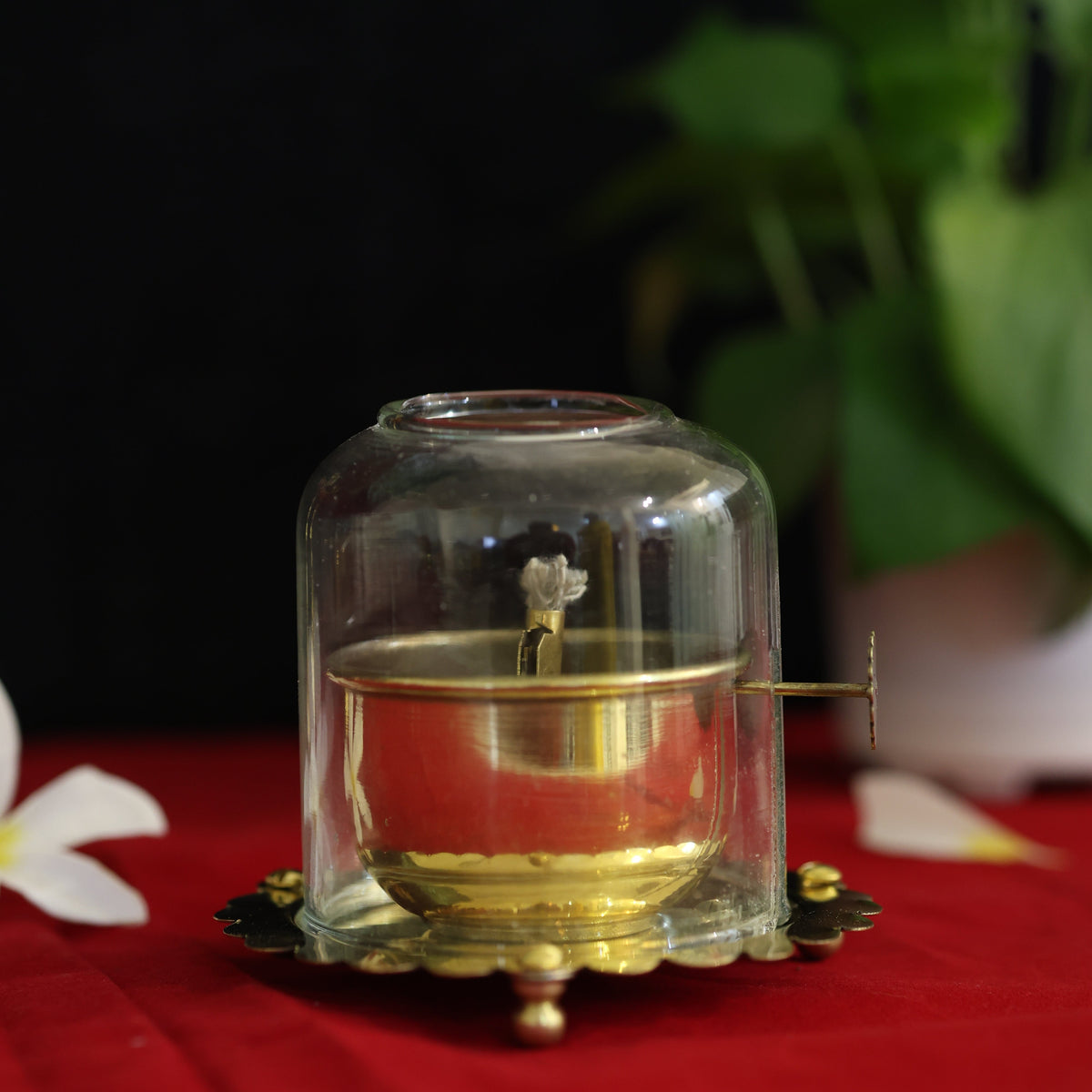
Karthigai Deepam is the Tamil festival of lights. It is observed on the full moon day of the Tamil month of Karthigai, when the moon stands in the Krittika star — which places it between mid-November and mid-December in the Gregorian calendar. Homes are lined with rows of clay lamps at dusk. At Thiruvannamalai the observance culminates in the Mahadeepam, a great beacon lit on the summit of Arunachala hill and visible across the plain. The festival is traditionally connected both with Shiva as a column of light and, through the Krittika stars, with Murugan. Confirm the date against a current panchang for your own city.
How the date is fixed
Two things have to line up. The first is the tithi — the day must be Pournami, the full moon. The second is the nakshatra — the moon must be in Krittika, the star cluster known in English as the Pleiades and in Tamil as Karthigai, which is what gives the month its name.
Because the lunar day and the star do not always coincide neatly, and because panchang calculations vary slightly with location and with the tradition a particular almanac follows, the observed day can differ by one day between sources and between towns. This is normal and it is not a mistake in anyone's calculation. We deliberately do not print a calendar date here. Ask your family priest, check your local temple's notice, or use a panchang calculated for your own city.
What the festival commemorates
There are two traditional strands, and Tamil households hold both without any sense of contradiction.
The first is Shaiva. In the well-known account, Brahma and Vishnu dispute which of them is greater, and Shiva appears between them as an infinite column of light whose top and bottom neither can find. Arunachala, the hill at Thiruvannamalai, is traditionally identified with that column of light, cooled and made approachable. The beacon lit on its summit is understood as a reminder of it.
The second strand is connected to Murugan. In the traditional account he is born of six sparks from Shiva, nursed by the six Krittika stars, and afterwards known as Karthikeya. The month of Karthigai carries their name, and many Tamil families treat the whole month as a period of Murugan observance, lighting lamps on the Krittika star day each month as well as at the great Deepam.
Thiruvannamalai and the Mahadeepam
The Arunachaleswarar temple at Thiruvannamalai is where the festival is at its largest. The observance there is a Brahmotsavam running over roughly ten days, with the deities taken in procession each day, building towards the final night.
On the day of the Deepam itself, tradition holds that a set of lamps is first lit within the temple in the early hours — the Bharani Deepam — and that the flame from these is carried up to the summit. At dusk, the Mahadeepam is lit in a great cauldron on the top of the hill, using a very large wick and a substantial quantity of ghee contributed by devotees. It burns for days.
Around it runs girivalam, the barefoot circumambulation of the hill, a path of roughly fourteen kilometres walked by enormous numbers of pilgrims. Girivalam is observed on full moon nights through the year, but the Karthigai crowd is by far the largest. If you are considering going, plan for very heavy crowds, walk with your group, and carry water.
Regional forms of the same season
| Region | Name commonly used | Character of the observance |
|---|---|---|
| Tamil Nadu | Karthigai Deepam | Rows of lamps at home; Mahadeepam at Thiruvannamalai; Shiva and Murugan both honoured |
| Kerala | Thrikkarthika | Observed in the Malayalam month of Vrischikam on the Karthika star; strongly associated with Devi worship |
| Andhra Pradesh and Telangana | Karthika Masam and Karthika Pournami | A full month of lamp offerings and Shiva worship, with Mondays particularly observed |
| Tamil diaspora | Karthigai Deepam | Temple observance and home lamps, often shifted to the nearest weekend for practical reasons |
These are related but distinct observances with their own liturgies. They are not simply local names for one identical festival, and it is worth respecting the differences rather than collapsing them.
The same is true of the North Indian lamp festival on the lunar Kartik Purnima. Dev Diwali, kept at the Varanasi ghats on the full moon that closes the month of Kartik, usually falls a week or more before Karthigai Deepam, because one is fixed by the lunar Purnima and the other by the Krittika star in the solar month; in 2026 the two happen to coincide on Tuesday, 24 November, which is also the Sikh Guru Nanak Jayanti. They share a night and a love of lamps, not a liturgy.
Observing Karthigai Deepam at home
The household form is simple, which is part of its appeal. What follows is the pattern common in Tamil households; families differ, and your own custom takes precedence.
- Clean the house and the entrance in the days before. The threshold is washed and a kolam drawn in front of the door.
- Prepare the lamps. Traditional agal vilakku are unglazed clay. Soak new clay lamps in water for an hour and dry them fully, otherwise the clay drinks the oil. Cut wicks from cotton and twist them firmly.
- Light the household lamp first. In most families the kuthu vilakku or the main lamp of the puja room is lit at dusk, and every other lamp in the house is lit from it rather than from a fresh match.
- Place the lamps. Along the threshold, on the compound wall, on window ledges, in the courtyard, at the tulsi if there is one. The intent is that the outside of the house is lit, not only the shrine.
- Offer and recite. Families follow their own practice — Shiva or Murugan verses, Thiruppugazh, the Deepa aradhanai. Our guide to aarti covers the general form.
- Prepare the traditional foods. Pori urundai, puffed rice bound with jaggery, and nei appam are the ones most associated with the day.
On lamp count: many families simply light as many as they have, and others prefer an odd number. Both are current practice and neither is wrong. If you want the fuller background on lamps themselves, see our guide to diyas and lamps, and for the general household sequence, how to do puja at home.
Lamp safety, which matters more on this night than any other
This is the one night of the year when a house has thirty open flames in it, several of them outdoors and unattended.
- Put every lamp on a stable, level, non-combustible surface. Clay lamps tip easily on uneven stone.
- Keep flames well clear of curtains, hanging cloth, dry kolam powder, paper decorations and plastic.
- Tie back long clothing and dupattas before lighting, and keep children supervised at all times.
- Do not leave lamps burning in an empty room. Extinguish them before sleeping unless the lamp is in a shrine that is designed for it and is genuinely safe.
- Have water within reach. Do not move a lit lamp that is full of hot oil.
Lamps, wicks and thalis for the evening are in our Diyas and Lamps and Pooja Thali collections, and Murugan pieces in the Lord Murugan collection.
Frequently asked questions
When is Karthigai Deepam observed?
On the full moon day of the Tamil month of Karthigai, when the moon stands in the Krittika star. In the Gregorian calendar that falls between mid-November and mid-December, and the exact day shifts each year. Because the tithi and the nakshatra must coincide, confirm the date against a current panchang for your own city rather than relying on a general listing.
What is the Mahadeepam at Thiruvannamalai?
It is the great beacon lit at dusk on the summit of Arunachala hill, in a large cauldron using a very big wick and ghee offered by devotees. Tradition holds that the flame is carried up from lamps lit inside the Arunachaleswarar temple earlier the same day. It burns for several days and is visible far across the surrounding plain.
How many lamps should be lit at home?
There is no fixed number. Many families light as many as they own and place them all around the house rather than only in the shrine. Others prefer an odd number. Both are current practice. What matters more is that the lamps are placed safely and that the outside of the home is lit as well as the inside.
Should the lamps use ghee or oil?
Both are traditional. Ghee is generally preferred for the main lamp of the shrine, and sesame or gingelly oil is the usual choice for the many clay lamps placed around the house, because it burns longer and costs far less. Many households use ghee for one lamp and oil for the rest.
Is Karthigai Deepam a Shiva festival or a Murugan festival?
Traditionally it is both, and Tamil households do not treat this as a contradiction. The Thiruvannamalai observance is Shaiva and centres on Arunachala as a column of light. The month itself carries the name of the Krittika stars who are said to have nursed Murugan, and many families observe the month as a Murugan period.
Is Karthigai Deepam the same as Deepavali?
No. They are separate festivals falling in different months, with different observances and different associations. Deepavali is a pan-Indian festival; Karthigai Deepam is specifically Tamil and is centred on rows of oil lamps rather than on new clothes, sweets and crackers. Karthigai Deepam follows Deepavali in the calendar.
What is girivalam?
Girivalam is the circumambulation of Arunachala hill on foot, a route of roughly fourteen kilometres, traditionally walked barefoot. It is observed on full moon nights through the year, and the Karthigai Deepam night draws by far the largest numbers. Anyone planning to walk should expect very heavy crowds and prepare accordingly.


