 Cow Shelter/Donation

Why Karungali Is Sacred to Murugan, Ayyanar and Shiva: The Tamil Tradition Behind the Black Wood
September 03, 2026
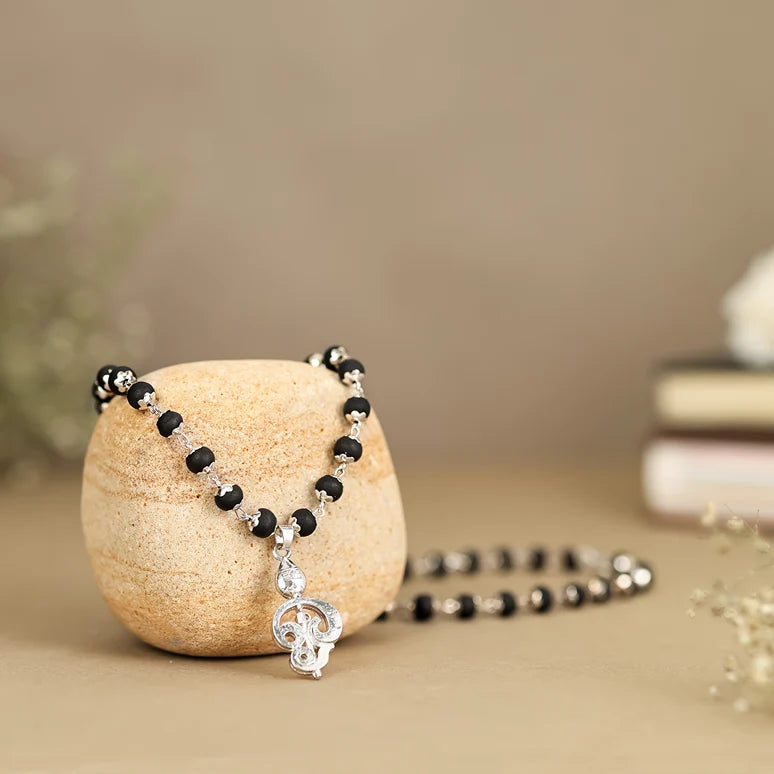
In Tamil tradition Karungali is associated above all with Murugan, and through him with Shiva; it is also strongly linked to Ayyanar, the guardian deity of the village boundary. That association is a living practice carried in temples, households and craft workshops rather than a claim traceable to one named scripture. What binds the three together is the character traditionally attributed to the wood itself: dark, dense, enduring and protective. This article sets out the Tamil context in which Karungali came to be carved and worn, what each association actually rests on, and what should not be claimed about it.
Murugan and the hill country
Murugan is the Tamil deity above all others — called Tamil Kadavul, the god of the Tamils. Classical Tamil poetry places him in the kurinji landscape, the hills and the forest slopes, and the six great pilgrimage centres known as the Arupadai Veedu are strung across exactly that terrain: Thiruparankundram, Thiruchendur, Palani, Swamimalai, Thiruthani and Pazhamudircholai.
Karungali comes from the same country. It is a slow-growing timber of the dry forest and hill scrub, and for centuries it was a wood that hill and forest communities knew, cut and worked. The association between deity and material begins there, in geography rather than in myth. When a Tamil household speaks of Karungali as Murugan's wood, part of what is being said is that it belongs to his landscape.
The second strand is function. Murugan is the deity of the Vel, the spear given to him by his mother, and the imagery around him is consistently one of protection and of decisive intervention against harm. Karungali is traditionally regarded as a protective material. Devotees connect the two along that line of thought, and the connection is reinforced every time a Karungali Murugan piece is carved, sold and worn.
Ayyanar and the edge of the village
Ayyanar is a guardian deity of rural Tamil Nadu, and his shrines are almost always found where they logically belong — at the boundary of the village, at the edge of the tank, on the road out. They are typically open to the sky, and they are marked by ranks of terracotta horses offered by villagers, on which Ayyanar is traditionally believed to ride out at night to guard the settlement and its fields.
This is guardian worship, and it is worth understanding on its own terms. It is territorial, it is practical, and it is concerned with keeping something out: illness, theft, drought, the ill will of others. Materials regarded as protective sit naturally within it, and dark heartwood is one of them. Practice around Ayyanar varies a great deal from village to village and from lineage to lineage, and there is no single correct form; anyone who tells you otherwise is flattening a very diverse tradition.
Shiva, and what black signifies
The Shiva connection runs partly through Murugan, who is his son, and partly through the older Tamil Shaiva temple culture in which almost every major Shiva temple carries a Murugan shrine within its precincts. A devotee moving through a Tamil temple is rarely far from both.

The colour matters too. In much of North Indian custom black is avoided in ceremonial dress. In Tamil practice, dark and black materials are used freely in protective contexts and are not treated as inauspicious in themselves — a genuine regional difference that trips up a lot of readers. Black is associated in the Shaiva imagination with the ascetic, with time, and with what absorbs rather than reflects. Karungali is read within that frame. Devotees also commonly associate the wood with deflecting drishti or nazar, which is why small pieces are traditionally tied on children; we cover that separately in our guide to Karungali for children.
Where the wood actually appears in worship
| Deity | Role in Tamil tradition | How Karungali typically appears |
|---|---|---|
| Murugan | Tamil Kadavul; deity of the hills, the Vel and protection | Carved idols and Vel forms; malai and bracelets worn by devotees, often begun on a Murugan-associated day |
| Ayyanar | Village guardian at the boundary; open-air shrines with terracotta horses | Protective pieces worn by household members; associations carried in local practice rather than temple liturgy |
| Shiva | Presiding deity of Tamil Shaiva temple culture; Murugan's father | Japa malai used for Shiva mantra recitation; beads worn as a general Shaiva marker |
Why this wood and not another
Three ordinary properties of the timber underwrite the whole tradition, and it is worth naming them plainly.
It lasts. Ebony heartwood is dense enough to resist insects and rot far better than the woods around it. A carved piece survives generations. Where a tradition wants an object that will outlive the person who commissioned it, it reaches for a wood like this.
It is dark without being dyed. The colour is intrinsic. Nothing is applied, nothing washes out, and the piece does not fade into something else over a lifetime of wear. In a devotional context that permanence reads as integrity.
It is scarce and slow. Only the mature inner heartwood is usable, and the tree takes a long time to produce it. Scarcity has always contributed to the sense that a material is set apart. It is also why the market is flooded with imitations, and why we published a full guide on telling Karungali from its lookalikes.
How devotees use Karungali in practice today
- As a japa malai. Used for counting recitation of Murugan or Shiva mantras. Held in the right hand, the beads moved with the thumb over the middle finger, the guru bead not crossed.
- As a worn malai or bracelet. The most common use by far. Many families begin wearing on a Tuesday or Friday, or on a day associated with Murugan; this is custom, not rule, and it varies. Our guide to how to wear a Karungali mala sets out the usual conventions.
- As a carved idol for the home shrine. Murugan with the Vel is the most requested form. Idols in this wood are treated as any other shrine idol would be in the family's own tradition; see Karungali idols and their significance.
- Tied on children. A short strand or a single bead, traditionally intended as protection from the evil eye. Keep any cord short and well fitted.
- Carried, not worn. Some devotees who cannot wear a malai daily keep a bead in a purse or in the vehicle instead. This is accepted practice.
None of these require initiation, a fee, or a ritual performed by anyone other than the household. If a seller tells you a piece will not work unless they perform something on it for a price, that is commerce, not tradition.
What we can say, and what we will not
Karungali is traditionally held to be protective, and it is worn in that spirit by a very large number of people. That is an accurate description of a living tradition and we are glad to state it. What we will not do is convert it into a promise. Wearing a bead does not treat illness, settle debt, or guarantee an outcome, and any seller who says otherwise is misleading you. Devotional practice is worth undertaking for its own sake.
We will also not overstate the textual position. There is no verse we can point to that names this bead. Dense dark heartwoods are specified for ritual implements in the wider Indian tradition, which is a real precedent, but a general precedent is not a specific mandate and we will not dress it up as one. If you want the fuller picture of what the tradition says, our article on the traditional beliefs around Karungali covers it, and current pieces are in the Karungali idols collection.
Frequently asked questions
Is Karungali mentioned in a specific scripture?
Not in a way that anyone should overstate. The Karungali tradition is carried in Tamil temple and household practice, in oral instruction and in the work of craftsmen, rather than in a single verse that can be cited. Dense dark heartwoods are named for ritual implements in the wider Indian tradition, but that is a general precedent, not a specific textual mandate for this bead.
Why is Karungali connected with Murugan in particular?
Murugan is closely tied in Tamil literature to the hill country, and Karungali is a hill and dry-forest timber, so the two share a landscape. Murugan is also the deity most associated with protection and with the Vel, and Karungali is traditionally regarded as protective. Devotees connect the two on those grounds rather than through a single origin story.
Who is Ayyanar, and how does Karungali relate to him?
Ayyanar is a guardian deity of the village boundary in Tamil Nadu, worshipped at open-air shrines that are often marked by large terracotta horses. Because his role is protective and territorial, materials regarded as protective are traditionally associated with him. Practice around Ayyanar varies considerably from village to village.
Can non-Tamil devotees wear Karungali?
Yes. There is no restriction of the tradition to Tamil devotees, and Karungali is worn today across India and abroad. What is worth carrying with it is the respect the tradition holds. If you are unsure how a piece should be treated within your own family practice, ask an elder or your family priest.
Should Karungali be worn only on certain days?
Tuesday and Friday are commonly preferred in Tamil practice for first wearing a Karungali piece, and many devotees choose a day connected with Murugan. This is custom rather than rule, and it varies by family and by region.
Is black an inauspicious colour to wear in worship?
In Tamil tradition dark and black materials are widely used in protective contexts and are not treated as inauspicious in themselves. Conventions differ elsewhere in India, where black is avoided in some ceremonial settings. Where your own family custom differs from the Tamil convention, follow your family custom.
Does a Karungali mala need to be taken to a temple before wearing?
It is not required. Many devotees do take a new malai to a temple, or place it before the family shrine for a few days, and some ask for it to be touched to the deity. These are optional acts of devotion rather than conditions that must be met before the piece can be worn.


