 Cow Shelter/Donation

New Shop & Business Opening Gifts: Kuber, Lakshmi, Shree Yantra and What Is Customarily Given
September 03, 2026
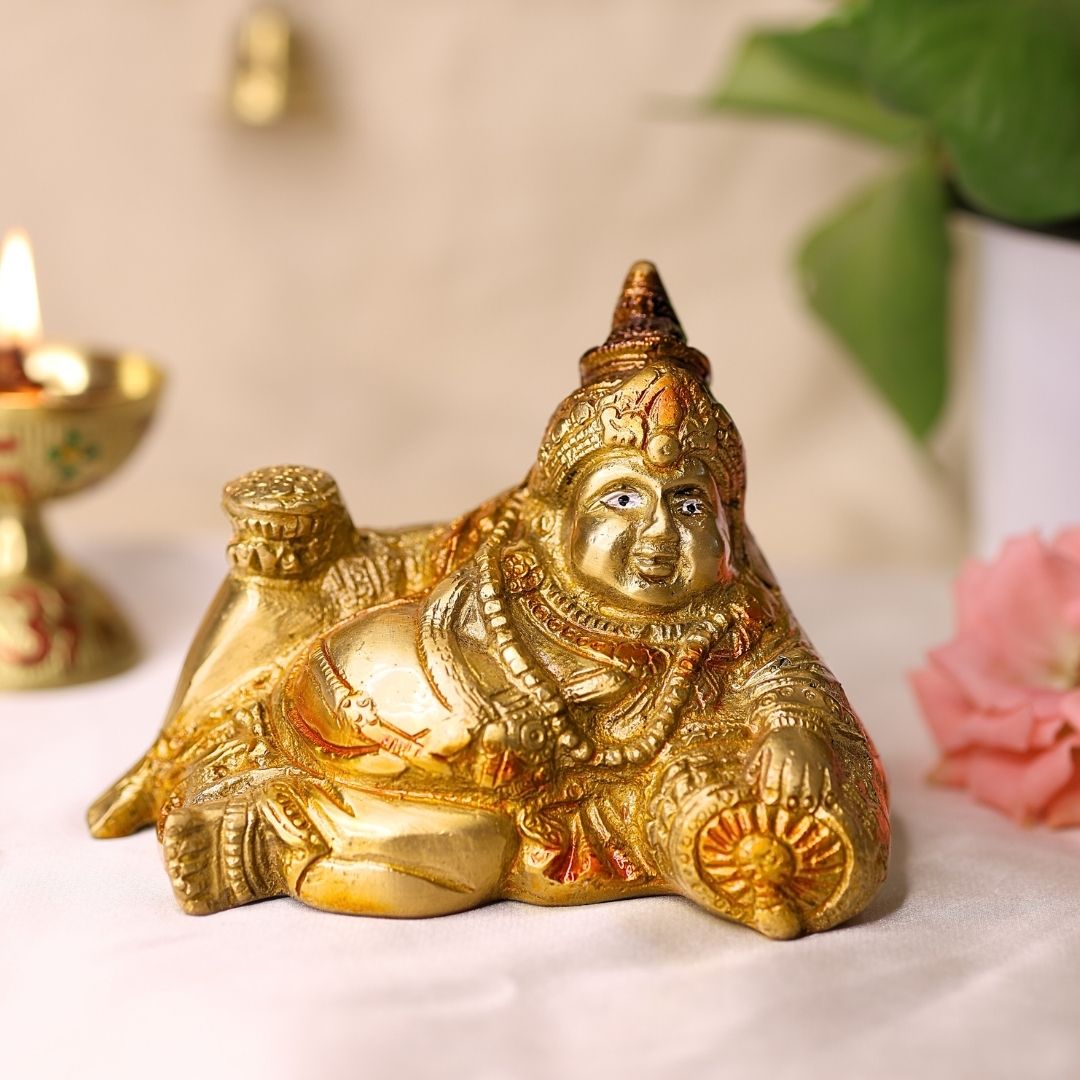
When a shop or business opens, the customary gift is something that will be placed during the opening puja itself. That is why a Lakshmi murti, a Ganesha murti, a Kuber murti, a Shree Yantra, a brass lamp, a cash box or a first ledger are the conventional choices, and why the timing matters as much as the object. Give it before or on the muhurat morning and it becomes part of the ceremony; give it a week later and it has to be installed separately. Here is what is given, where each item customarily sits, and when.
What the opening actually sets up
An Indian business opening usually establishes four things on the same morning, and every traditional gift maps to one of them. There is the shrine, however small, which is often a shelf above the counter. There is the counter or gaddi itself, the seat from which the business is run. There is the safe, locker or cash box. And there is the first ledger, opened and marked before any trade takes place.
Knowing which of the four your gift is for makes the choice almost automatic, because each has its own conventional occupant. It also stops the common mistake of giving something large and beautiful that has nowhere to go in a twelve foot shop.
The gifts and where each is customarily placed
| Gift | Traditionally associated with | Where it customarily goes |
|---|---|---|
| Ganesha murti | Invoked at the start of anything new | The shrine, or above the entrance |
| Lakshmi murti | Wealth in its flowing, circulating sense | The shrine, facing east or north |
| Kuber murti | Wealth in its stored and safeguarded sense | Near the safe, locker or cash box; customarily the north |
| Shree Yantra | Long standing association with abundance in Tantric tradition | The shrine or the counter, raised off the surface |
| Brass lamp or diya pair | The first light in a new space | The shrine, lit at opening and daily thereafter |
| Cash box or golak | Marks where takings will be kept | The counter; customarily given with a coin inside |
| First ledger or bahi khata | The account that begins the enterprise | Marked with swastik and shubh labh before use |
| Toran, nimbu mirchi, coconut | Doorway customs observed at openings | The entrance |
| Sweets and dry fruit | Shared with the first visitors of the day | Counter, distributed rather than stored |
Lakshmi, Kuber and Ganesha: who gets given what
These three are not interchangeable, and understanding the distinction makes you look like you know what you are doing.
Ganesha is traditionally invoked at the beginning of any undertaking, which makes a Ganesha murti the most universally correct gift for an opening and the right choice when you know nothing about the family's practice.
Lakshmi is associated in tradition with wealth as movement, circulation and flow, which is why a Lakshmi murti sits in the shrine and is offered to daily rather than tucked away. If you give only one thing, this is the one.
Kuber occupies a different position: in the Puranas he is the treasurer, the keeper of stored wealth, and a lokapala of the north. That is why a Kuber murti is customarily placed near the safe or the cash box rather than in the shrine, and often facing north. Many businesses keep both, and the pairing is entirely conventional.
The Shree Yantra and the cash counter
The Shree Yantra is among the most commonly given business opening gifts, and among the most commonly placed badly. The conventional placement is in the shrine or on the cash counter, raised on a small platform rather than laid flat on the surface, kept clean, and positioned so that it faces the seat the owner uses. The practical constraint in a small shop is that it must not end up somewhere it gets reached across, leaned on or stepped over.

If you want to understand what you are actually giving, our guide to the Shree Yantra, its nine triangles and its placement covers the geometry and the energisation convention, and our comparison of the Kuber Yantra, Shree Yantra and pyrite pyramid is the fastest way to decide between the three. Yantras are made in several materials; a government lab certified Karungali yantra is one option, and a pyrite piece is the usual choice for someone who wants something for the desk rather than the shrine.
Timing: opening day, Dhanteras, or Chopda Pujan
There are three customary moments, and any of them is correct.
Before or on the muhurat morning is the ideal. The muhurat is usually taken from the panchang, and in many trading families the shop is opened, the coconut broken, the lamp lit and the first ledger marked within a specific window. A gift that arrives before that window can be included in the puja, which is the whole point of giving it.
Dhanteras is the second moment. It is traditionally when businesses buy metal, and a gift given then joins an existing custom rather than interrupting it.
Diwali Chopda Pujan is the third. In Gujarati and Marwari businesses the account books are worshipped at Lakshmi Puja and the new year's ledgers are opened, and a gift given at that point is squarely traditional. If you missed the opening, this is the moment to use rather than apologising for being late.
One custom worth knowing: in many trading communities the first sale of the day, the bohni, carries more weight than any gift. Buying something on opening day is itself a recognised gesture, and in some families it is the expected one.
What is customarily avoided
- Sharp objects. Knives, scissors and cutlery are traditionally left out of auspicious gifting.
- Black items and black wrapping. Customarily avoided, though black stone and Karungali articles are treated separately and are widely given.
- Leather and footwear. Conventionally not gifted in Indian households or businesses.
- Clocks. Avoided by some communities as an opening gift, and easy to substitute.
- Empty containers. A cash box, golak or vessel is customarily given with a coin or a few grains of rice inside rather than empty.
- Anything chipped or repaired. Check the piece before wrapping, particularly if it has been couriered.
- Oversized pieces. Not a custom, simply the most common practical error at shop openings.
Choosing by budget and relationship
Under 999 comfortably covers a small Ganesha or Lakshmi murti, a brass diya, a golak with a coin in it or a pyrite piece, and any of those is a perfectly respectable gift from a colleague or supplier. The middle band, roughly 1,000 to 3,000, covers a proper Lakshmi or Kuber murti, a good yantra or a lamp pair, and is where most friends and business associates land. Family and partners typically go higher, and gifts above 3,000 covers larger brass pieces and multi item sets. Cash, where it is given, is customarily an amount ending in one, in an envelope.
What these gifts are, and what they are not
Everything described here is long standing Indian business custom, followed differently across regions, communities and trades. Nothing in this guide is a claim that any object will produce profit, growth, footfall, luck or protection for a business, and no such claim should be made when giving one. These are gestures marking a beginning with respect and good wishes, which is what has kept them in use for centuries, and it is more than enough.
Frequently Asked Questions
What is traditionally given when a new shop opens?
A Lakshmi murti, a Ganesha murti, a Kuber murti or a Shree Yantra are the conventional gifts, along with a brass lamp, a cash box, a first ledger and sweets. In most communities the gift is given before or on the muhurat day, so that it can be placed at the counter or in the shrine during the opening puja itself.
Should I give a Kuber murti or a Lakshmi murti?
Both are given, and many businesses keep both. In tradition Lakshmi is associated with wealth in its flowing, circulating sense and Kuber with its storage and safekeeping, which is why a Kuber murti is customarily placed near the safe or the cash box while Lakshmi sits in the shrine. If you are giving only one, Lakshmi is the more universal choice.
Where is a Shree Yantra customarily placed in a shop?
Most commonly in the shrine or on the cash counter, kept clean, raised off the surface and facing the seat the owner uses. It is traditionally positioned so that it is not stepped over or reached across, which in a small shop is the real constraint. Some businesses keep it inside the locker instead.
When is the right time to give a business opening gift?
Before the opening, or on the muhurat morning, so that the item can be included in the puja. Giving it afterwards is not wrong, but the item then has to be installed separately. Many people who miss the opening give at Dhanteras or at the Diwali Chopda Pujan instead, which is an equally traditional moment.
Is it appropriate to give money at a shop opening?
Yes, and in many trading communities it is expected. Cash is customarily given in an envelope in an amount ending in one. In some communities the first sale of the day carries more weight than any gift, so making a purchase on opening day is itself a recognised gesture.
What is customarily avoided as a business opening gift?
Sharp objects, black items, leather goods, footwear and anything chipped or repaired are traditionally left out, as at any auspicious occasion. Clocks are avoided by some communities. Empty cash boxes and empty vessels are customarily filled with a coin or a few grains of rice before being given.
Do these gifts guarantee that a business will do well?
No, and they should never be presented that way. These are customs of goodwill and long standing tradition, observed to mark a beginning with respect and to wish someone well. Nothing in this guide is a claim that any object will produce profit, growth, luck or protection for a business.


