 Cow Shelter/Donation

Mahaprasad of Puri: Inside Jagannath Temple's Sacred Kitchen
June 28, 2025
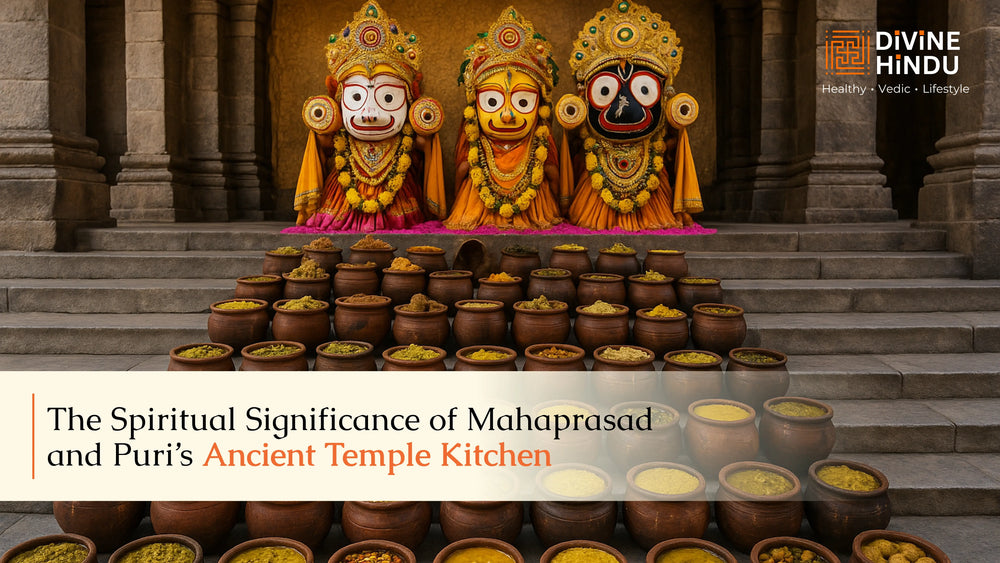
The Mahaprasad of Puri is one of the most sacred food offerings in the Hindu world, prepared in the legendary kitchen of the Jagannath Temple. Jagannath Yatra marks a very auspicious festival in Sanatan Dharma. Lord Jagannath, a form of Vishnu, together with his brother Lord Balabhadra and his sister Devi Subhadra, begins his journey from the Jagannath Mandir in Puri, Odisha, to the Gundicha Temple, which is their aunt's home. The festival, held every year in the month of Ashadha (June-July) and observed on 16 July 2026, is not just a religious event; it evokes a deep sense of community, togetherness and spirituality.
The Divine Hindu App is here.
Chat free with top astrologers for your first 5 minutes every week, generate your Kundli, book temple Puja & Chadhava, and check today's Panchang — all in one app.
But a festival is not only about gatherings; it is also about the food and offerings. At Puri, this offering is the 'Mahaprasad', prepared fresh to welcome thousands of devotees every day.

Let us embark on a journey to understand how this prasad goes from ordinary to extraordinary in the kitchen of Jagannath Puri.
Structure of the Jagannath Temple Kitchen
In keeping with Vastu Shastra, the kitchen of Jagannath Puri is situated in the south-east area of its main gate. There are nine sacred wells, such as Ganga Kua and Yamuna Kua, used for cooking. Several clay tandoors (chulhas) are used for the fire. Before cooking begins, each stove is energised with Vedic Agni rituals. The Rosh Ghar (kitchen) is about 150 feet long, with around 600 suaras (cooks) preparing 'bhoga' or 'prasad' for millions of devotees. The kitchen of Jagannath Puri holds real importance for the masses. It is said that Lakshmi Devi and Maa Annapurna bless the preparations. Common people are not allowed in the preparation area, to keep the food pure and uncontaminated.
What Is Mahaprasad (Mahaprasadam)?
During the Rath Yatra, lakhs of people travel from around the world to seek the blessings of Lord Jagannath. The Jagannath kitchen in Puri is considered one of the largest in India. The Mahaprasadam, or bhog, is prepared fresh every day with great devotion and hygiene for the devotees. It is said that no one goes hungry in the land of Lord Jagannath. The Chappan Bhog, or 56 dishes, is the highlight of the preparation. Each item is made with devotion and divine love, making the offering a grand feast. The Mahaprasad is also known as 'Abhada', which means cooked rice with a variety of vegetable dishes. The prasad is first offered to the deities and then distributed among the devotees in the distribution hall, or Ananda Bazaar.
Types of Prasad at Jagannath Puri
The prasad at Jagannath is divided into three types:
1. Sankhudi - cooked food like rice, dal, and khichdi.
2. Nisankhudi - dry or uncooked food like laddu, khaja, and malpua.
3. Nirmala - dry, concentrated rice used in pooja.
The Chappan Bhog prepared daily at Jagannath is a menu of 56 items cooked in desi ghee without onion, garlic, or tomatoes. The Mahaprasadam includes nine varieties of rice, 14 vegetable preparations, nine milk-based items, eleven sweets, and 13 types of cakes (pethas). The menu is elaborate, yet the cooks use very little oil and few spices so the food stays light and cooling for the body. Bhog is prepared six times a day, offered to the deities, and known by different names such as Gopal Vallabh Bhog and Sakala Bhog. Everything is prepared with respect for culture, tradition and religious guidelines. At the Rath Yatra, food is always available - not to feed a fixed number of people, but as a blessing from the deities. Anyone who wishes to partake, without any economic, cultural, or social barrier, can relish the food.
How Is Prasad Made in Jagannath Puri?
At the Jagannath Puri kitchen, the prasad is made with utmost care and devotion. Clay pots are filled with dishes and placed vertically on top of one another. It is said that, miraculously, the topmost clay pot cooks first, followed by the lower ones. Although this defies the modern laws of science, it is upheld by the spiritual beliefs of many. The preparation and serving are done by an army of volunteers - cooks (suaras), servers, and helpers. Training begins at around 12 years of age. Apart from onion and garlic, foreign vegetables such as tomatoes, potatoes, beetroots, corn, green peas, cauliflower, cabbage, carrot, coriander, beans, turnips, bell peppers, chilli peppers, green beans, karela, lady fingers, and cucumbers are not used in the offerings.

The price of the prasad at Jagannath Puri is kept very affordable so everybody can enjoy it. It is said that no food in Jagannath Puri gets wasted. Each day a different number of devotees come to experience the Mahaprasadam, yet the quantity of food is maintained accordingly without any modern forecasting techniques. This phenomenon is said to be powered by 'divine intervention'.
Frequently Asked Questions About Mahaprasad
Why is it called Mahaprasad and not just prasad?
At Puri, the food offered to Lord Jagannath is called Mahaprasad (the 'great' prasad) because it is considered supremely sacred - blessed by Maa Lakshmi and Maa Annapurna and shared equally by all, beyond caste or class.
Why is the Jagannath temple kitchen famous?
It is regarded as the largest living temple kitchen in the world, where around 600 cooks prepare food on wood-fired clay stoves using nine sacred wells, serving thousands to lakhs of devotees daily.
Why is no onion, garlic or tomato used in Mahaprasad?
The Chappan Bhog follows a strict sattvic tradition. Onion, garlic and 'foreign' vegetables like tomato and potato are avoided to keep the offering pure, cooling and fit for the deities.
Conclusion
The Rath Yatra is not just a religious proceeding; it is a reminder that anyone and everyone, regardless of economic or social class, can come and pray to Lord Jagannath. Food at the Jagannath Puri temple is not merely a means to feed the masses; it is a sacred offering to the divine and to his devotees, which makes it 'Mahaprasad'. The largest living kitchen in the world, the Jagannath kitchen, is a holy and spiritual way to connect with the community.
Next time you experience the Rath Yatra of Puri, think of the food as a pilgrimage and go one step closer on your devotional journey. To bring that devotion home, explore our collection of sacred God idols at Divine Hindu.
You May Also Like :
How to Balance Chakras Daily : A Beginner's Guide to Energy Healing
Where to Buy Original Karungali Malai Online - Benefits & Guide
What Is The Significance of 108 in Hinduism?
Lord Jagannath's Rath Yatra 2025: A Spiritual Journey of Tradition
The Symbolism and Spiritual Meaning Behind Murugan Idols


