 Cow Shelter / Donation

1–14 Mukhi Rudraksha Mala and Siddha Mala
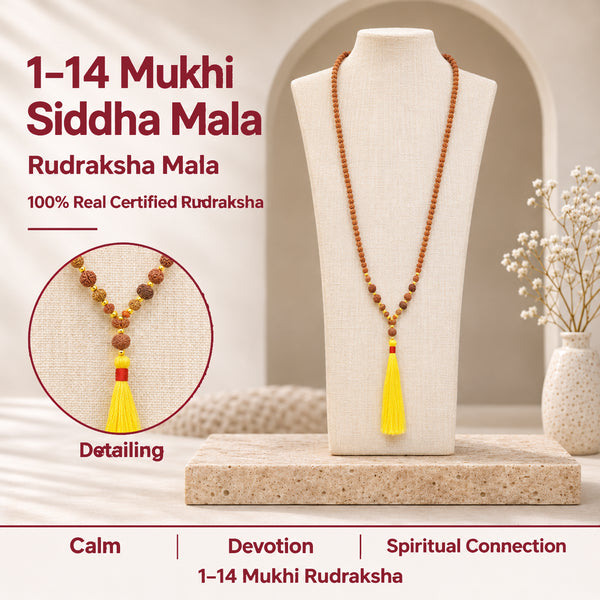
14 Mukhi Rudraksha appears on this page within 1–14 Mukhi malas, which combine bead types from 1 to 14 mukhi in one design. You can compare two listings, including a Siddha mala with Ganesh Mukhi and Gaurishankar beads.

About 1-14 Mukhi Rudraksha
These malas bring different mukhi varieties into one design. Compare the 1–14 Mukhi mala with the listed Siddha mala that also names Ganesh Mukhi and Gaurishankar in its contents.
This is a combination of bead types, not simply a 14-bead necklace. Read the exact bead list, origin information where stated, mounting and supporting documents for each product. Choose the composition that matches your own practice or guidance.
Explore individual Rudraksha beads.
- Bead types
- 1 Mukhi to 14 Mukhi in one design
- Listings
- 1 - 14 Mukhi Rudraksha Mala and a Siddha mala
- Siddha mala extras
- Ganesh Mukhi and Gaurishankar
- Origin stated
- Nepal, on the Siddha mala listing
- Tradition
- Rudraksha is associated with Lord Shiva
What a 1–14 Mukhi Rudraksha mala combines
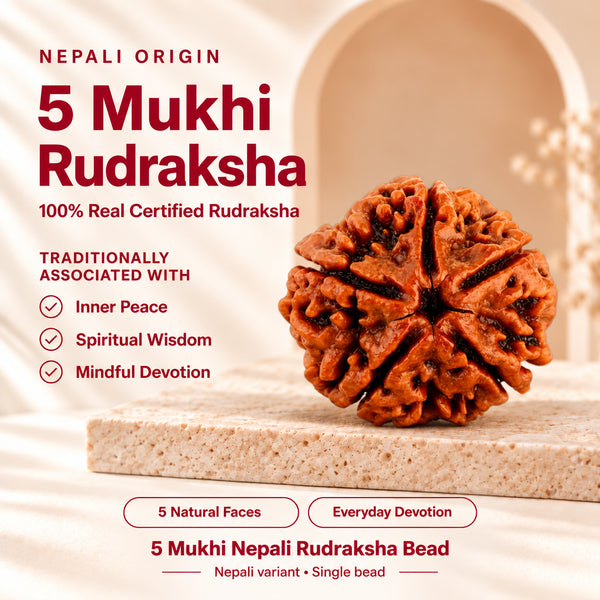
Each Rudraksha bead is named by its mukhi, the natural lines that run along its surface. A 1–14 Mukhi mala combines these bead types, so the mukhi count describes each bead, not the length of the piece.
The 1 - 14 Mukhi Rudraksha Mala names the mukhi range in its title. The 1–14 Mukhi Rudraksha Siddha Mala is listed as Nepal origin and also names Ganesh Mukhi and Gaurishankar beads. Read the exact bead list on each page before you compare them.
Ganesh Mukhi and Gaurishankar in the Siddha mala
The Siddha mala names two bead forms in addition to the mukhi range. In Hindu tradition, a Ganesh Mukhi bead has a raised, trunk-like form and is associated with Lord Ganesha. A Gaurishankar is two beads joined naturally, associated with Lord Shiva and Goddess Parvati.
Because the Siddha mala names these extra beads, compare its bead list with the 1 - 14 Mukhi Rudraksha Mala side by side. Choose the composition that matches your own practice or the guidance you follow.
How to check origin, mounting and documents
Read three details on each product page before you order:
- The bead list, including any beads beyond the mukhi range.
- The origin information, where it is stated.
- The mounting and any supporting documents supplied.
The Siddha mala listing states Nepal origin. For any certificate or report, match it to the exact product you are buying. A document for one bead or mala does not describe another.
Looking for a single 14 Mukhi Rudraksha?
This page lists combination malas only. For one 14 Mukhi bead to wear on its own, start with Rudraksha single beads and check the mukhi on each listing.
For a 14 Mukhi Rudraksha bracelet or pendant, check the mukhi named on listings in Rudraksha bracelets and Rudraksha pendants. Other mukhi pages include 1 Mukhi, 5 Mukhi and 7 Mukhi Rudraksha.
Wearing and caring for a Rudraksha mala
Many devotees first wear a new Rudraksha mala on a Monday, after a bath, while chanting Om Namah Shivaya. Follow your family custom or the guidance of your guru.
Keep the beads dry and away from soap, perfume and chemicals. Wipe them with a soft cloth after wearing. Store the mala in a clean pouch or box when you are not using it, so the beads do not knock against hard surfaces.
Frequently asked questions
What are the benefits of 14 Mukhi Rudraksha?
Is the 14 Mukhi Rudraksha from Nepal?
How do I know a 14 Mukhi Rudraksha is original?
What is the 14 Mukhi Rudraksha price?
Is a 1–14 Mukhi mala the same as a 14-bead necklace?
Can I buy a single 14 face rudraksha here?
Related pages
- Single Rudraksha Bead by Mukhi, Origin and Size
- Ek Mukhi (1 Mukhi) Rudraksha Bead and Pendants
- Panch Mukhi Rudraksha: Beads, Bracelets and Malas
- 7 Mukhi Rudraksha: Single Beads and Malas
- Nepali Rudraksha Beads, Malas and Necklaces
- Rudraksha Chain and Necklace Designs for Men and Women
- Rudraksha Pendants: 1 Mukhi, Adiyogi and Karungali Malai Designs
- Rudraksha Mala, Beads, Necklaces and Bracelets
Updated on 20 October 2026

Top picks for you
 6mm
 8mm
 Small 7*7 inch


