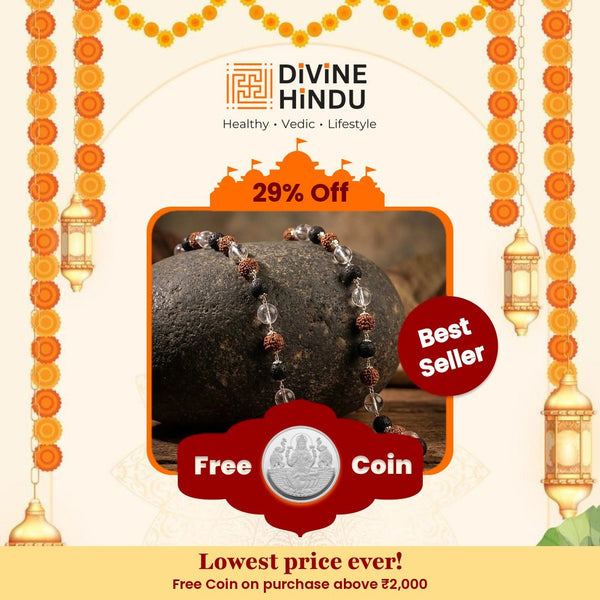
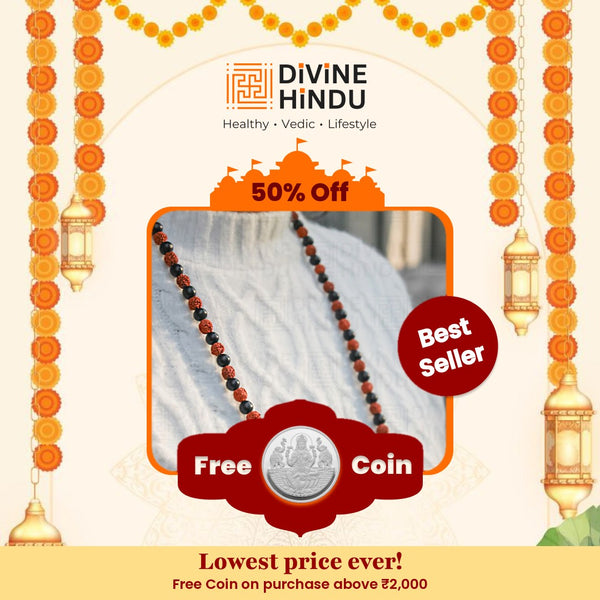
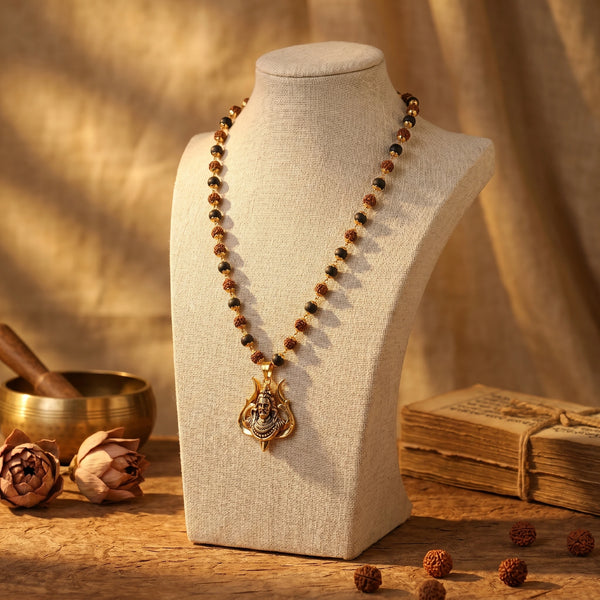
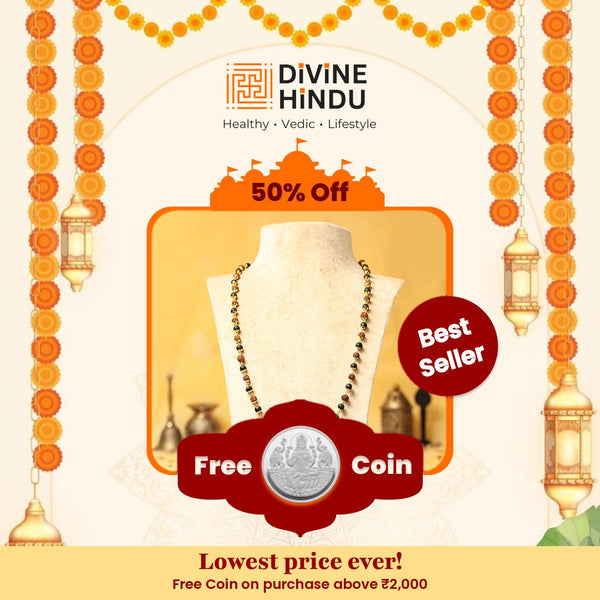
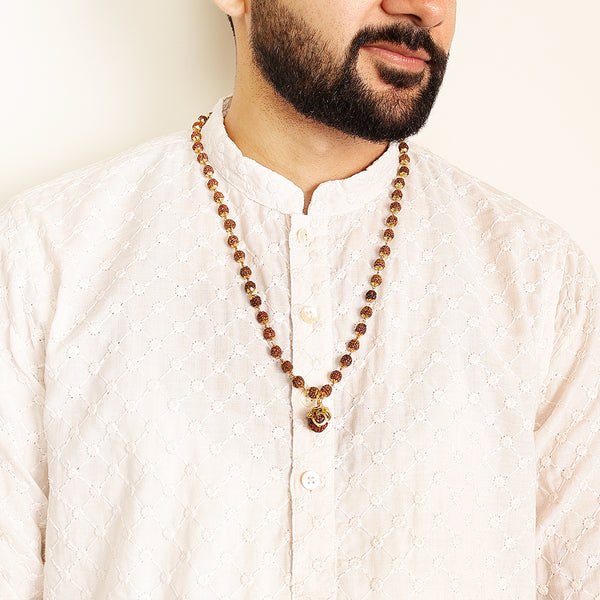
54 Beads
Original Rudraksha Mala — Lab Certified, 1 to 14 Mukhi
A Rudraksha mala is the traditional companion of japa and meditation — 108 beads of the sacred Rudraksha seed, associated with Lord Shiva. Divine Hindu sources genuine Nepali and Java Rudraksha and has every bead X-ray lab tested and certified, because filled, glued and dyed imitations are common in the market. Each mala is energised before dispatch.
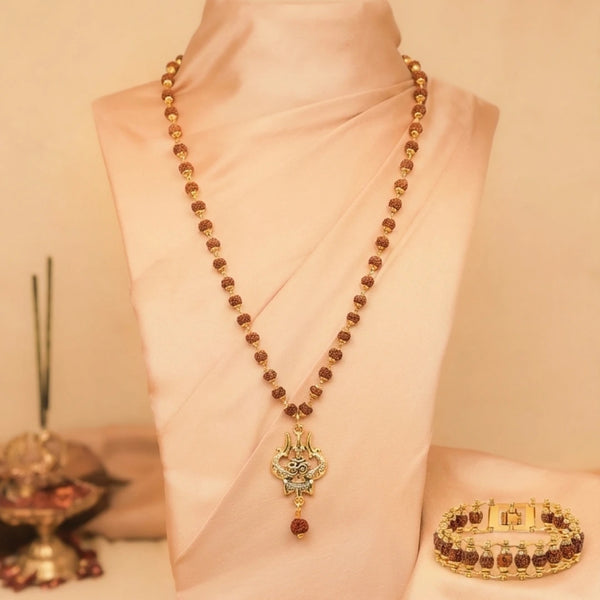
This collection brings the full range together in one place: 108-bead jaap malas, 54-bead kanthi necklaces, everyday bracelets, silver-cap and gold-cap strands, and loose certified single beads across the mukhi range. The guide below is written for buyers who would rather understand what they are choosing before they choose it.
What Rudraksha Actually Is
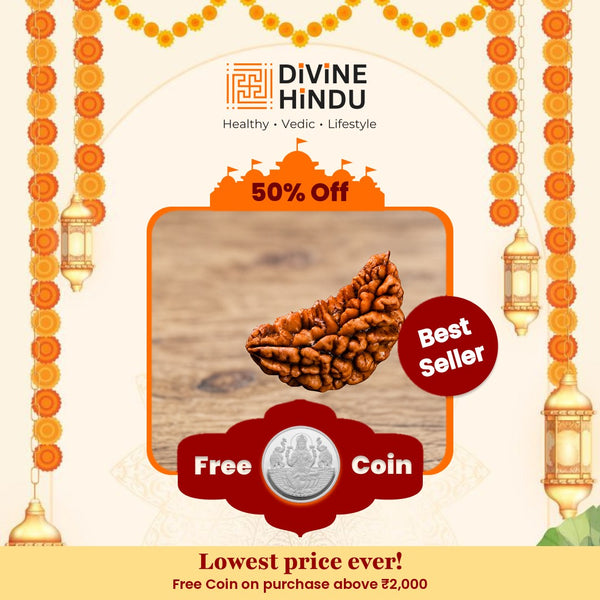
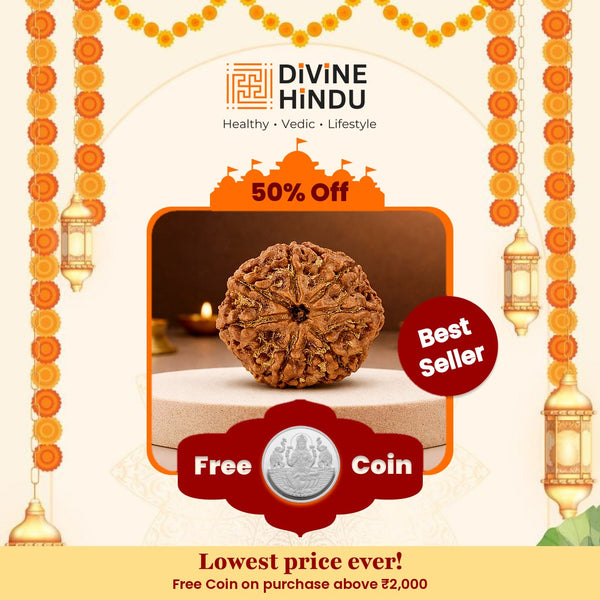
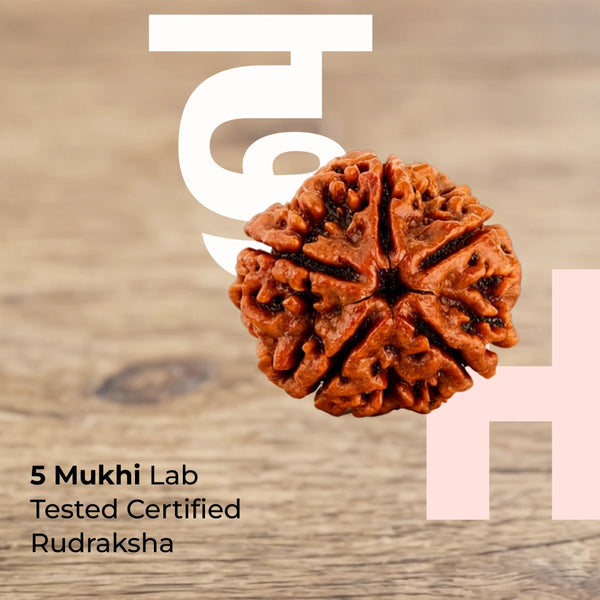
Rudraksha are the dried stones of the fruit of Elaeocarpus ganitrus, a broadleaf tree that grows in the Himalayan foothills of Nepal, in Indonesia — chiefly Java — and in parts of India. Once the fruit pulp is removed and the seed is dried, natural vertical clefts appear along its surface. Each cleft is a mukhi, or face, and the count of these faces is how a bead is classified. Five clefts make a 5 Mukhi Rudraksha; a single unbroken cleft running the whole way round makes a 1 Mukhi.
The word itself comes from Rudra and aksha — the eye of Rudra — and the bead has been worn in India for centuries by ascetics and householders alike. In tradition it is associated with Lord Shiva and is worn as an aid to devotion, discipline and a settled mind. Everything described on this page is custom and buying guidance; nothing here should be read as a promise of a medical, financial or astrological outcome.
Nepali, Java and Indian Beads — What Actually Differs
Origin is the single biggest influence on how a Rudraksha looks, how it feels in the hand and what it costs.
- Nepali Rudraksha are the largest and heaviest, with deep, well-separated clefts you can count with the naked eye and a pronounced, ridged surface. Because the beads are bigger and the supply narrower, Nepali beads sit at the top of the price range — and in the higher mukhi they are genuinely scarce.
- Java or Indonesian Rudraksha are noticeably smaller and smoother, with finer, shallower lines. That compactness is precisely what makes them suitable for slim bracelets, fine 108-bead malas and anything meant to sit unobtrusively under a shirt cuff. They are the more affordable option and are entirely genuine — small is not the same as fake.
- Indian Rudraksha fall between the two in size and are traded in smaller volumes.
Neither origin is inherently superior. A large Nepali bead is the right answer for a pendant or a statement kanthi; a Java bead is the right answer for a 108-bead mala you want to carry in a pocket and use daily. Choose by the format you actually intend to wear, then let origin follow.
How to Choose Your Rudraksha
1. Decide the mukhi first
The mukhi count is the meaningful choice; everything else is construction. If you are starting out, the 5 Mukhi bead is the conventional beginning — it is the most widely available, the most affordable, and the one traditionally prescribed for continuous daily wear without special observance. Most 108-bead japa malas are strung from 5 Mukhi beads for exactly this reason. Specific mukhi are traditionally selected for specific intentions, and the table below sets out those associations.
2. Then decide the format
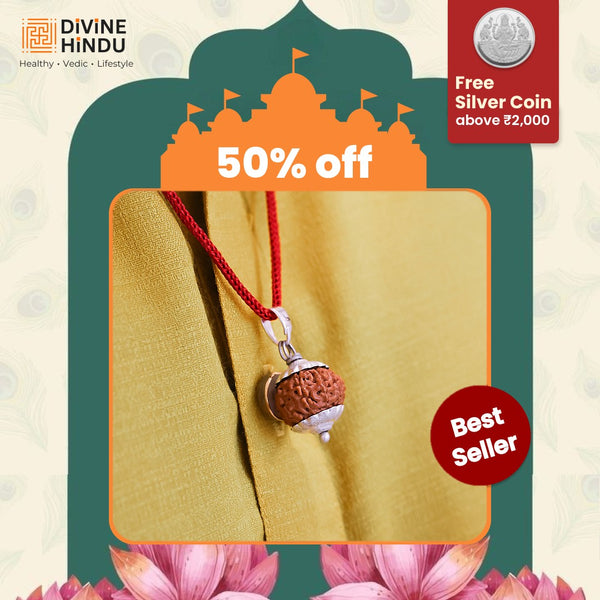
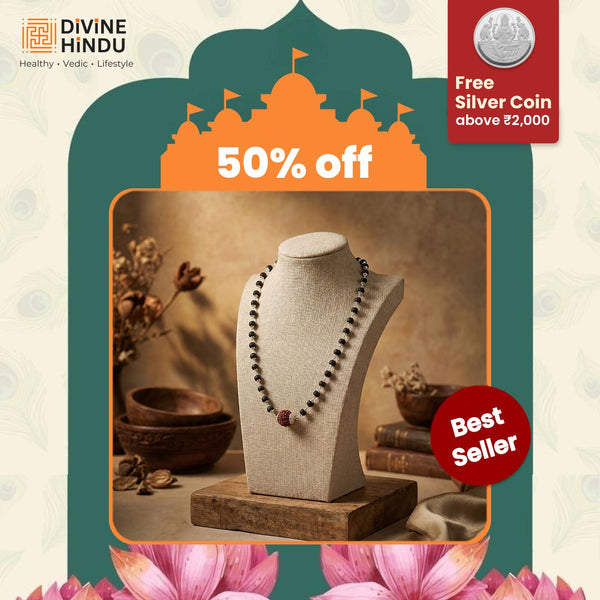
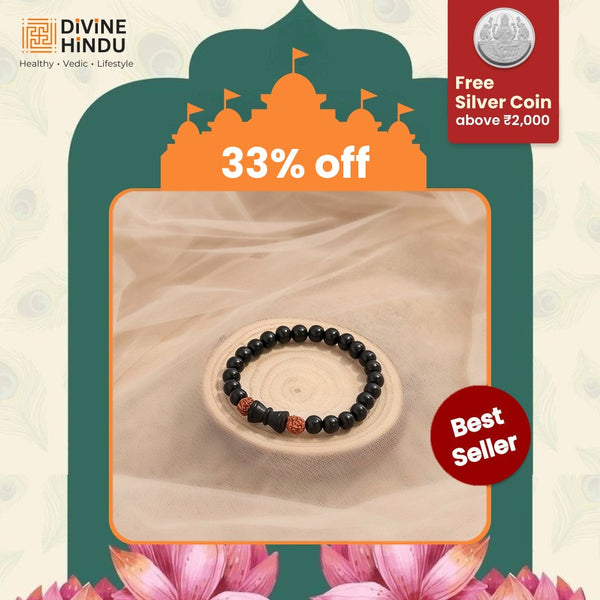
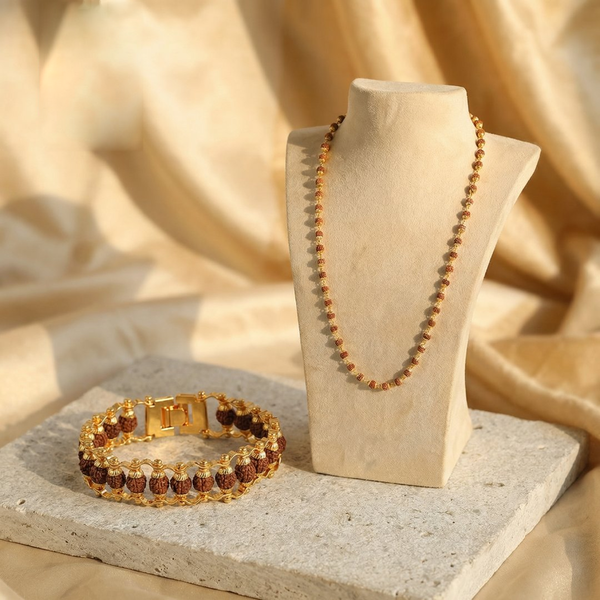
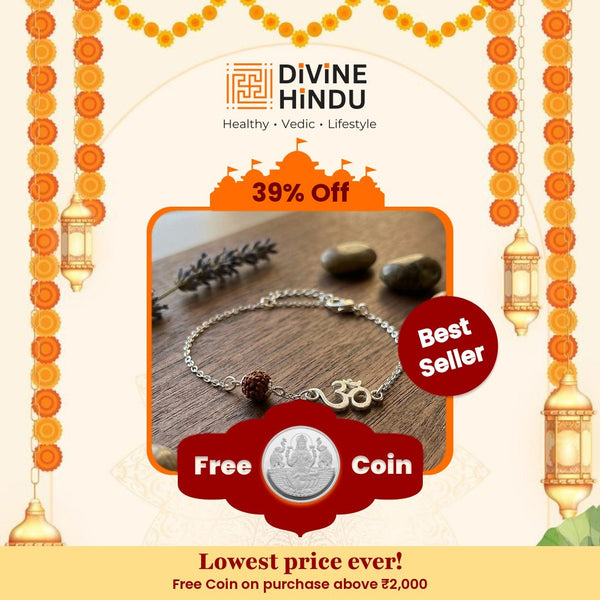
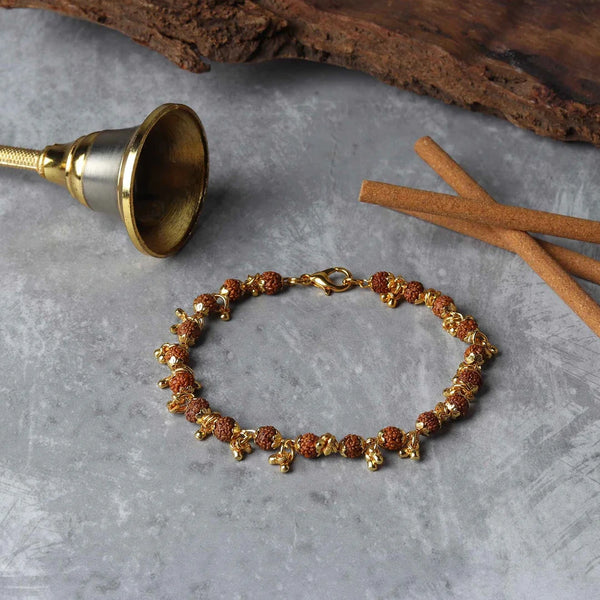
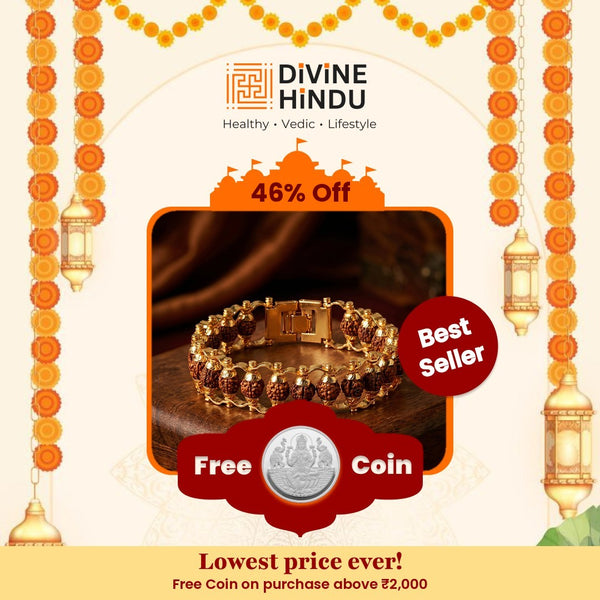
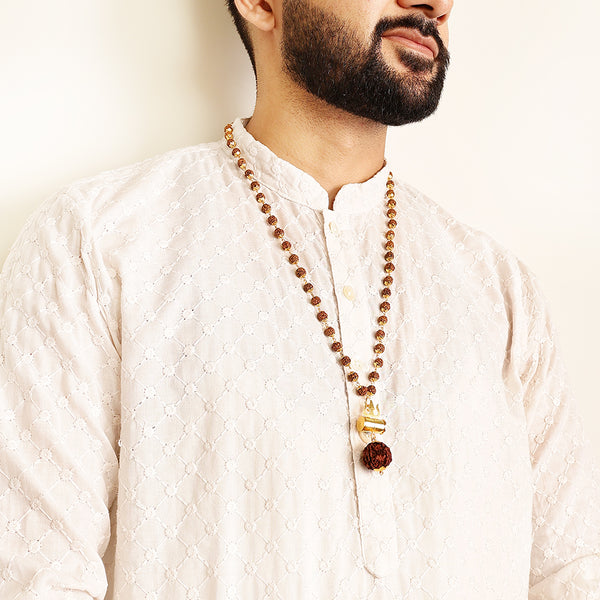
A 108-bead mala is a working tool for japa — you count mantra on it. A 54-bead necklace or kanthi is made to be worn continuously and sits near the throat. A bracelet is the low-friction option for a working day, and is what most first-time buyers actually end up wearing. A single capped bead on a thread or chain is for someone who wants one specific mukhi rather than a strand. Browse the formats separately as Rudraksha necklaces and kanthi malas, Rudraksha bracelets or single certified Rudraksha beads.
3. Understand the bead counts
Japa malas are traditionally 108 beads plus one sumeru or guru bead, which is not counted and marks where a round ends — you turn back rather than cross it. 54 is half of 108 and is used where a shorter strand is wanted, completing a full round in two passes. 27 is a quarter, and is the count usually chosen for a wrist mala. The numbers are traditional rather than arbitrary, and none of them is more or less correct than the others.
4. Bead size
Smaller beads make a lighter, more discreet piece and are more comfortable for long japa sessions; larger Nepali beads read as a deliberate statement and suit pendants and capped centrepieces. If a strand is going to be worn every day under office clothes, err smaller.
5. Thread, silver cap or gold cap
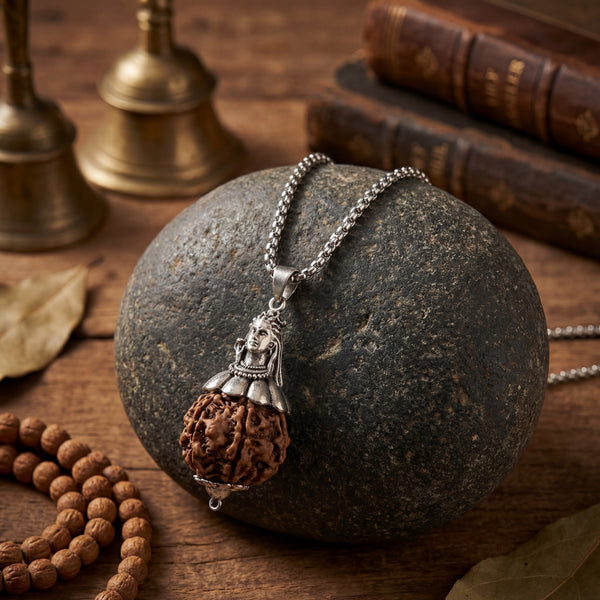
Plain thread is the traditional stringing and the easiest to replace, though it stretches and eventually needs redoing. Silver or gold-plated caps protect the drilled ends of a bead from splitting, add weight and durability, and are what you want if a single bead is going on a chain. Capped strands hold their shape far longer than plain thread but cost more and need to be kept away from water.
Mukhi Guide: Traditional Associations at a Glance
The associations below are drawn from traditional Rudraksha literature and vary between texts, regions and lineages. They describe custom, not guaranteed effect.
| Mukhi | Traditionally associated with | Commonly chosen by |
|---|---|---|
| 1 Mukhi | Lord Shiva; the Sun | Serious practitioners and collectors; the rarest bead |
| 2 Mukhi | Ardhanareeshwar (Shiva–Parvati); the Moon | Those who ask for it for harmony at home |
| 3 Mukhi | Agni; Mars | People wanting a fresh start after a difficult period |
| 4 Mukhi | Lord Brahma; Mercury | Students, teachers and those in study or speech |
| 5 Mukhi | Kalagni Rudra, a form of Shiva; Jupiter | First-time wearers and anyone wanting daily wear |
| 6 Mukhi | Lord Kartikeya; Venus | Younger wearers and those in creative work |
| 7 Mukhi | Goddess Mahalakshmi; Saturn | Householders and those in trade or business |
| 8 Mukhi | Lord Ganesha; Rahu | Those beginning a new venture |
| 9 Mukhi | Goddess Durga; Ketu | Wearers who ask for a bead of courage |
| 10 Mukhi | Lord Vishnu; no single ruling planet | Those who want a general protective bead |
| 11 Mukhi | Ekadash Rudra, associated with Hanuman | Practitioners of disciplined sadhana |
| 12 Mukhi | Surya, the Sun | Those in leadership or public-facing roles |
| 13 Mukhi | Indra and Kamadeva; Venus | Wearers who ask for it for personal magnetism |
| 14 Mukhi | Deva Mani, associated with Hanuman | Advanced practitioners; a scarce and costly bead |
How to Check Whether a Rudraksha Is Genuine
This is the question buyers ask most, and it deserves a straight answer. Imitations fall into three groups: beads of an entirely different seed dyed and sold as Rudraksha; low-mukhi beads carved with extra grooves to pass as high-mukhi; and beads drilled, weighted with lead and glued shut to fake density.
Read the mukhi lines
On a natural bead each cleft runs unbroken from the crown to the base and follows the contour of the seed. Carved lines tend to stop short, waver, cut across the natural surface at an odd depth, or look suspiciously even in spacing. A magnifying glass and good light will usually show tool marks where a groove has been cut.
The X-ray test is the reliable one
Every genuine mukhi corresponds to an internal seed compartment. An X-ray image shows those compartments, and the number of internal chambers should match the number of faces visible on the outside. It also reveals fillers and glue joints. This is why our beads are described as X-ray lab tested — the internal structure, not the surface, is what settles the question.
Why the water test does not work
The advice that a real Rudraksha sinks and a fake floats is widely repeated and is not reliable. Whether a bead sinks depends on its density, its moisture content, how much oil it has absorbed and how long it has been stored. Perfectly genuine beads float and lead-filled fakes sink very convincingly. The same applies to the copper-coin rotation test — it is folklore, not evidence. Treat neither as proof.
What a certificate should tell you
A useful lab report identifies the individual bead, not just the category: its mukhi count, its measured size and weight, its stated origin, and confirmation that the bead is natural and untreated, with a reference number and image tying the document to the bead in your hand. A generic slip with no bead-specific detail is not certification.
How to Wear Rudraksha
Traditions differ from family to family, and what follows is the common practice rather than a rulebook.
- When to begin: Monday is the day most often chosen, being associated with Lord Shiva. Shivratri, Sawan Mondays and Amavasya are also popular starting points. Any day is acceptable if you are ready.
- Energising: the customary practice is to rinse the bead in clean water or milk, wipe it dry, offer it before Shiva, and chant Om Namah Shivaya 108 times before wearing it for the first time. Every piece we dispatch is energised before it reaches you, so this is optional rather than required.
- Who may wear it: traditional texts place no bar on women wearing Rudraksha, and it is worn widely by women across India. Some households follow customs about removing it during menstruation; that varies by family and is a matter of personal observance.
- Diet: some traditions ask wearers to keep a vegetarian diet and avoid alcohol while wearing Rudraksha. Others do not. Follow the practice of your own tradition.
- Sleeping and bathing: many people remove Rudraksha at night and before a bath. The practical reason is straightforward — soap, shampoo and constant damp shorten the life of the thread and dry out the beads.
Caring for Rudraksha
Rudraksha is a seed, and it behaves like one. Left completely dry for years it can crack; kept oiled and clean it darkens handsomely and lasts decades.
- Apply a drop of mustard, olive or sandalwood oil every few weeks, work it over the beads and wipe away the excess.
- Keep beads away from salt water, chlorinated pool water, harsh detergent, hand sanitiser, perfume and deodorant. Spray scent first, then put the mala on.
- If a strand gets soaked, pat it dry with a soft cloth and let it air-dry away from direct heat.
- Restring before the thread frays rather than after. Cotton and silk thread stretch with wear, and a snapped 108-bead mala is a long evening.
- Store in a cotton or silk pouch, or in your puja space — not loose in a drawer where beads knock against metal.
Rudraksha FAQs
Which Rudraksha should I wear first?
The 5 Mukhi. It is the most widely available, the most affordable, and the bead traditionally described as suitable for anyone to wear continuously without special observance. Start with a 5 Mukhi Rudraksha mala or bracelet and add specific mukhi later if you wish.
How many mukhi are there?
Beads from 1 to 21 mukhi are described in tradition, though anything above 14 is rare and correspondingly expensive. There are also special forms such as Gauri Shankar, where two beads are naturally joined, and Ganesh Mukhi, which carries a natural trunk-like protrusion.
Can women wear Rudraksha?
Yes. Traditional sources place no restriction on women wearing Rudraksha, and it is worn commonly by women. Individual families follow their own customs around when to remove it, and those are best followed as they are practised at home.
Does the bead count really matter — 108, 54 or 27?
For japa, yes, because you are counting. 108 is the full traditional round, 54 completes it in two passes and 27 in four. For a piece worn simply as a kanthi or bracelet, choose the count that fits comfortably.
Can I wear Rudraksha along with gemstones or other beads?
It is done commonly — Rudraksha is often strung with Karungali, sphatik, tulsi or gemstone beads, and combination bracelets are among the most popular pieces we sell. If you are following a specific astrological prescription, take that advice from your own astrologer rather than from a product page.
Should I take it off while sleeping or bathing?
Many wearers do, and it is sensible for the life of the piece. Capped and plated strands in particular should be kept away from water.
Does Rudraksha need to be energised before wearing?
It is the customary practice, and every mala, bracelet and bead we dispatch is energised beforehand. If you prefer to perform your own puja on receiving it, that is entirely usual.
How long does a Rudraksha mala last?
The beads themselves last for decades with oiling and sensible handling. The thread is the wearing part — expect to restring a daily-use mala periodically, which is normal maintenance rather than a defect.
Explore related strands in the wider Rudraksha range and Karungali malai, or read our detailed guide on how to wear Rudraksha.