 Cow Shelter/Donation

Ghee Diya vs Oil Diya: Which to Light When, Wick Rules, Burn Times and Safety
September 03, 2026
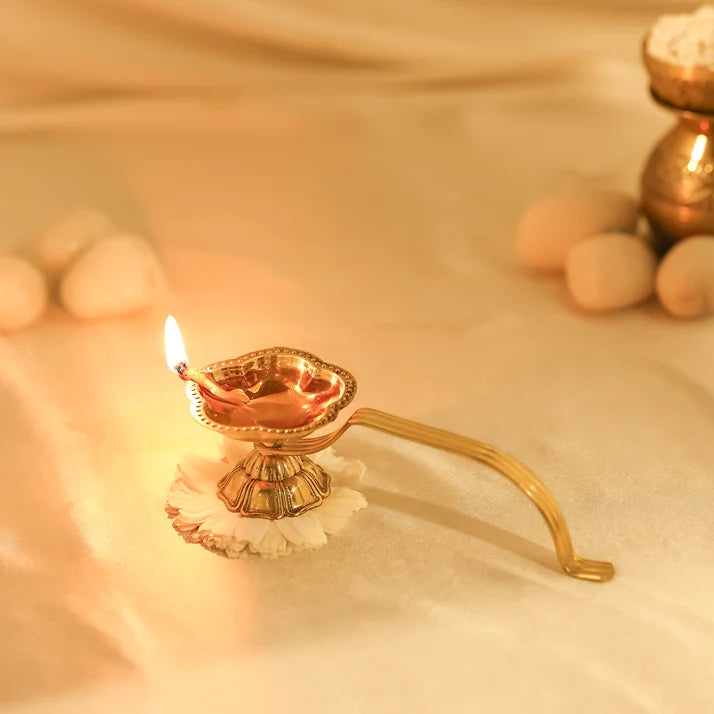
Ghee burns brighter, cleaner and shorter. Oil burns longer and costs far less. Tradition generally reserves ghee for the main lamp before the deity and for aarti, and uses oil for the many lamps placed around a house and for any lamp that has to burn for hours. Sesame is the usual South Indian oil, mustard the northern one, coconut the Kerala one. Use a cotton wick, keep it standing about a fingertip above the oil, and never use a synthetic one. Both kinds of lamp need a stable, level base well clear of cloth and curtains. Here is how to choose, and the wick rules that actually matter.
The straight comparison
| Ghee diya | Oil diya | |
|---|---|---|
| Flame | Bright, warm, steady, tall | Slightly smaller and softer; varies by oil |
| Soot | Low | Low with sesame and coconut; noticeably higher with mustard |
| Smell | Mild and pleasant | Neutral with sesame; pungent with mustard |
| Cost | High | Low |
| Behaviour in cold weather | Solidifies; a small diya can go out before the ghee melts | Unaffected in most Indian conditions |
| Burn time, small clay diya | Roughly 30 to 45 minutes | Roughly 45 to 60 minutes |
| Burn time, brass lamp with a deeper well | Two to three hours | Three to five hours, longer with a thicker wick and more oil |
| Usual place in worship | The main lamp of the shrine; the aarti lamp; festival days | The many lamps around the house; long or continuous lamps |
Burn times are approximate and depend on the size of the well, the thickness of the wick and how much draught the lamp sits in. A thick wick in a draughty doorway will halve any figure above.
What tradition says about each
Ghee is conventionally regarded as the highest of the offerings that can be burned in a lamp, and where a household lights only one lamp with ghee, it is almost always the lamp of the deity. On festival days and at aarti, ghee is the usual choice.
Oils carry their own associations, and these vary a great deal by region — which is worth saying plainly, because the internet tends to present one region's convention as though it were universal.
- Sesame or gingelly oil — the standard lamp oil across Tamil Nadu and much of the south, used for temple and household lamps alike. In many traditions it is also the oil associated with Shani and with Hanuman.
- Coconut oil — the usual choice in Kerala, in temples and homes, and commonly used for Devi worship there.
- Mustard oil — widespread in the north and east. Frequently associated with Shani and with Bhairava. It smokes and smells more than the others.
- Castor oil — used where a lamp must burn for a very long time without attention, since it burns slowly with little soot. It is harder to light.
None of these should be treated as a rule that must not be broken. If your family has always used a particular oil, that is the correct oil for your household. Our guide to diyas and lamps covers the wider symbolism.
Wick rules that actually matter
More lamps fail because of the wick than because of the fuel.
Use cotton, always. Hand-rolled cotton wicks, or a length of clean cotton twisted by hand. Never polyester or a synthetic thread — it melts, smells foul and can drip.
Match the wick to the fuel. Ghee works best with a short, fat, round wick that gives the flame something to draw on. Oil suits a flatter twisted wick, laid so the tip rests on the lip of the diya.
Set the height. The wick should stand about a fingertip above the surface. Too long and it smokes and drops black flakes; too short and it drowns and gutters out.
Soak the wick before lighting. Press it down into the ghee or oil for a few seconds and then lift it. A dry wick lights fast, burns itself and dies.
Trim between uses. If a wick has burned before, pinch off the black carbon crown before relighting. That crown is the source of almost all household lamp smoke.
On wick counts and direction, practice varies too much for anyone to give a single answer. Many households use a single wick daily and multiple wicks on festival days; a Tamil kuthu vilakku is commonly lit with wicks facing east and west, or with five wicks on occasions. Several traditions prefer the wick to face north or east and avoid a south-facing wick for daily lamps. These are conventions, held differently in different families. Follow yours, and if you have none, a single east-facing wick is uncontroversial everywhere.
Preparing a clay diya properly
- Soak new clay diyas in water for about an hour, then dry them completely in the shade. Unfired clay is porous and will otherwise drink most of your oil in the first ten minutes.
- Make sure they are bone dry before filling. Water left in a diya spatters when ghee gets hot.
- Fill to about two-thirds. An overfilled diya spills when carried and floods the wick.
- Lay the wick with the tip on the lip, the tail down in the fuel, and press it into the fuel to soak before lighting.
- Light and let it settle. The flame takes half a minute to steady. Do not keep adjusting it.
- Top up rather than relight. For a lamp that must burn a long time, add oil gently down the side, not onto the flame.
If your ghee has set solid in a cold month, stand the container in warm water for a few minutes before filling. Do not microwave a filled clay diya.
Safety, which is not optional

- Stable, level, non-combustible base. A metal or stone plate. Clay diyas rock on uneven surfaces, and a tipped diya of hot oil on a rangoli or a cotton runner is a house fire.
- Clear of cloth. Curtains, table runners, dupattas, hanging toran, paper decorations, artificial flowers. A minimum arm's length, more if there is any draught.
- Never on plastic. Not on a plastic tray, not on a laminate shelf, not on a plastic-topped stool.
- Tie back long clothing and hair before leaning over a row of lamps.
- Children and pets. Lamps above reach, never at floor level in a house with a toddler or a cat.
- Do not move a burning lamp that is full of hot oil. Extinguish, let it cool, then move it.
- Do not leave lamps burning in an empty room or overnight unless you are using a lamp genuinely designed for continuous burning, in a fixed safe position, and someone is in the house. Festival nights with dozens of lamps deserve particular care; see our note on Karthigai Deepam, when a house may have thirty flames in it.
- Keep water within reach and know where it is before you start lighting.
Putting it out, and clearing up
Many families hold that a lamp should not be blown out, and use a flower, a wick dipper or a fold of cloth to press the wick down instead, or simply let it burn to the end. This is a convention rather than a rule and is observed more strictly in some households than others.
Used clay diyas are generally not reused indefinitely; they crack and they carry old carbon. Disposal follows the same conventions as other used puja material, which we cover in disposing of puja items respectfully. Brass and metal lamps should be cleaned of carbon and old oil after use so the next lighting is clean.
For the sequence a lamp sits within, see how to do aarti and our daily pooja essentials guide. Lamps are in the Diyas and Lamps collection, and thalis in Pooja Thali.
Frequently asked questions
Should I light a ghee diya or an oil diya for daily puja?
Either is proper. The common household pattern is ghee for the main lamp of the deity and oil for any additional lamps, because ghee is expensive and oil burns longer. If you light only one lamp a day and can afford ghee, use ghee. If you cannot, an oil lamp lit attentively is in no way lesser.
How long does a ghee diya burn compared with an oil diya?
A small clay diya with ghee usually burns roughly thirty to forty-five minutes; the same diya with sesame oil generally runs a little longer, around forty-five to sixty. A deeper brass lamp will give two to three hours on ghee and three to five on oil. Wick thickness and draught change all of these figures considerably.
Which oil is traditionally used in a puja lamp?
It depends on where you are. Sesame or gingelly oil is standard across Tamil Nadu and much of the south, coconut oil is the Kerala choice, and mustard oil is widespread in the north and east. Castor oil is used where a lamp must burn a very long time. Your family's usual oil is the right one for your household.
How many wicks should a diya have?
There is no universal answer. Most households use a single wick for the daily lamp and more on festival days. A Tamil kuthu vilakku is commonly lit with two wicks facing east and west, or five on occasions. Follow your family practice; where there is none, a single wick is correct everywhere.
Which direction should the wick face?
Several traditions prefer north or east for a daily lamp and avoid a south-facing wick. Others attach no importance to it at all. It is a convention rather than a rule, held differently in different families. If you have no family custom, an east-facing wick is uncontroversial.
Is it wrong to blow out a diya?
Many families avoid it and press the wick down with a flower, a wick dipper or a fold of cloth instead, or let the lamp burn to the end. It is a widely held convention rather than a rule, and it is observed more strictly in some households than others. Never extinguish a lamp with water while the oil is hot.
Why does my new clay diya soak up all the oil?
Because unfired clay is porous. Soak new diyas in water for about an hour and then dry them fully in the shade before use; the water fills the pores so the oil cannot. Make sure they are completely dry before filling, since water left inside will spatter once the ghee heats.
Can a diya be left burning overnight?
Only with a lamp genuinely designed for continuous burning, in a fixed and safe position, with someone in the house. For an ordinary clay or small brass diya the answer is no. Extinguish lamps before sleeping, keep them clear of cloth and curtains, and never leave one burning in an empty room.


