 Cow Shelter/Donation

Gudi Padwa and Ugadi: The Gudi, Bevu-Bella and Why This New Year Is a Muhurat
September 03, 2026
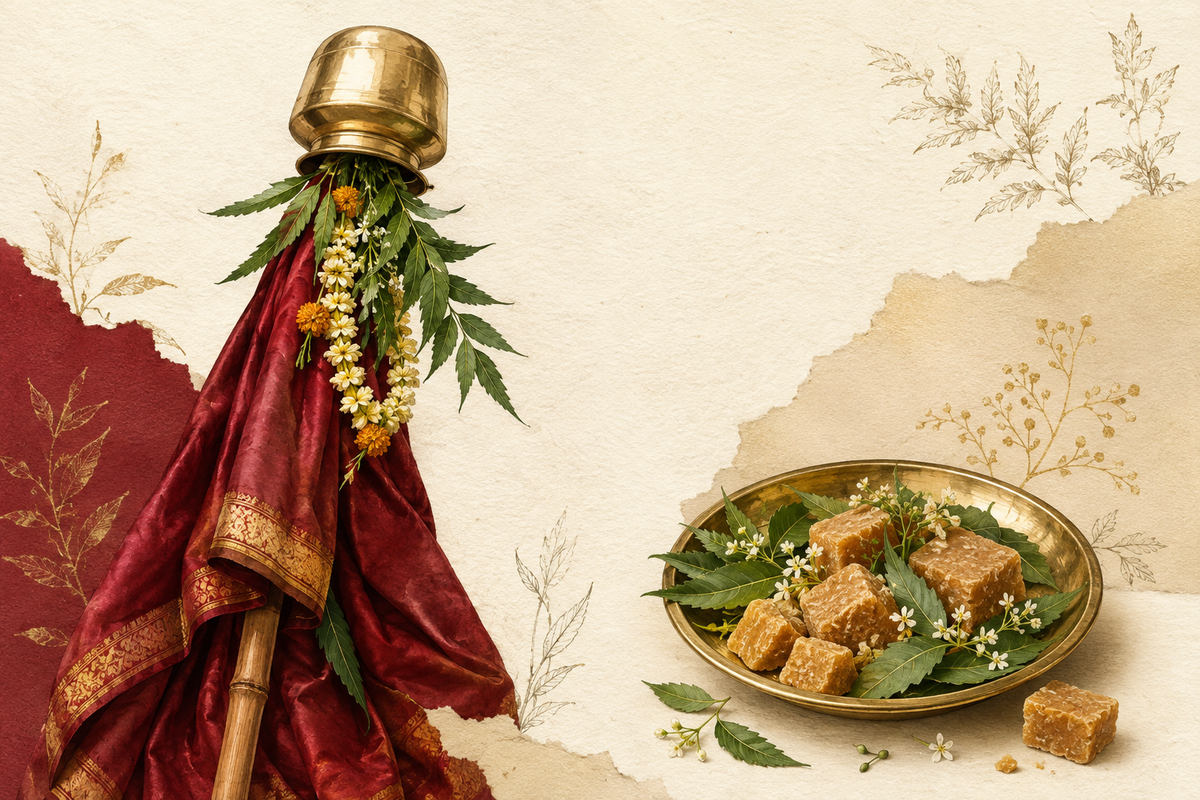
Gudi Padwa and Ugadi are the same new year kept under two names. Both fall on Chaitra Shukla Pratipada, the first tithi of the bright fortnight of the lunar month Chaitra, and both mark the start of a fresh samvatsara for their regions. Maharashtra and Konkan raise the gudi; Karnataka, Andhra Pradesh and Telangana keep Ugadi with bevu-bella and Ugadi pachadi. In Maharashtrian reckoning the day is also counted among the sade teen muhurat, which is why so many families choose it to begin something new. Confirm the tithi against a current panchang for your own city.
One tithi, two names, two very different mornings
The calendar logic is shared. Chaitra is the first lunar month of the Vikrama and Shalivahana reckonings, and its first bright-fortnight tithi opens the year. What changes across the Sahyadris is everything that happens after the bath and the rangoli. In a Pune or Mumbai household the day is built around raising a pole at the window. In a Bengaluru, Hyderabad or Vijayawada household it is built around a single mouthful of food that deliberately tastes of several things at once.
Because both are lunar observances, neither has a fixed English date. They drift across late March and April from year to year, and in rare cases the civil date can differ between two cities because the tithi begins and ends at clock times that shift with longitude and sunrise. This is also why the day is usually a fortnight or so ahead of the solar new years, Puthandu in Tamil Nadu, Vishu in Kerala, Poila Boishakh in Bengal and Baisakhi in Punjab, which are pegged to the sun entering Mesha rather than to a tithi. Our Hindu festival calendar sets out how the lunar and solar reckonings sit next to each other.
Gudi Padwa and Ugadi side by side
| Gudi Padwa | Ugadi | |
|---|---|---|
| Regions | Maharashtra, Goa, Konkan | Karnataka, Andhra Pradesh, Telangana |
| Name meaning | Gudi, a banner; padwa from pratipada, the first tithi | Yuga plus adi, the beginning of an age |
| Tithi | Chaitra Shukla Pratipada | Chaitra Shukla Pratipada |
| Central ritual object | The gudi raised at the door or window | The bevu-bella or Ugadi pachadi offered and eaten |
| Signature food | Shrikhand and puri, puran poli | Ugadi pachadi, obbattu or bobbatlu, holige |
| Reading of the year ahead | Panchang shravan, the year almanac read aloud | Panchanga shravanam, often at a temple |
| Muhurat status | One of the sade teen muhurat | Treated as broadly auspicious for beginnings |
What the gudi is, and how it is assembled
The gudi is put together from a small number of specific parts, and each is traditionally read as carrying meaning. A bamboo pole is washed and stood upright. A bright cloth, usually silk in green, yellow or saffron, is tied near the top so that it hangs like a flag. Fresh neem leaves, a sprig of mango leaves and a garland of flowers are bound at the same point, along with a string of sugar crystals known as gathi or battasa. An inverted metal pot, usually silver, copper or brass, is set on the very top like a crown. The whole assembly is raised in the morning, tied so that it leans slightly outward from a window, balcony or the main door, and lowered before sunset the same day.
The interpretations offered for the gudi are several and they coexist rather than compete. It is described as the flag of Shalivahana, whose era the day inaugurates. It is described as Brahmadhwaj, the banner of Brahma, under whose day of creation the tithi is traditionally placed. It is described as a household mark of victory and of the return of Shri Rama to Ayodhya. Most families keep all of these loosely in mind and none of them exclusively, which is a fair description of how a living custom actually works.
Bevu-bella and the six tastes
Bevu means neem and bella means jaggery in Kannada. On Ugadi morning a small quantity of the two is taken together, often after being offered first. In Telugu households the same principle is expanded into Ugadi pachadi, in which neem flowers, jaggery, raw mango, tamarind, salt and green chilli or pepper are combined so that bitter, sweet, sour, astringent, salty and pungent arrive in one spoon.
The explanation given is the same in both cases and it is unusually plain for a festival custom: the year ahead will contain all of these, they will not arrive separately, and the correct response is to take them as they come. It is worth noticing that the first act of the new year in this tradition is not a wish for good fortune but an acceptance of mixed fortune.
Why the day is treated as a muhurat
Maharashtrian astrological convention recognises sade teen muhurat, three and a half occasions in the year on which a separate auspicious window is customarily considered unnecessary because the entire day is regarded as auspicious. These are Gudi Padwa, Akshaya Tritiya, Vijayadashami and, as the half, Balipratipada during Diwali.
This is why Gudi Padwa carries so much practical weight. It is traditionally chosen for griha pravesh, for registering or opening a business, for signing agreements, for the first day of a course of study and for significant household purchases. It should be said clearly that this is a customary belief about auspiciousness and not a promise of any commercial, financial or personal outcome. Families with a specific parampara, or who are timing something consequential, still consult their own priest or astrologer. If a new home is the occasion, our griha pravesh guide covers what is customarily given and why.
How to keep the day at home: a practical sequence
- Confirm the tithi first. Look up Chaitra Shukla Pratipada on a panchang set to your own city. Do not assume last year's date pattern repeats.
- Clean and mark the threshold. The doorway is washed the previous evening or at dawn, and a rangoli is laid. In Maharashtra a torana of mango leaves is tied above the door.
- Bathe before the puja. An abhyanga snan with oil is the older Maharashtrian custom, followed by fresh or new clothes.
- Assemble and raise the gudi, or set out the pachadi. Whichever tradition is yours, do this before the family eats.
- Do the household puja. A short puja at the home shrine with a lamp, flowers and naivedya is enough in most homes. If you are also beginning Chaitra Navratri, Ghatasthapana is done on this same morning.
- Read or hear the panchang. Panchang shravan and panchanga shravanam are the same idea: the year's almanac is read aloud so the household knows what is coming.
- Take the bitter with the sweet. Neem and jaggery, or the full pachadi, before the festive meal.
- Lower the gudi before sunset with a short prayer, and put the cloth and pot away carefully for reuse.
What households traditionally set up or replace on this day
Because the day is treated as a clean start, it is common to refresh the things that carry the household's daily worship rather than to buy for the sake of buying. A new lamp, a fresh kalash, a replacement thali when the old one has worn thin, or a murti for a shrine that has been meaning to have one, all fit the logic of the day. Families setting up a shrine for the first time often use this morning for the installation itself, and our guide to prana pratishtha at home explains the sequence traditionally followed.

If you are refreshing rather than installing, the practical categories are a kalash and puja accessories set, diyas and lamps, and, where a new deity is being brought in, sacred god idols. Nothing here is compulsory. The gudi itself is assembled from a bamboo pole, cloth and leaves that most households already have or can buy in any market that morning.
A note on the year name
Both traditions name the incoming year. The sixty-year cycle of samvatsara names, Prabhava through Kshaya, turns over on this tithi, and in Karnataka and the Telugu states the new name is announced during panchanga shravanam along with a summary of the year ahead. Predictions of that kind are part of the tradition and are read as such. They are not forecasts to plan finances around.
Gudi Padwa and Ugadi: Frequently Asked Questions
Are Gudi Padwa and Ugadi the same day?
In most years yes. Both are observed on Chaitra Shukla Pratipada, the first tithi of the bright fortnight of the lunar month Chaitra, so the two festivals usually fall on the same date. The names, the household rituals and the food differ by region. Because tithis begin and end at times that shift with sunrise and location, the civil date can occasionally differ, so confirm against a current panchang for your own city.
What does the gudi actually stand for?
The gudi is a bamboo pole dressed with a bright silk cloth, neem and mango leaves, a garland of sugar crystals and an inverted metal pot at the top. It is traditionally read as a banner of victory and an emblem of the Shalivahana era, and in many Maharashtrian homes it is simply understood as a mark of an auspicious fresh start raised at the doorway or window.
What is bevu-bella and why is something bitter eaten at a new year?
Bevu-bella is the Kannada name for neem and jaggery. In Karnataka a small portion of the two is taken together on Ugadi, and in Telugu homes the same idea appears as Ugadi pachadi, a preparation that combines several tastes at once. The custom is traditionally explained as accepting that the coming year will bring bitter and sweet together, and receiving both without complaint.
Is Gudi Padwa considered a good day for a major purchase or a new venture?
Traditionally yes. In Maharashtrian reckoning Gudi Padwa is counted among the sade teen muhurat, the three and a half occasions on which a separate muhurat is customarily considered unnecessary. Many families therefore start ventures, move into new homes or make significant purchases on this day. This is a customary belief and not a guarantee of any outcome.
Do I still need a muhurat if I am acting on Gudi Padwa or Ugadi?
By the sade teen muhurat convention the whole day is treated as auspicious, which is why so much is scheduled on it. Even so, families who follow a specific parampara or who are timing something like a griha pravesh or a business registration often still ask their own priest or astrologer for a window. That decision belongs to your family and your panchang, not to a general article.
When is the gudi raised and when is it taken down?
Custom in most homes is to raise the gudi in the morning after the household has bathed and the threshold has been cleaned and decorated, and to lower it before sunset the same day with a short prayer. Details such as which cloth is used and where the pole is fixed vary considerably from family to family and from village to village.
Which regions use which name for this new year?
Gudi Padwa is the Maharashtrian and Konkani name. Ugadi, from yuga and adi, is used in Karnataka, Andhra Pradesh and Telangana. Related new year observances on nearby dates include Cheti Chand among Sindhis and Navreh in Kashmir. The Tamil, Malayalam, Bengali, Assamese, Odia and Punjabi new years follow a solar reckoning in the month of Vaisakha and fall about a fortnight later.
How do I find the exact date for my city?
Use a panchang that lets you set your location, and look for the sunrise on which Chaitra Shukla Pratipada is current. Because tithi timings shift by longitude, a household in Pune and a household in Hyderabad can occasionally see different civil dates for the same tithi. Always confirm against a current panchang for your own city rather than relying on a generic calendar.


