 Cow Shelter/Donation

Karungali Care: Water, Oil, Perfume, Restringing and How to Bring Back a Dull Finish
September 03, 2026
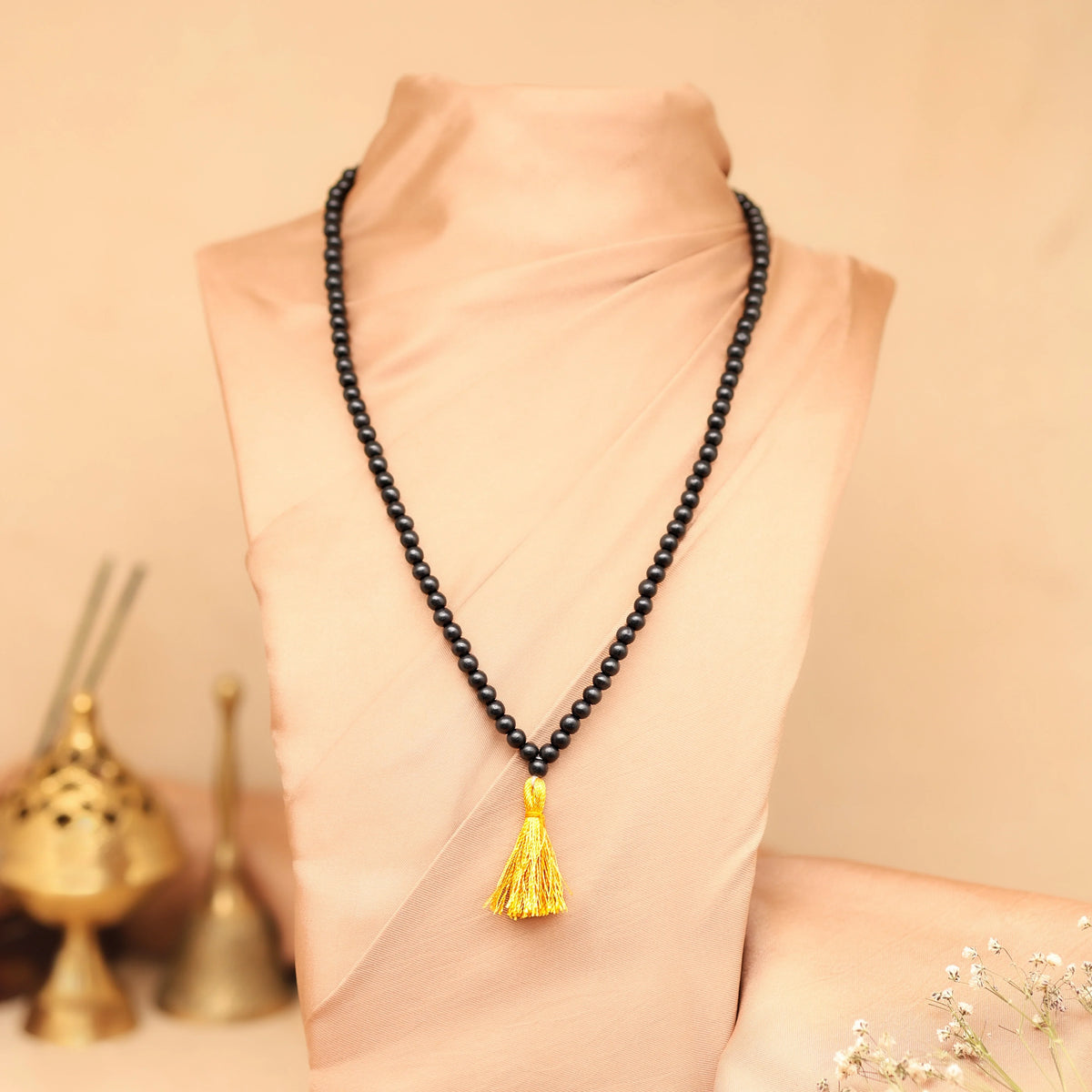
Karungali asks for very little. Keep it dry. Keep it away from perfume, soap and salon chemicals. Wipe it with a soft dry cloth after wearing, and give it a trace of oil once a month at most. Take it off before bathing, swimming and any treatment involving chemicals. Restring it roughly once a year. Store it in a cotton pouch away from heat and sunlight. Never soak it, never use alcohol or an ultrasonic cleaner, and never sand or varnish it. A dulled finish is almost always recoverable. A cracked or repeatedly soaked bead usually is not.
Quick reference: what is safe and what is not
| Situation or substance | Safe? | What to do |
|---|---|---|
| Splash of water, rain, washing hands | Fine | Pat dry with a cloth and carry on |
| Bathing, shower, swimming pool | Avoid | Remove first. Soap film dulls the wood; chlorine is worse |
| Soaking or overnight immersion | No | Swells the wood, loosens knots, can crack beads on drying |
| Sweat from heat or exercise | Tolerable | Wipe dry the same day. Do not leave salt on the surface |
| Perfume, attar, deodorant, hair spray | Avoid | Apply first, let it dry fully, then put the piece on |
| Sesame or coconut oil, sparingly | Yes | A trace on a cloth, buffed in, excess wiped off |
| Alcohol, sanitiser, acetone, solvent | No | Strips the surface and leaves patchy dead areas |
| Toothpaste, metal polish, abrasive cream | No | Scratches the polish permanently |
| Ultrasonic or steam jewellery cleaner | No | Designed for metal and hard stone, not for wood |
| Direct sun, car dashboard, near a stove | No | Heat and dry air are the main cause of hairline cracks |
Water: the single biggest mistake
Karungali is dense, but it is still wood, and wood moves. Brief contact with water does nothing at all — washing your hands, getting caught in rain, an abhishekam splash at the temple. The damage comes from repetition and from soaking.
Every wetting and drying cycle makes the bead expand slightly and then contract. Do it often enough, or soak the piece properly, and three things follow: the thread absorbs water and weakens, the knots swell and then sit loose, and the wood itself can develop fine surface checks as it dries unevenly. This is also why the popular water test is a bad idea on a strung mala, as we explain in the guide to telling Karungali from its lookalikes.
The practical rule: take the piece off before you get properly wet. Shower, bath, oil bath, swimming pool, sea. If it does get soaked, dry it slowly at room temperature on a cotton cloth. Do not use a hairdryer, do not put it in sunlight, do not leave it on a warm surface. Fast drying is what cracks beads.
Oil: useful in very small quantities
A little oil restores the depth of the colour and protects against the dry air of an air-conditioned office or a north Indian winter. Tamil households have traditionally used gingelly or sesame oil, and coconut oil is equally common. Either is fine.
The method matters more than the choice. Put one or two drops onto a soft lint-free cloth — not onto the beads. Work the cloth over each bead, then take a second dry cloth and buff everything until nothing feels tacky. If the piece looks wet, you have used far too much.
Frequency: once a month is generous, and once a quarter is enough for most people. Over-oiling is a real problem. Excess oil sits on the surface, collects dust into a grey film, and eventually goes rancid and smells. Never oil the thread if the mala is knotted — oil accelerates thread degradation.
Perfume, cosmetics and the things that quietly ruin a finish
Alcohol is the enemy. Perfume, attar sprays, deodorant, hand sanitiser and hair spray are all alcohol-carried, and alcohol lifts the natural polish off the wood in patches. The result is not dramatic on day one; it shows up six months later as uneven dull zones on the beads that sit under a shirt collar or against a wrist.
The fix is simply the order of operations. Perfume and cosmetics first. Let them dry. Jewellery last. Reverse it at night: piece off first, then cleansers.
The same logic applies to salons. Hair colour, bleach, keratin treatments, nail products and cleaning chemicals will all mark wood. Take the piece off and put it somewhere you will not forget it.
When to remove it
- Bathing, showering, swimming, and traditional oil baths
- Salon treatments, hair colouring and any work with household chemicals
- Gym sessions with heavy weights, where a mala can catch or snap
- Sleeping, if the cord is long enough to wrap — a safety point, particularly for children
- Kitchen work near an open flame or a hot tawa
Beyond these practical cases, some families observe their own conventions about when a devotional piece is set aside — during mourning periods, for example. These vary a great deal by community and we do not think it is our place to prescribe. Follow your family practice, and see our note on the customs around who wears Karungali and when for the range of views.
Restringing before it breaks
Thread is always the first thing to fail, and a mala that breaks in a crowd loses beads. Inspect yours every few months and look for four signs: visible fuzzing of the thread at the guru bead, beads that have begun to slide because the thread has stretched, a mala that measures noticeably longer than it used to, and any discoloured or stiff section of cord.
For a piece worn daily, restring roughly once a year. For a mala kept for japa and handled only during recitation, two to three years is normal. Knotted stringing costs a little more and is worth it: if the thread does give way, knots hold the remaining beads in place instead of scattering them. We compare the options in our piece on thread, knotted and silver-capped malas.
When restringing, ask for the same bead order to be preserved and for the guru bead to be kept, not replaced. If any bead is cracked, have it swapped at that point rather than later.
Storage
Store Karungali in a soft cotton or silk pouch. This is not decoration — it keeps abrasive dust off the polish and keeps the beads from rubbing against metal jewellery, which is what scratches them.
Avoid three things. Sealed plastic zip bags for long periods, because they trap humidity against the wood. Bathroom cabinets, for the same reason. And any spot in direct sun or near heat, including a car dashboard, a window sill and the top of a fridge.
Lay the piece flat or hang it loosely so it is not folded on itself under tension. A small wooden or cardboard box inside a cupboard, with the pouch inside it, is close to ideal. Many families keep the piece in or beside the home shrine when not being worn, which serves the same practical purpose.
How the finish dulls, and how to bring it back
A Karungali piece goes from deep black to a flat, greyish, slightly chalky look for one of three reasons: a film of soap or body lotion built up over months, fine abrasion from dust and grit, or the wood drying out in low humidity. All three are usually recoverable.
- Dry buff first. Take a soft cotton cloth and work each bead for a few seconds. A surprising amount of dullness is just film and comes off here. Stop if this is enough.
- Barely damp cloth, if needed. Wring a cotton cloth out in plain water until it is only just damp, wipe the beads, then dry them immediately with a second cloth. No soap. No soaking. No running water.
- Let it rest for an hour at room temperature so any moisture in the surface leaves.
- Trace of oil, then buff. One drop on the cloth, over the beads, then buff dry with a clean cloth until the surface is dry to the touch.
- Reassess in a day. The colour deepens as the oil settles. Resist the urge to repeat immediately.
What not to do, ever: sandpaper, steel wool, a nail file, furniture polish, wood varnish, shoe polish or spray lacquer. Any of these permanently changes the surface, and a lacquered bead can never be brought back to natural wood. If a piece is genuinely beyond a home clean, ask a stringer to handle it rather than experimenting.
Cleansing in the devotional sense is a separate matter from physical care. Traditional practices such as passing the piece through incense smoke, keeping it before the family shrine, or reciting over it are covered in our guide to energising and cleaning a mala, and the conventions for daily wear in how to wear a Karungali mala. Replacement pieces and additional strands are in the Karungali malai and Karungali bracelet collections.
Frequently asked questions
Can I wear my Karungali mala in the shower?
Better not to. A single splash is harmless, but daily showering builds a film of soap and shampoo on the beads and puts the thread through a wetting cycle every day. Take the piece off, leave it somewhere fixed so it does not get lost, and put it back on once you are dry.
Which oil is safe for Karungali, and how often?
Sesame or coconut oil, and far less often than most people think. One or two drops on a soft cloth rather than on the beads, worked over the surface and then buffed off with a second dry cloth. Once a month is generous. Excess oil collects dust, dulls the piece and can eventually turn rancid.
My Karungali beads have gone grey and dull. Can that be fixed?
Usually yes. Start with a dry cotton cloth and buff each bead, which removes most surface film on its own. If that is not enough, wipe with a barely damp cloth, dry immediately, wait an hour, then apply a trace of oil and buff. Never sand, varnish or polish the wood.
How often should a Karungali mala be restrung?
About once a year for a piece worn every day, and every two to three years for a mala used only for recitation. Restring before the thread fails rather than after. Fuzzing near the guru bead, beads that slide, and a mala that has grown longer are all signs it is due.
Does perfume damage Karungali?
The alcohol in perfume does. It lifts the natural polish in patches, and the damage shows up gradually as uneven dull areas rather than all at once. Apply perfume first, let it dry completely, and put the piece on afterwards.
Can Karungali crack?
It can, though it is uncommon. Fine surface checks appear when a bead dries too fast or swings between very humid and very dry conditions. Keeping the piece out of direct sun, away from heaters and off car dashboards prevents almost all of it. A cracked bead can be replaced when the mala is next restrung.
How should I store a Karungali mala I am not wearing?
In a soft cotton or silk pouch, laid flat or loosely hung, kept in a cupboard or beside the home shrine. Keep it away from direct sunlight and heat, out of the bathroom, and out of sealed plastic bags, which trap moisture against the wood. Do not store it tangled with metal jewellery.


