 Cow Shelter/Donation

Rudraksha and Children: Safety First, What Family Custom Says About Age, and How to Decide
September 03, 2026
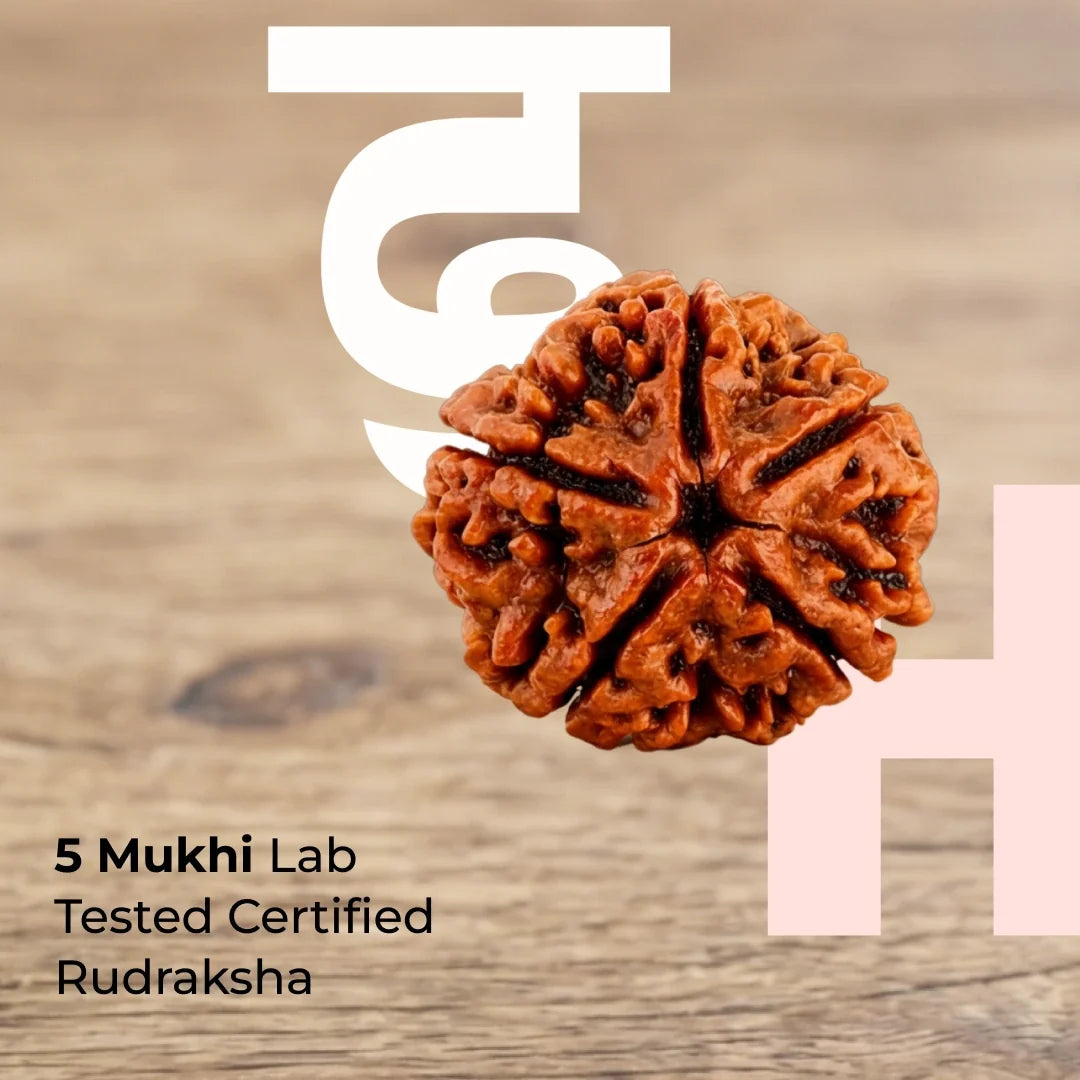
Before anything else: small beads are a choking hazard for young children, and any cord, thread or chain worn around a small child's neck is a strangulation risk. Nothing should be worn by an infant or toddler unsupervised, and nothing should be worn during sleep or naps. With that established, there is no single traditional age at which a rudraksha is given to a child. It varies by family, region and sampradaya, the 5 Mukhi is the bead most commonly given, and whether a child wears one at all is a parent's decision, best taken with a family elder or your family priest.
Read this part first
This section is not a disclaimer at the bottom of the page. It is the most important thing on it, and it is why the article is written in this order.
- Choking. A rudraksha bead is roughly the size and shape of the objects that most commonly cause choking in children under three. A single bead that comes loose from a thread, a bracelet whose elastic has perished, a silver cap that works free, or a bead a child simply decides to put in their mouth are all realistic scenarios. Children under three should not be given small beads to wear or to hold.
- Strangulation. Anything worn in a loop around the neck can catch. Cots, prams, high chairs, car seats, playground equipment, bunk bed rails and the arms of older siblings are all places where a cord can snag or be pulled. This risk is independent of what is threaded on the cord.
- Sleep. Nothing should be worn around a child's neck or wrist while they are asleep, including daytime naps. This is the single rule most often broken and the one least worth breaking.
- Supervision. If a young child is wearing anything at all, an adult should be able to see them. That is the whole rule.
- Chewing. Beads are polished, sometimes oiled, and can splinter at the drill hole. A bead is not a teether and should never be used as one.
- Skin. If any redness, rash or irritation appears where a bead or thread sits, take it off and do not put it back on. If it does not settle, see a doctor.
Plainly stated: this article is not medical advice and it is not developmental advice. It describes household custom.
What tradition actually says about age
Less than people assume. The shastric material on rudraksha concerns the bead, its mukhi and the conduct of the wearer, not paediatric thresholds. What exists in practice is family custom, and family custom is genuinely varied.
Three broad patterns are common. Some households receive a bead around a naming or first-year ceremony but keep it in the shrine rather than on the child. Some give nothing until the child is old enough to understand it and look after it, usually somewhere in the primary school years. Families that observe upanayana often give a mala at the thread ceremony.
None of these is more correct than the others. If your family has a settled practice, that practice is the answer for your household. If it does not, the sensible order is to ask an elder, then your family priest, and to let the safety considerations above set the floor regardless of what either says about the custom.
Age, custom and the safety consideration that dominates
| Age band | What families commonly do | The consideration that governs |
|---|---|---|
| Under 3 years | Most keep the bead in the home shrine, not on the child | Choking risk from small objects is at its highest. Nothing worn, nothing within reach. |
| 3 to 6 years | Some families begin, usually with a single bead and always supervised | Choking risk persists. Never during sleep. An adult should be present. |
| 6 to 10 years | More common; the child is usually told what it is and how to look after it | Cords and loops still catch. Still nothing worn at night or during sport. |
| 10 years and above | Widely given; in some families a mala is given around upanayana | The child can be taught the handling rules and can be expected to follow them. |
The bands describe what is commonly observed, not a rule. Only a parent knows whether a particular child still mouths objects, tugs at things or sleeps restlessly. That judgement belongs to you.
Which mukhi is customarily given
The 5 Mukhi is the bead most families choose. It is the most widely available and least expensive Nepali bead, and the one most often described in tradition as suitable for general wear by anyone. Our guide to the 5 Mukhi Rudraksha covers the bead, and the 1 to 14 mukhi chooser explains how faces are counted.
Higher mukhi and rarer beads are generally not given to children in ordinary family practice, for practical reasons: they cost more, they are more often faked, and they are easier to lose. Beads associated with particular planetary remedies are traditionally chosen only on an astrologer's advice, which is a matter for a jyotishi rather than for a general article.
We make no claim, and no claim should be inferred, that any mukhi does anything for a child. Not for health, not for studies, not for concentration, not for behaviour, not for protection. Tradition treats a rudraksha as a devotional object. That is all this article treats it as.
The form matters more than the mukhi
If a bead is going to be given, its physical form is the decision that actually affects safety.
- Kept in the shrine, not worn. The safest option by a wide margin, and a completely legitimate one. Many families do exactly this for years before the child wears anything.
- A single capped bead on the parent's own mala. Also common. The bead is in the house and nothing is on the child.
- A single bead pendant. If it is to be worn, one securely capped bead is far preferable to a strung mala, because there is one bead rather than a hundred to come loose. See single Rudraksha beads for what a capped single looks like.
- A bracelet. Beads on elastic scatter when the elastic goes, and elastic always eventually goes. Check the cord monthly, replace at the first sign of thinning, and prefer knotted thread. Our comparison of thread, knotted and silver-capped construction explains why knotting limits how many beads can escape at once.
- A full 108-bead mala. Rarely appropriate for a young child. It is long, heavy, easy to catch and carries the most beads to lose.
A parent's checklist before buying
- Buy a bead that is properly capped or properly knotted rather than a loose bead on a plain loop of thread.
- Check the drill hole. A ragged or over-wide hole is where threads saw through.
- Ask what the cord is. Cotton, silk, elastic and metal chain all fail differently. Ask whether a safety or breakaway fastening is available.
- Buy from a seller who states origin and size in writing and who offers lab certified and X-ray tested beads. X-ray testing checks the internal compartments against the faces on the outside. Our guides to buying authentic rudraksha and to what drives the price cover what to ask for.
- Set the household rules on day one. Off at bedtime, off for swimming, off for sport, off in the bath. Rules made at the start are kept; rules made after an incident are not.
- Inspect it every few weeks. Cord, knots, caps, drill hole. Replace early.
Adult wearing customs, including the traditional observances around cleanliness and handling, are set out in our guide on how to wear rudraksha, and the precautions people ask about most often in our note on precautions and side effects.
What this article does not claim
It is worth being explicit, because a great deal of what circulates online about children and spiritual items is not. We are not saying, suggesting or implying that wearing a rudraksha will improve a child's health, immunity, sleep, temperament, behaviour, concentration, memory, academic results or safety, or that it will protect a child from anything. No such claim is made by this article, this brand or this author. If you have a concern about a child's health or development, the correct step is a doctor or a qualified professional, not a bead.
What can fairly be said is that a rudraksha is a devotional object with a long history in Hindu households, that families give one to a child as part of their own custom, and that whether, when and in what form belongs to the parents.
Rudraksha and Children: Frequently Asked Questions
Is it safe for a small child to wear a rudraksha?
For infants and toddlers, the honest answer is that small beads and neck cords carry real risks and are best avoided altogether. A loose bead is a choking hazard and any loop around the neck is a strangulation risk that can catch on cots, prams, car seats and playground equipment. Nothing should be worn during sleep or naps, and nothing should be worn unsupervised. Many families keep the bead in the home shrine instead, which is a completely traditional option.
At what age do families usually give a child a rudraksha?
There is no fixed traditional age and practice varies widely. Some households keep a bead in the shrine from infancy without the child wearing it, some wait until the child is old enough to understand and look after it, and families that observe upanayana often give a mala at the thread ceremony. Age and suitability are a parent's decision, ideally taken with a family elder or your family priest, and the safety considerations should set the floor regardless of custom.
Which mukhi is customarily given to a child?
The 5 Mukhi is by far the most common choice. It is the most widely available Nepali bead, the least expensive, and the one most often described in tradition as suitable for general wear. Rarer and higher mukhi beads are usually not given to children in ordinary family practice because they are costly, more often faked and easier to lose. No claim is made here about what any mukhi does.
Should a child wear it while sleeping or playing sport?
No. Nothing worn around the neck or wrist should stay on during sleep, including daytime naps, and it should come off for sport, swimming, bathing and rough play. These are the situations in which cords catch and threads break. Setting the rule on the first day and keeping it is much easier than reintroducing it later.
What form is safer than a mala for a young child?
A single securely capped bead is preferable to a strung mala, because there is one bead rather than many to come loose. A knotted thread is preferable to elastic, since knots between beads limit how many can escape if the cord fails. Safest of all is not wearing anything: keeping the bead in the home shrine, or on a parent, is a normal and traditional practice.
What should I check before buying one for a child?
Check that the bead is properly capped or knotted rather than loose on a plain loop, look at the drill hole for ragged edges, ask what the cord is made of and whether a breakaway fastening is available, and buy from a seller who states origin and size in writing and offers lab certified and X-ray tested beads. Then inspect the cord and caps every few weeks and replace them early rather than late.
Will wearing a rudraksha help a child with studies, focus or behaviour?
We make no such claim. Nothing in this article should be read as suggesting that a rudraksha affects a child's health, development, concentration, memory, behaviour, academic performance or safety. In tradition it is a devotional object and that is how it is described here. Any concern about a child's health or development should be taken to a doctor or a qualified professional.


