 Cow Shelter/Donation

Sambrani, Dhoop, Loban and Camphor vs Agarbatti: What Each One Is and When to Burn It
September 03, 2026
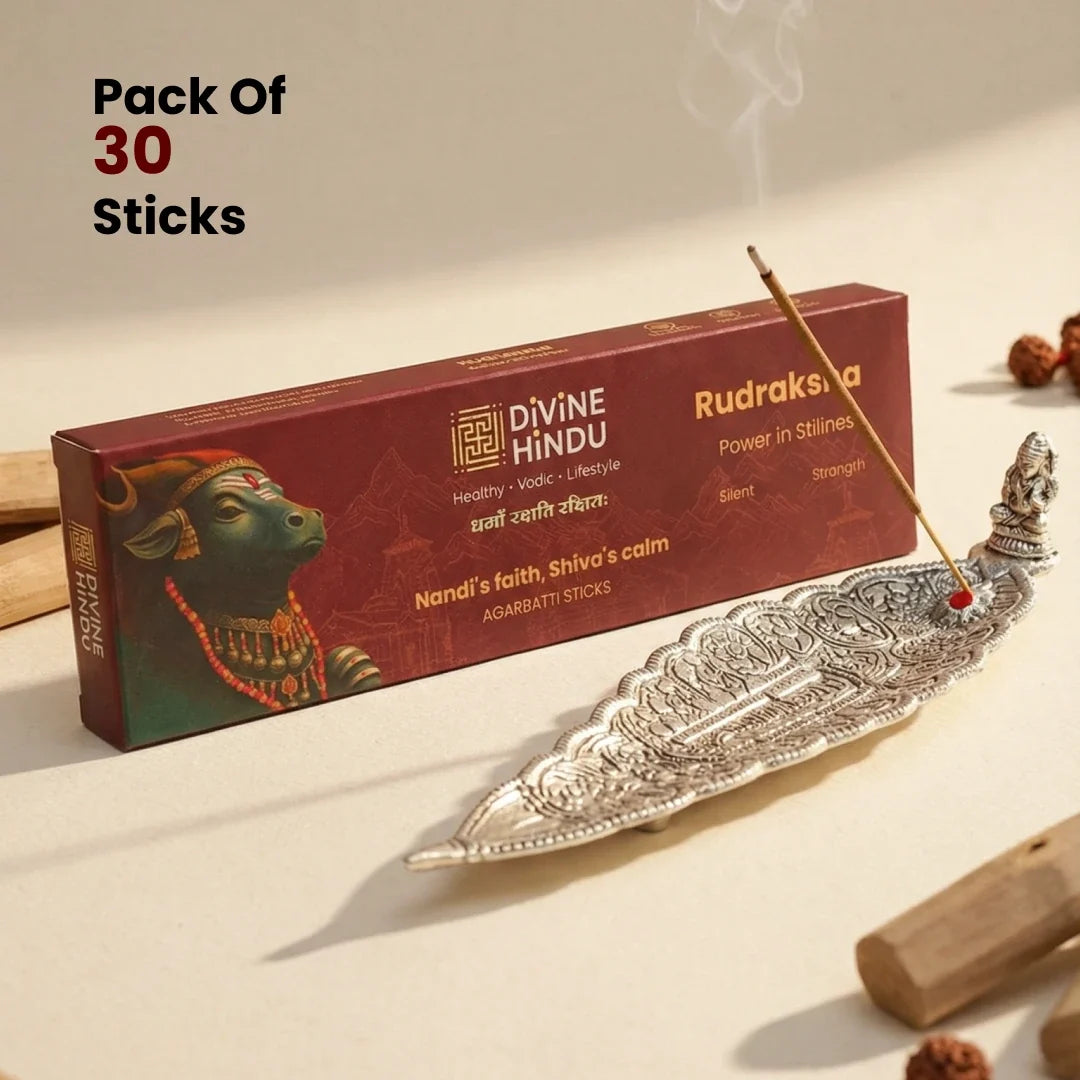
Agarbatti is a bamboo stick coated in aromatic paste that burns on its own. Dhoop is the same idea without the stick — denser smoke, heavier scent. Sambrani and loban are two regional names for what is essentially the same resin, which will not burn by itself and needs a charcoal disc or a self-lighting cup. Camphor is not incense at all: it burns with an open flame, is gone in a minute or two, and is offered at the close of aarti. Each has its own place in household worship and each carries its own fire risk. Here is what to use when, and how to burn it safely.
The five, side by side
| What it is | Made from | How it burns | Roughly how long | Traditionally used for |
|---|---|---|---|---|
| Agarbatti | Bamboo stick coated with charcoal or wood powder, a natural binder and aromatics | Self-sustaining once lit; blow out the flame and let it smoulder | 20 to 45 minutes by length | Daily morning and evening puja; everyday use |
| Dhoop | Aromatic wood powders, resins, herbs and often ghee, pressed without a stick | Self-sustaining; stand the batti or cone on a metal or ceramic plate | 15 to 30 minutes | Formal puja, aarti, festival days; the dhoopam offering |
| Sambrani | Benzoin resin, sold as raw granules or as pressed cups | Raw resin needs a hot charcoal disc; pressed cups contain their own charcoal and self-light | 10 to 25 minutes | Evening at dusk, after cleaning, after illness, for smoking hair and clothes |
| Loban | Essentially the same benzoin resin under its northern and Urdu name | On charcoal, in a loban daan or dhoop daan | 10 to 25 minutes | Purifying a room, evening use, and at dargahs |
| Camphor | Camphor, natural or synthetic, pressed into tablets | Open flame; needs a metal holder, never a surface | 1 to 3 minutes for a tablet | The closing aarti; deeparadhana |
Agarbatti: the everyday one
An agarbatti is a thin bamboo splint rolled in a paste of charcoal or wood powder held together with a natural bark binder, then scented. Once lit and the flame waved out, the coating smoulders steadily down the stick and the bamboo carries the ember.
Two grades exist and they are worth telling apart. Masala agarbatti has the aromatic material worked into the paste itself. Dipped or charcoal agarbatti is a plain unscented blank soaked in perfume afterwards, which is cheaper and why a very inexpensive stick can smell intense at first and of almost nothing halfway down. If the fragrance is strongest in the packet and fades once burning, you have a dipped stick.
Agarbatti is the workhorse of household worship: one or three sticks at the morning lamp, the same in the evening. Our separate guide to agarbatti and incense covers types and choosing in more detail.
Dhoop: the formal one
Dhoop is what you get when you take the aromatic material and leave out the bamboo. It comes as a thick stick without a core, as a cone, or as a loose powder to be sprinkled on charcoal.
Because there is no stick and no charcoal filler diluting it, the smoke is thicker and the scent heavier and more resinous. Dhoop is what most households reach for on festival days, at aarti, and for a formal puja rather than a daily one. In the classical sequence of sixteen upacharas, dhoopam is the offering that comes before deepam, the lamp — which is broadly why dhoop and then lamp is the order many families still follow.
Practical point: a dhoop batti or cone leaves ash and can leave an oily mark. Stand it on a metal or ceramic plate, never directly on wood, marble or cloth.
Sambrani and loban: the same resin, two names
This is the single most common confusion and it is easily settled. Sambrani in Tamil, Telugu and Kannada and loban in Hindi and Urdu both refer to benzoin resin, the hardened sap of the Styrax tree. The material is the same. The names, the vessels and the occasions attached to them differ regionally. Loban is also used more loosely in the north for other aromatic gums, so a packet labelled loban is not guaranteed to be benzoin in the way one labelled sambrani usually is.
Resin does not burn on its own. It melts, bubbles and gives off its smoke only when something else supplies the heat. That means one of two things:
- Raw granules on a charcoal disc, in a metal sambrani or loban holder with a bed of sand or ash. This is the traditional method and the one that gives the fullest scent.
- Pressed cups or discs, which already contain charcoal and light directly from a match. Convenient, and much safer for a household with no experience of charcoal — but they still get extremely hot and still need a holder.
In South Indian households, sambrani is strongly associated with dusk: burned at the threshold and carried through the rooms as the evening lamp is lit. It is also traditionally used after cleaning the house, after illness in the home, to smoke and dry a baby's hair after a bath, and to scent stored clothes. Several of these uses are covered in our note on clearing the atmosphere of a home.
Camphor: not incense, and the one to be careful with
Camphor sits in a different category entirely. It is not smouldered for scent; it is set alight and burns with a visible flame. Good camphor burns away almost completely, leaving little or no residue, and that property is traditionally read as the point of the offering — something that consumes itself entirely and leaves nothing behind.
It is offered at the conclusion of the aarti, the karpoor aarti, waved before the deity and then brought to the devotees. Our guide to aarti covers where it sits in the sequence.
Three practical points. First, camphor burns fast and hot — the flame is larger than people expect and can flare if several tablets are lit together. Always use a metal aarti holder or a diya with a handle, never a plastic or painted plate, and never hold a burning tablet in bare fingers. Second, Bhimseni or natural camphor and ordinary synthetic tablet camphor are different products; families that use camphor in offerings other than burning should be particular about which they buy. Third, and most seriously: naphthalene mothballs look almost identical to camphor tablets and are not camphor. They are toxic and must never be burned or confused with puja camphor. Store the two nowhere near each other.
How to burn resin on charcoal, safely

- Use a proper holder. A metal sambrani or loban daan, or a thick ceramic bowl. Put a layer of clean sand or ash in the base; it insulates the vessel and stops the heat reaching the surface underneath.
- Light the disc with tongs, never fingers. Hold it at the edge and touch a flame to it until it sparks across the surface. Set it on the sand and let it ash over for a few minutes before adding anything.
- Add resin a little at a time. A few granules. Adding a spoonful produces a great deal of smoke very quickly and a smell of burning rather than of benzoin.
- Stand it on a heatproof surface. A charcoal disc runs far hotter than most people assume and will scorch wood, crack marble and melt plastic straight through a thin metal base.
- Open a window. Resin smoke is dense. A closed puja room fills fast.
- Never leave it unattended, and never carry a lit holder by anything other than its handle or chain.
- Let it die out fully in the holder, or douse it with water outdoors and confirm it is cold. Do not put warm charcoal into a bin.
A word on smoke
Anything burned indoors produces smoke and fine particles, and resin and dhoop produce a great deal more of it than an agarbatti. This is not an argument against a practice that predates all of us; it is an argument for ventilation.
Open a window or a door while burning. Keep smoke away from infants. Anyone in the household with asthma or a respiratory condition should be considered before a room is filled with resin smoke, and if in doubt, ask their doctor rather than us. Pet birds in particular are extremely sensitive to smoke of any kind and should be in another room with the door shut. Keep matches, camphor and charcoal out of reach of children.
Which to use when
A simple household pattern that most families would recognise: agarbatti for the daily lamp morning and evening; dhoop on festival days and for a full puja; sambrani or loban at dusk, after cleaning, and on occasions in the house; camphor to close the aarti. None of it is compulsory, and doing one thing attentively is worth more than doing all four.
What to keep stocked is covered in our daily pooja essentials guide, and how to lay it all out in what goes on a puja thali. Current stock is in the Agarbatti and Incense and Pooja Thali collections.
Frequently asked questions
Is sambrani the same as loban?
In practice, yes. Both names refer to benzoin resin, the hardened sap of the Styrax tree, and the material is the same. Sambrani is the Tamil, Telugu and Kannada name and loban the Hindi and Urdu one. Loban is used a little more loosely in the north and may sometimes refer to other aromatic gums, so check what is actually in the packet.
Can sambrani be burned without charcoal?
Raw resin granules cannot, because they need an external heat source to release their smoke. Pressed sambrani cups and discs can, because charcoal is already built into them and they light directly from a match. Those cups still become extremely hot and still need a proper holder on a heatproof surface.
What is the difference between agarbatti and dhoop?
An agarbatti has a bamboo core and a coating that includes charcoal or wood powder, so its smoke is lighter and it burns for longer. Dhoop has no stick and no filler, so the smoke is thicker and the scent heavier and more resinous. Agarbatti suits daily use; dhoop is what most households reach for on festival days and for formal puja.
Why is camphor burned at the end of an aarti?
Because it burns away almost completely and leaves little or no residue behind. Tradition reads that as the meaning of the offering, something that consumes itself entirely without remainder. Practically, it also gives a bright, brief flame that can be waved before the deity and then carried to those present.
Is it safe to burn camphor indoors?
In small quantities and with care, yes, and it is done in millions of homes daily. Use a metal aarti holder or a diya with a handle, light one tablet at a time, keep it away from cloth, curtains and hair, and never hold a burning tablet in your fingers. Ventilate the room, and never confuse naphthalene mothballs with camphor tablets.
Which one is best for daily puja?
Agarbatti, for most households. It is inexpensive, it burns cleanly enough for a small room, it needs no charcoal and no supervision beyond ordinary care, and it takes twenty to forty minutes, which is about the length of a morning routine. Keep dhoop and sambrani for festival days and for occasions.
How do I put out a charcoal disc safely?
Let it burn out fully in the holder, which is the simplest option, and check that it is genuinely cold before touching it. If you need to stop it sooner, take the holder outdoors and douse the disc with water, then confirm it is cold. Never put warm charcoal into a bin, and never leave a disc burning in an empty room.


