 Cow Shelter/Donation

Skanda Sashti: The Six-Day Vratham, Soorasamharam and Murugan Worship at Home
September 03, 2026
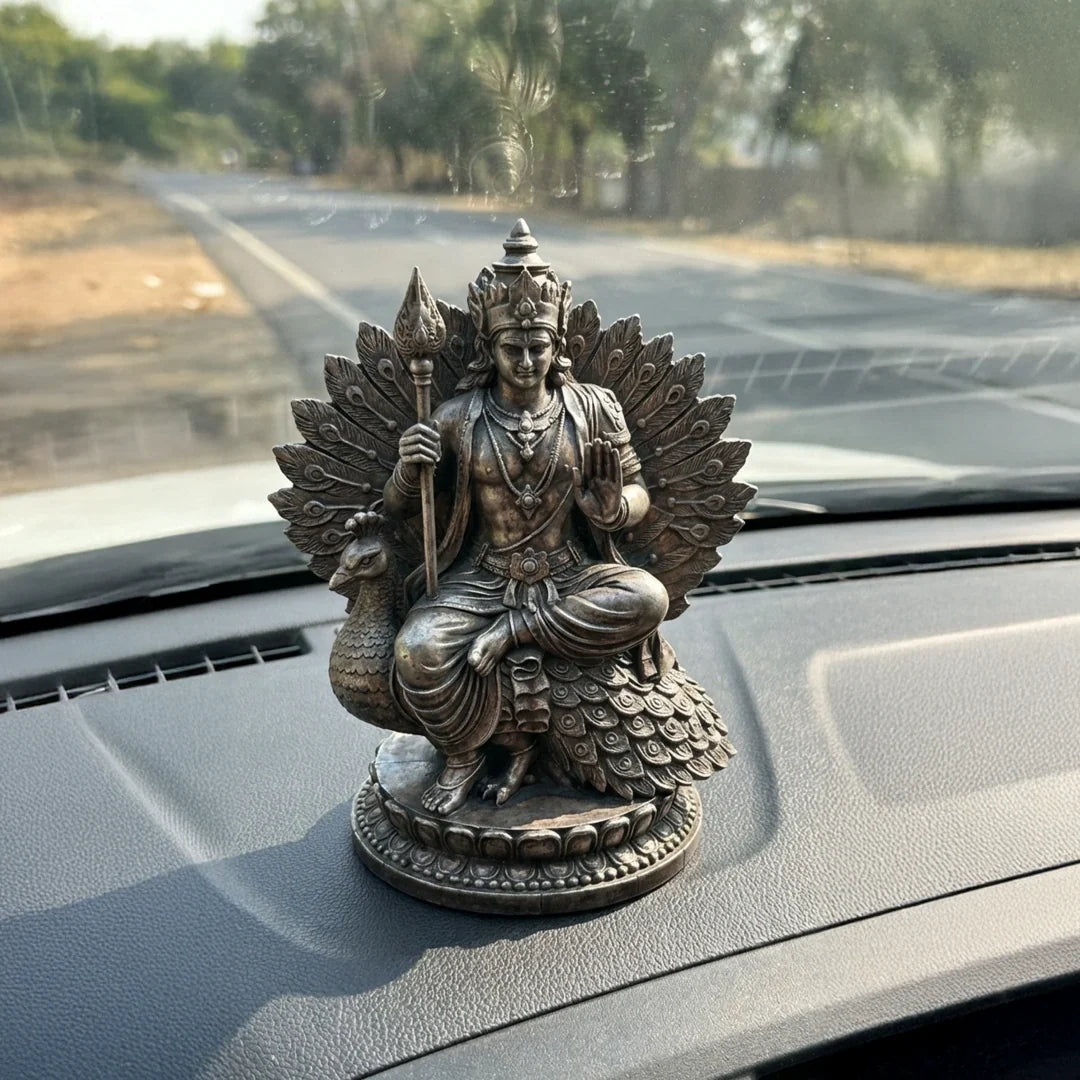
Skanda Sashti is a six-day observance for Murugan, kept in the Tamil month of Aippasi — mid-October to mid-November in the Gregorian calendar. It begins on the first tithi of the waxing fortnight following the Aippasi new moon and ends on Sashti, the sixth tithi. The six days mirror the six days of Murugan's battle with Soorapadman, and the observance culminates in Soorasamharam, the re-enactment of that victory, staged most famously on the shore at Tiruchendur. Many devotees keep a vratham across the six days. Confirm the dates against a current panchang for your own city.
The shape of the six days
| Day | Tithi | What it traditionally carries |
|---|---|---|
| One | Prathamai | The vratham is taken up. Devotees begin the fast, light the lamp and start the recitation cycle |
| Two | Dwitiyai | Continued observance. In temples, the utsava murti begins the sequence of processions |
| Three | Trithiyai | Continued observance. Many households begin daily reading of the Kanda Sashti Kavasam here if not before |
| Four | Chaturthi | Continued observance. The battle narrative is recited or read in stages at many temples |
| Five | Panchami | The last full day of the fast for most observers. Temple crowds build sharply |
| Six | Sashti | Soorasamharam is enacted, usually in the late afternoon or evening. The fast is broken afterwards |
At many temples the day following Sashti is kept as Thirukalyanam, the celestial marriage of Murugan and Deivanai. Where that is observed, devotees frequently stay an extra day.
Why six days
In the traditional account, Soorapadman and his brothers had made themselves proof against almost everything. Murugan was born to meet them, and the confrontation ran over six days. Each of the six days of the vratham corresponds to one day of that engagement, which is why the observance is counted rather than simply kept on a single tithi.
The number six recurs around Murugan more broadly — the six faces of Shanmukha, the six sparks from which he is born, the six Arupadai Veedu temples. Devotees read the six days of Sashti within that pattern.
Soorasamharam
On the sixth day, temples enact the conclusion of the battle. The best-known staging is at Tiruchendur, where the enactment takes place beside the sea and draws immense crowds; Thiruparankundram, Thiruthani and many smaller temples hold their own versions.
The form is broadly consistent. The utsava murti of Murugan is brought out in procession. Effigies representing Soorapadman and his forces are set up. Over a sequence that can run for some hours, the confrontation is played out, ending when the Vel is cast. In the traditional account Soorapadman finally takes the form of a mango tree, which the Vel splits in two; the halves become a peacock and a rooster, and Murugan takes them as his mount and his banner rather than destroying them.
That ending is the point of the whole thing, and it is worth saying plainly. The tradition does not present Soorasamharam as annihilation. What is opposed is taken into service. Devotees who watch it are generally invited to read it inwardly, as something about what is done with one's own resistance rather than as a spectacle about an enemy.
The vratham: how the fast is actually kept
There is no single form, and anyone who tells you there is has not looked outside their own family. The common patterns are these.
- One meal a day. The most widespread form. A single vegetarian meal, usually taken after the evening lamp, with fruit and milk otherwise.
- Fruit and milk only through the six days, with a proper meal only after Soorasamharam.
- A full fast on Sashti alone, with light vegetarian food on the preceding five days. Common among those who work.
- Nirjala or complete fasting on the final day. Kept by some devotees and not advisable for most.
- The extended observance. Some devotees keep a much longer preparatory period running up to Sashti. This is a serious undertaking and belongs with guidance, not with a website.
Alongside whatever form is chosen, the usual disciplines are a vegetarian diet, abstention from alcohol, bathing before dawn, and daily recitation — most commonly the Kanda Sashti Kavasam, traditionally attributed to Devaraya Swamigal, and selections from the Thiruppugazh.
A plain word on health. Fasting is a devotional discipline, not a treatment for anything, and we make no claims about what it does to the body. If you are pregnant, diabetic, on regular medication, elderly or unwell, speak to your doctor before undertaking a multi-day fast, and choose a lighter form without any guilt. The tradition has always accommodated those who cannot fast; substituting recitation, charity or temple service is entirely accepted.
Observing Skanda Sashti at home
- Decide the form before day one. Choose the version of the fast you can actually complete, and tell the household so meals are planned around it.
- Set the shrine. Clean it before the first day. Place the Murugan idol or the Vel at the centre. Fresh flowers daily if possible; yellow and orange are the traditional colours.
- Light the lamp at the same time each evening. A ghee lamp for the deity is customary. Keep it on a stable base clear of cloth. See our guide to diyas and lamps.
- Recite daily. The Kanda Sashti Kavasam once each evening is the most common household practice. If you are counting japa, our note on chanting on a mala covers the technique.
- Keep the sixth day free if you can. Visit a Murugan temple for Soorasamharam. If you cannot, many temples now stream it.
- Break the fast properly. After Soorasamharam, with something light first. Offer the food at the shrine before eating.
Murugan idols and Vel forms are in the Lord Murugan collection; carved Karungali idols are the traditional Tamil choice, and the background to that is in our article on why Karungali is sacred to Murugan, Ayyanar and Shiva.
Related observances, and what not to confuse it with
A Sashti vratham is kept every month on the sixth tithi of the waxing fortnight by many Murugan devotees; the Aippasi one is simply the greatest of them. Thai Pusam commemorates a different moment altogether — the giving of the Vel, before the battle rather than after it.
Karnataka and Maharashtra keep a separate Subrahmanya Shashti in the month of Margashirsha, associated with Kukke Subramanya and, in Maharashtra, with Khandoba at Champa Shashti. These are related traditions with their own liturgies and their own dates, and they should not be treated as the Tamil observance under another name.
Frequently asked questions
When is Skanda Sashti observed?
Over six days in the Tamil month of Aippasi, which runs from about mid-October to mid-November. The observance begins on the first tithi of the waxing fortnight after the Aippasi new moon and concludes on the sixth tithi. Tithi timings vary with location and with the almanac tradition followed, so confirm against a current panchang for your own city.
What is Soorasamharam?
It is the ritual enactment on the sixth day of Murugan overcoming Soorapadman. Temples stage it in procession, most famously at Tiruchendur beside the sea. In the traditional account Soorapadman finally takes the form of a mango tree, the Vel splits it, and the halves become the peacock Murugan rides and the rooster on his banner.
Why does the observance run for six days?
Because the six days correspond to the six days of the battle in the traditional account. The number recurs throughout Murugan devotion, in the six faces of Shanmukha, the six sparks of his origin and the six Arupadai Veedu temples, and devotees read the vratham within that pattern.
How strictly must the Skanda Sashti fast be kept?
Practice varies widely and no single form is required. The most common is one vegetarian meal a day taken after the evening lamp, with fruit and milk otherwise. Others eat lightly for five days and fast fully only on Sashti. Choose the form you can genuinely complete.
Can someone who cannot fast still observe Skanda Sashti?
Yes, and the tradition has always allowed for it. Daily recitation, lighting the lamp, temple service and charity are accepted substitutes. If you are pregnant, diabetic, elderly, unwell or on regular medication, speak to your doctor before any multi-day fast and choose a lighter observance without guilt.
What is recited during the six days?
The Kanda Sashti Kavasam is the text most closely associated with the observance, traditionally attributed to Devaraya Swamigal, and it is commonly recited once each evening. Selections from the Thiruppugazh are also widely used. Recite what your family knows rather than attempting something unfamiliar for the first time during a vratham.
Is Skanda Sashti the same as Thai Pusam?
No. Thai Pusam falls in the month of Thai and commemorates Parvati giving Murugan the Vel, before the battle. Skanda Sashti falls in Aippasi and commemorates the battle and its conclusion. Both are Murugan festivals, but they mark different moments and are kept quite differently.


