 Cow Shelter/Donation

What Not to Gift: Traditional Customs on Sharp Objects, Black Items, Leather and Timing
September 03, 2026
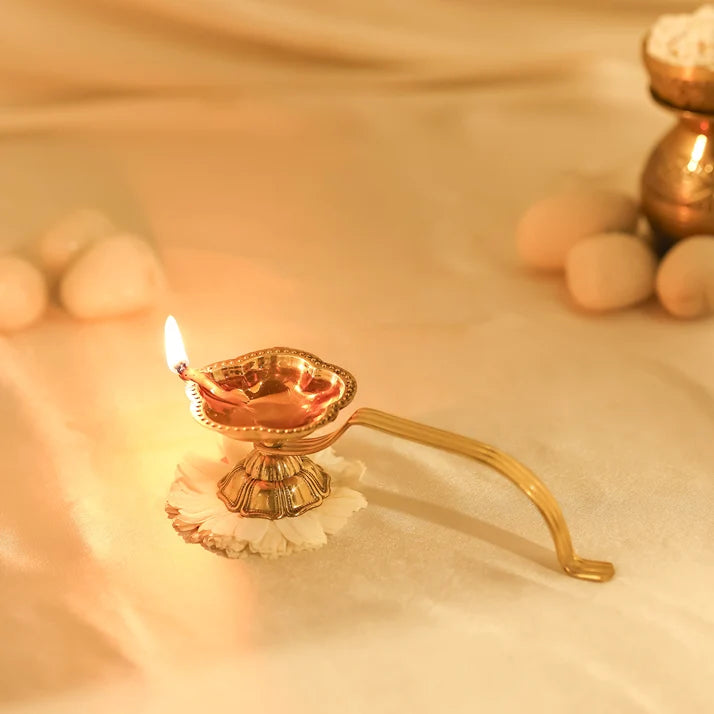
A short list of things is traditionally left out of Indian gifting, and knowing it is mostly about not putting a host in an awkward position. Sharp objects, black items, leather and footwear, empty wallets and containers, handkerchiefs and anything chipped are the items most commonly avoided. Timing matters too: Pitru Paksha, Adhik Maas, a family's mourning period and, for many, Amavasya are customarily set aside. None of this is binding, and observance varies enormously from one household to the next.
Before the list
Everything below is custom, not prohibition. These are conventions of courtesy that grew up over a long time and are followed to very different degrees across regions, communities and families. Many households observe several of them without ever having thought about why. Many observe none at all and would be surprised to learn the list exists.
These are traditional beliefs and practice varies. Nothing here should be read as a claim that giving a particular object causes misfortune, loss, illness or bad luck to anyone. The practical value in knowing the list is simply that you avoid handing someone something they will feel obliged to set aside quietly, which is an uncomfortable position to put a host in.
What is customarily avoided
| Item | The reasoning usually given | Give instead |
|---|---|---|
| Knives, scissors, cutlery sets | A cutting edge is traditionally associated with severance in a relationship | A serving piece, a lamp, or take a coin in exchange |
| Black clothing, black decor, black wrapping | Black is customarily linked to mourning and to warding off rather than celebration | Red, yellow, green or gold; black stone and Karungali are a separate category and widely given |
| Empty wallets, purses, cash boxes | Anything meant to hold something is not given empty | The same item with a coin or note placed inside |
| Empty vessels and containers | Same reasoning; the vessel enters in the state you wish for the house | Filled with rice, sugar, jaggery or a coin |
| Leather goods, footwear | Customarily avoided in Hindu households, especially near a mandir | Non leather bags, wallets, shawls |
| Handkerchiefs | A widely held association with tears | A scarf, a stole or a shawl |
| Clocks and watches | Avoided by some communities as marking time running out | A desk piece, a pen, a crystal or stone article |
| Anything chipped, cracked or repaired | Damaged objects are customarily not offered at an auspicious occasion | Check the piece before it is wrapped, particularly after courier |
| Second hand and used items | Traditionally not given at auspicious occasions, family heirlooms excepted | New, however modest |
| White flowers, white clothing | White is associated with mourning in many Hindu communities | Coloured flowers; marigold and rose are conventional |
| Gemstones chosen at random | In Vedic tradition a stone is selected for an individual from their chart | Rudraksha, a plain japa mala, or ask first |
| Medicines and health items | Implies a diagnosis and can cause real discomfort | Something given plainly as affection |
The three ideas running underneath
Almost the whole list collapses into three ideas, which makes it far easier to remember than a list of twelve items.
Nothing that cuts. Anything with an edge is read as separation, which is why knives and scissors are avoided and why the coin workaround exists.
Nothing empty. A wallet, a box, a vessel or a jar is customarily given with something inside it, on the reasoning that the object should enter the recipient's home in the condition you wish for the home.
Nothing associated with mourning. Black and white, handkerchiefs, and items used at last rites fall here. This is also why the same object can be entirely welcome in one community and quietly avoided in another, since the colour conventions of mourning are not uniform across India.
Timing: when gifting is customarily deferred
| Period | What is customarily deferred | Note |
|---|---|---|
| Pitru Paksha | New purchases, auspicious gifting, ceremonies | The fortnight is set aside for ancestors; gifting resumes after |
| Adhik Maas | Weddings, housewarmings, new beginnings | The intercalary month, observed in most North Indian traditions |
| Kharmas | Weddings and new undertakings | The solar months of Dhanu and Meen, in North Indian practice |
| Amavasya | Beginnings, in many families | Diwali is the well known exception, since Lakshmi Puja falls on it |
| A family's mourning period | All celebratory gifting | Follow the family's lead entirely; do not send anything unasked |
| Rahu Kaal | Starting anything new, for many households | A short window that shifts by weekday and location |
Two smaller timing customs worth knowing. Many families prefer to give in the first half of the day for auspicious occasions, and a good number avoid giving money or valuables after sunset. Neither is universal, but both are common enough that you will encounter them.
The workarounds everyone actually uses
The coin exchange. If someone genuinely wants a knife set, the accepted route is for the recipient to hand back a token coin, which makes the exchange a purchase rather than a gift. Everyone understands what is happening and nobody treats it as anything but a formality.
Fill it first. A rupee coin in a wallet, a spoon of rice in a vessel, a note in a cash box. This takes ten seconds and resolves the whole category.
Move the colour to the box. If the item is black and the recipient is traditional, the usual approach is wrapping and packaging in a conventional colour, which does most of the work.
Ask, when it matters. For close family and for anything expensive, asking is not considered rude in Indian households. It is considered sensible.
What to give instead
The safe categories are consistent across occasions. Lamps and diyas, silver, sweets and dry fruit, mandir items, brass, natural stone and crystal pieces, and anything the household will genuinely use. Cash in an amount ending in one is never wrong at any occasion. If you want a shortcut, browsing gifting or gifts under 999 filters out most of the categories on the avoid list by default, and pre-built spiritual combos remove the packaging question at the same time.
For the specific occasions, we have worked through each in more detail: griha pravesh and housewarming gifts, wedding gifts for the couple, and new shop and business opening gifts.
A closing note
It is worth saying plainly that a gift given with warmth is what registers, and that no household worth visiting is keeping score against a list. These customs exist because they encode a kind of attentiveness, a habit of thinking about how something will land rather than only about what it costs. Where a family observes them, following them is a courtesy. Where a family does not, none of it matters. Practice varies by region, community and household, and nothing described here is a claim about consequences of any kind.
Frequently Asked Questions
Why are sharp objects not given as gifts?
Knives, scissors and similar items are customarily avoided because tradition associates giving something with a cutting edge with severance in a relationship. The widely used workaround is for the recipient to hand over a token coin, which turns the exchange into a purchase rather than a gift. It is an old custom, and many families follow it without thinking much about the reasoning.
Is it really wrong to gift black items?
It is not wrong, it is simply avoided by many families for auspicious occasions, because black is customarily associated with mourning and with warding off rather than with celebration. Black stone articles, Karungali and black thread are treated as a separate category and are given very widely. As with everything on this list, practice varies considerably.
Why should a wallet or purse never be given empty?
A very widely followed custom holds that anything meant to hold something should not be handed over empty, so a coin or a note is customarily placed inside a wallet, and rice or a coin inside a vessel, before it is given. The same reasoning applies to cash boxes, jars and containers of any kind.
Are there dates when gifting is traditionally avoided?
Several. Amavasya is customarily avoided for beginnings, though Diwali is a well known exception. Pitru Paksha, Adhik Maas and the Kharmas periods are traditionally set aside for auspicious purchases and ceremonies, and gifts are usually deferred rather than given during a family's mourning period. Rahu Kaal, a short window each day, is avoided by many for starting anything new.
Can leather goods be given as a gift?
Leather is customarily avoided as a gift in most Hindu households, and particularly so where the item might come near a mandir or be used at a religious occasion. A good many people do not realise that a wallet or a bag they have chosen is leather, which is why it is worth checking. Non leather alternatives sidestep the question entirely.
What if I have already given something on this list?
Nothing needs to be undone. These are customs of courtesy rather than prohibitions, most families do not observe all of them, and a great many observe none. If you know that a particular household follows one closely, you can quietly offer to swap the item. Otherwise it is not worth losing any sleep over.
Are these actual rules, or just superstition?
They are traditional customs, followed to different degrees in different regions, communities and families, and they carry real social meaning even where the original reasoning has been forgotten. They are not rules in any binding sense, and nothing here suggests that ignoring one causes misfortune. Their practical value is that following them avoids putting a host in an awkward position.


