 Cow Shelter / Donation

7 Powerful Lord Shiva Mantras for Peace & Spiritual Growth
Published · Updated
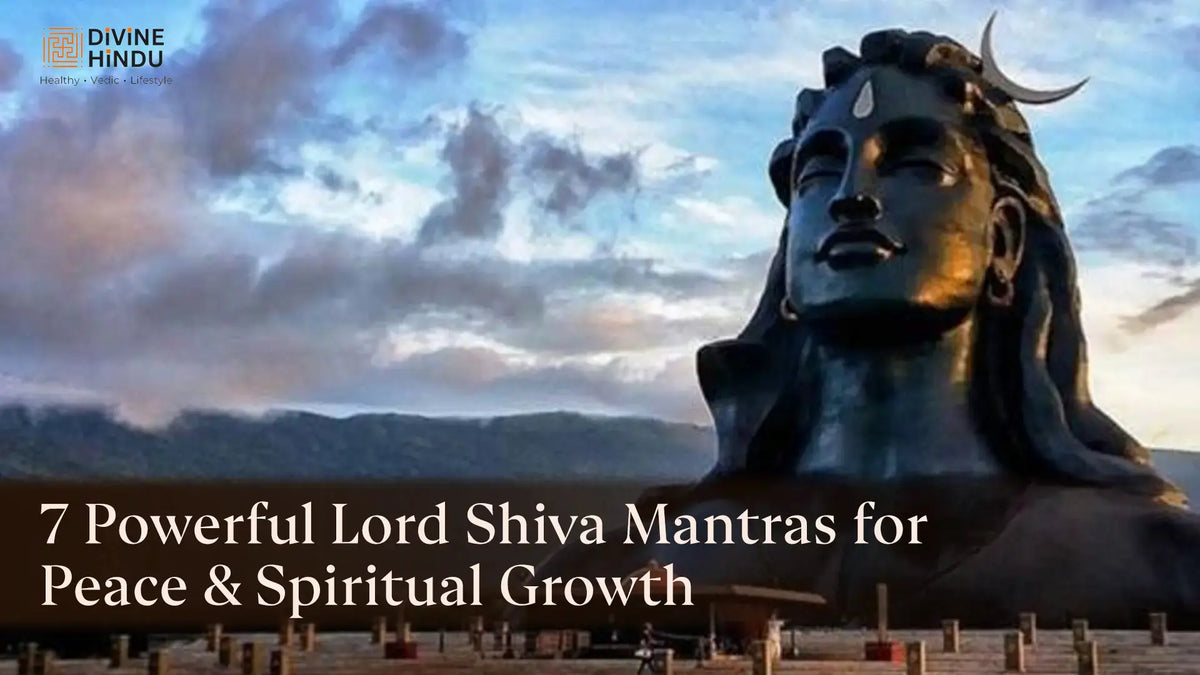
Lord Shiva mantras hold a special place in Hindu spirituality, offering a path to inner peace, strength, and divine connection. These sacred chants are believed to invoke the blessings and protection of Shiva, the supreme reality and embodiment of cosmic consciousness. Whether you seek spiritual growth, courage or relief from suffering, Shiva mantras are powerful tools for personal transformation and self-realisation. Below are seven of the most revered Shiva mantras, their meanings and the benefits they offer.
Choose a mala or arrange a Shiva puja
A simple counting mala, a necklace for daily wear and a temple booking serve different purposes. Choose the format that fits your practice.
- 108-bead Rudraksha japa mala — a counting strand with 4mm, 5mm and 8mm bead options. Compare the selected size and price.
- 925 silver Rudraksha necklace — a 54-bead design for those looking for a silver-finished wearable strand. Review its material and fit details.
- Rudra Abhishek in Ayodhya — compare individual, partner and family booking packages, scheduling and stated inclusions.
You can also chant without buying anything. For Panchang and app services, open Divine Hindu on Google Play.
Plan Maha Shivaratri: compare Rudraksha malas, Shiva puja pieces and booking options.
1. Panchakshari Shiva Mantra
ॐ नमः शिवाय - Om Namah Shivaya
Meaning - I bow to Shiva.
The literal meaning of Om Namah Shivaya is "I bow to Shiva." Here, Shiva is the supreme reality, or the inner Self. While chanting this mantra, you call upon the inner Self.

The Panchakshari mantra is mainly for those seeking protection and safety. It boosts inner potential and strength and fills life with positive energy. It is for everyone, with no restrictions, and you can repeat it any time and in any way you wish.
2. Mahamrityunjaya Mantra
ॐ त्र्यम्बकं यजामहे सुगन्धिं पुष्टिवर्धनम् |
उर्वारुकमिव बन्धनान् मृत्योर्मुक्षीय मामृतात् ।
Om Tryambakam Yajaamahe Sugandhim Pushti-Vardhanam | Urvaarukam-Iva Bandhanaan Mrityor-Mukshiiya Maa-Amritaat ||
Meaning - We worship the Three-Eyed One, who is fragrant and nourishes all beings. May He liberate us from the bondage of death (attachment to perishable things) for the sake of immortality, just as a ripe cucumber is severed from its creeper.

The Mahamrityunjaya Mantra is said to be the most powerful Shiva mantra. Unlike Om Namah Shivaya, which can be chanted any time and in any way, this mantra has certain rules, so you should be aware of when and how to chant it. The Sanskrit word "Mahamrityunjaya" means "victory over death." If you wish to overcome the fear of death and other forms of material suffering, this mantra is for you.
3. Rudra Mantra
ॐ नमो भगवते रूद्राय ।
Om Namo Bhagavate Rudraay
This Rudra mantra is a simple, direct way to please Lord Shiva. It is chanted to receive the blessings of Lord Rudra and to have one's wishes fulfilled by the Lord himself.
4. Shiva Gayatri Mantra
ॐ तत्पुरुषाय विद्महे महादेवाय धीमहि तन्नो रुद्रः प्रचोदयात ।
Om Tatpurushaay Vidmahe Mahadevaay Dheemahi Tanno Rudrah Prachodayat
Meaning - Let me meditate on the great Purusha. O greatest God, grant me higher intellect, and may God Rudra illuminate my mind.
Just as the Gayatri Mantra is one of the most powerful Hindu mantras, so too is the Shiva Gayatri Mantra. If you seek peace of mind and wish to please Shiva, chant this mantra with devotion and focus.
5. Shiva Dhyaan Mantra
करचरणकृतं वाक् कायजं कर्मजं वा श्रवणनयनजं वा मनसंवापराधं ।
विहितं विहितं वा सर्व मेतत् क्षमस्व जय जय करुणाब्धे श्री महादेव शम्भो ।
Karcharankritam Vaak Kaayajam Karmajam Vaa Shravana-Nayanajam Vaa Maansam Vaa Aparadham |
Vihitam Avihitam Vaa Sarvam Etat Kshamasva Jaya Jaya Karunaabdhe Shree Mahadeva Shambho ||
Meaning - An ode to the Supreme, chanted to purify the body, mind and soul from all stress, rejection, failure, depression and other negative forces one is exposed to.

If you want to meditate on Shiva, the Shiva Dhyaan Mantra is right for you. It seeks the Lord's forgiveness for all sins committed in this life or past lives, making it effective for purifying your soul and removing negativity from your life.
6. Ekadasa Rudra Mantra
There are eleven mantras in total, honouring Shiva in his eleven Rudra forms:
Kapali - Om Hum Hum Satrustambhanaya Hum Hum Om Phat
Pingala - Om Shrim Hrim Shrim Sarva Mangalaya Pingalaya Om Namah
Bhima - Om Aim Aim Mano Vanchita Siddhaya Aim Aim Om
Virupaksha - Om Rudraya Roganashaya Agacha Cha Ram Om Namah
Vilohita - Om Shrim Hrim Sam Sam Hrim Shrim Shankarshanaya Om
Shastha - Om Hrim Hrim Safalyayai Siddhaye Om Namah
Ajapada - Om Shrim Bam Sough Balavardhanaya Baleshwaraya Rudraya Phut Om
Ahirbhudanya - Om Hram Hrim Hum Samastha Graha Dosha Vinashaya Om
Sambhu - Om Gam Hluam Shroum Glaum Gam Om Namah
Chanda - Om Chum Chandishwaraya Tejasyaya Chum Om Phut
Bhava - Om Bhavodbhava Sambhavaya Ishta Darshana Om Sam Om Namaha
These mantras are a tribute to Lord Shiva in his eleven Rudra forms. The effect is multiplied if you chant the mantra specific to that month, though all the others can also be recited. Devotees usually practise these mantras during Shiva festivals such as Maha Shivratri or when the Maha Rudra Yajna takes place.
7. Om Namaste Astu Bhagawan - Shiva Stotram
नमस्ते अस्तु भगवन विश्रेश्वराय
महादेवाय त्र्यम्बकाय त्रिपुरान्तकाय
त्रिकालाग्निकालाय कालाग्निरुद्राय
नीलकण्ठाय मृत्युंजयाय सर्वेश्वराय सदाशिवाय
श्रीमन् महादेवाय नमः
Namaste Astu Bhagavan Vishveshvaraaya Mahaadevaaya
Trayambakaaya Tripurantakaaya Trikaalaagni-Kaalaaya
Kaalaagni-Rudraaya Nilakantaaya Mrityunjaya
Sarveshvaraaya Sadaashivaaya Sriman Mahadevaaya Namah.

Meaning - O Lord, I salute you, O Lord of the universe, the greatest of all. He who has three eyes (the eye of omniscience), who grants enlightenment beyond the three worlds (astral, physical and causal), who like fire engulfs the three times (past, present, future), who like time ends everything and sets the world in order, whose form is vast (blue like the sky and oceans), and who has conquered Yama, the Lord of death. These mantras, deeply rooted in Hindu tradition, are chanted for inner peace, courage, overcoming fear, and spiritual growth, allowing devotees to connect with Shiva in different ways.
How to Chant Shiva Mantras: Count, Time, Direction and Posture
Mantra japa is traditionally judged less by volume and more by steadiness. None of the conventions below are barriers — Om Namah Shivaya in particular is described as open to everyone, at any time — but following them is believed to help the mind settle faster.
| Element | What tradition suggests |
|---|---|
| Count | One round of 108 repetitions on a japa mala is the standard unit. Many devotees commit to 3, 5 or 11 rounds daily; a sankalp of 1,008 repetitions is traditional for special occasions. |
| Time of day | Brahma Muhurta, the pre-dawn window beginning roughly an hour and a half before sunrise, is traditionally considered the most sattvic. Pradosh, the twilight around sunset, is the usual second choice. |
| Direction | Sit facing east or north while chanting. |
| Seat | A clean woollen, cotton or kusha-grass asana rather than the bare floor, ideally kept only for japa. |
| Voice | Three grades are described — vaikhari (audible), upanshu (whispered, lips moving) and manasik (silent, in the mind). Beginners are usually advised to start audible and move inward as concentration improves. |
| Consistency | Same seat, same time, same mala. A 40-day mandala is the traditional unit for building a regular practice. |
A small settled corner helps more than an elaborate one — a clean cloth, a diya and a stick of dhoop or agarbatti are enough to mark the space as your japa seat. Mondays (Somvar), the Pradosh tithi of each fortnight, the monthly Masik Shivratri and the month of Sawan are all traditionally associated with Shiva worship. Maha Shivratri falls on the Chaturdashi of Phalguna Krishna Paksha; because tithi-to-date mapping shifts by location, confirm the exact date and Nishita Kaal muhurat against a current panchang for your own city. For the year's tithis in one place, see our Hindu festival calendar 2026.
Mahamrityunjaya Mantra Meaning, Word by Word
Because the Mahamrityunjaya is a Vedic mantra rather than a simple nama-mantra, tradition asks for more care with its pronunciation. Understanding each word first makes that much easier.
| Word | Traditional meaning |
|---|---|
| Om | The primordial sound, the seed of all mantras |
| Tryambakam | The three-eyed one — Shiva, whose third eye is read as the eye of wisdom |
| Yajamahe | We worship, we adore, we offer |
| Sugandhim | The fragrant one; also read as the sweet-natured, all-pervading presence |
| Pushti-vardhanam | He who increases nourishment and well-being in all beings |
| Urvarukam-iva bandhanan | As a ripe cucumber is released from its stalk |
| Mrityor mukshiya | May we be freed from death — traditionally read as freedom from attachment to the perishable |
| Ma amritat | But not severed from the deathless, from immortality |
The image at the centre of the mantra is worth sitting with. A ripe cucumber does not have to be torn from the creeper; it separates on its own when it is ready. That is the quality of release the mantra is traditionally said to ask for.
Which Shiva Mantra Should You Chant?
All seven mantras above are chanted across India, but they are not interchangeable in intent. This is the mapping most commonly followed.
| If you are seeking | Mantra traditionally chanted | Note |
|---|---|---|
| A simple daily practice; you are a beginner | Om Namah Shivaya | No restriction of time, place or background; can be chanted aloud or silently |
| Courage in illness or fear; long-life prayers for family | Mahamrityunjaya Mantra | Traditionally chanted with more discipline; learn the pronunciation properly first |
| Everyday worship of Rudra and fulfilment of wishes | Om Namo Bhagavate Rudraya | Short enough to hold in the mind through the day |
| Clarity of mind, study and concentration | Shiva Gayatri Mantra | Usually chanted at sunrise or sunset |
| Forgiveness, purification, letting go of guilt | Shiva Dhyaan Mantra | Often recited at the close of puja |
| Festival or Rudra Yajna sadhana | Ekadasa Rudra Mantras | Usually practised under guidance during Maha Shivratri or a Rudra Yajna |
If you would rather have a Rudrabhishek or Shiva puja performed at a temple on your behalf, you can book it through our online puja and pooja seva listings.
Choosing a Mala for Shiva Mantra Japa
A japa mala is a counting tool first. It holds the count so your mind does not have to — and the moment you start counting mentally, you have stopped chanting. A traditional mala carries 108 beads plus one larger bead called the sumeru or meru, which marks where each round begins and ends.
Why 108 beads?
Several explanations are handed down: the 12 zodiac signs multiplied by the 9 grahas, the 27 nakshatras across 4 padas each, and the traditional count of breaths in an auspicious cycle. Whichever reading you follow, 108 is the number the tradition settled on — and 54 and 27-bead malas are simply halves and quarters of it for shorter rounds. Our article on the significance of 108 in Hinduism goes into this in detail.
Which mala suits which mantra
| Mala | Traditionally used for | Why |
|---|---|---|
| Rudraksha (5 Mukhi) | Om Namah Shivaya, Mahamrityunjaya, Rudra mantra | The bead most closely associated with Shiva himself. The 5 Mukhi is the everyday, all-purpose bead and the one most widely used for Shiva japa — see the full range of rudraksha malas and beads or a single rudraksha bead. |
| Karungali (ebony wood) | Om Namah Shivaya, protective and disciplinary sadhana | Dense South Indian ebony, traditionally kept for steady, grounding practice. See our Karungali japa malas. |
| Sphatik, crystal and gemstone | Shiva Gayatri and meditative practice | Sphatik (clear quartz) is traditionally described as cooling and is a common choice for long sittings. |
| Chandan (sandalwood) | Dhyaan and stotra recitation | Light in the hand with a natural fragrance that many find settling. |
| Tulsi | Vishnu and Krishna mantras | Traditionally reserved for Vaishnava japa rather than Shiva mantras. |
Care matters as much as choice. Keep your japa mala in a clean cloth pouch, do not let it touch the floor, keep it for your own use, and do not carry it into places considered impure. If you would like something you can also wear through the day rather than keep only for japa, look at our Rudraksha necklaces and spiritual necklaces. To compare everything in one place, browse all jaap malas and our authentic japa mala range.
Common Mistakes to Avoid in Shiva Mantra Japa
- Crossing the sumeru bead. When you reach the meru at the end of 108, tradition says not to step over it. Turn the mala around and begin the next round back the way you came.
- Using the index finger. Beads are traditionally moved with the thumb and the middle finger; the index finger is kept off the mala.
- Changing mantras every few days. One mantra held steadily for a mandala of 40 days is traditionally valued far above five mantras sampled for a week each.
- Racing through the count. Eleven attentive rounds are considered worth more than a hundred distracted ones.
- Treating a japa mala as an accessory. A mala kept for practice is traditionally not shared, not worn into the bathroom, and not left lying on the floor.
- Chanting the Mahamrityunjaya carelessly. Because it is a Vedic mantra, most teachers ask that you learn it correctly first, then chant slowly, rather than repeating an approximation at speed.
FAQs: Lord Shiva Mantras
Which is the most powerful Lord Shiva mantra?
The Mahamrityunjaya Mantra is regarded as the most powerful Shiva mantra, chanted for protection, healing and victory over the fear of death. Om Namah Shivaya is the simplest and can be chanted by anyone at any time.
How many times should I chant a Shiva mantra?
Mantras are traditionally chanted 108 times using a japa mala, which helps maintain focus and count without distraction.
What is the best time to chant Lord Shiva mantras?
Early morning (Brahma Muhurta) and evening are considered ideal. Mondays and Maha Shivratri are especially auspicious for chanting Shiva mantras.
Which mala is best for chanting Shiva mantras?
A Rudraksha mala is traditionally considered the most suitable for Shiva mantras, with the 5 Mukhi bead being the common all-purpose choice. Karungali (ebony) malas are also widely used for Om Namah Shivaya. Tulsi malas are traditionally reserved for Vishnu and Krishna mantras rather than Shiva japa.
Which direction should I face while chanting Shiva mantras?
East or north are the directions traditionally recommended for japa. Sit on a clean asana kept for your practice rather than on the bare floor.
Can I chant Shiva mantras without a mala?
Yes. A mala only keeps the count. Om Namah Shivaya in particular can be repeated silently at any time and in any place with no restriction; a mala simply makes a fixed daily count easier to hold.
Can beginners chant the Mahamrityunjaya Mantra?
Yes, but tradition asks for care with pronunciation because it is a Vedic mantra. Beginners are usually advised to learn it from a teacher or a reliable recording, chant it slowly, and start with a fixed daily count such as one round of 108.
Can women chant Shiva mantras?
Yes. Om Namah Shivaya is traditionally described as open to everyone, with no restriction of gender, age or background. For Vedic mantras such as the Mahamrityunjaya, families often follow their own kul or guru parampara, so it is best to follow the practice your family or teacher observes.
How long should I continue chanting a Shiva mantra?
Tradition favours regularity over intensity. A common approach is to commit to one mantra and a fixed daily count for a 40-day mandala, keeping the same time, seat and mala, and then continue or extend the practice.
Conclusion
Chanting Lord Shiva mantras is a time-honoured practice that brings peace, strength and spiritual upliftment. Each mantra carries its own energy and purpose, from seeking protection and courage to purifying the soul and attaining higher wisdom. By incorporating these sacred chants into daily life with devotion and sincerity, you can experience the transformative power of Lord Shiva's blessings. To deepen your japa practice, explore Divine Hindu's collection of authentic Karungali Japa Malas and Rudraksha Necklaces.
You May Also Like :
Lava Stone: Meaning, Benefits and Healing Properties
Top 6 Benefits of Blowing the Shankh (Conch Shell) Daily
5 Reasons Why You Should Wear Rudraksha
Can Anyone Wear the 1 Mukhi Rudraksha?
The Science Behind Hindu Rituals : Why We Do What We Do


