 Cow Shelter / Donation

Rudraksha Lab Certificate and X-Ray Report Explained: How to Read It and Why the Water Test Is a Myth
Published · Updated
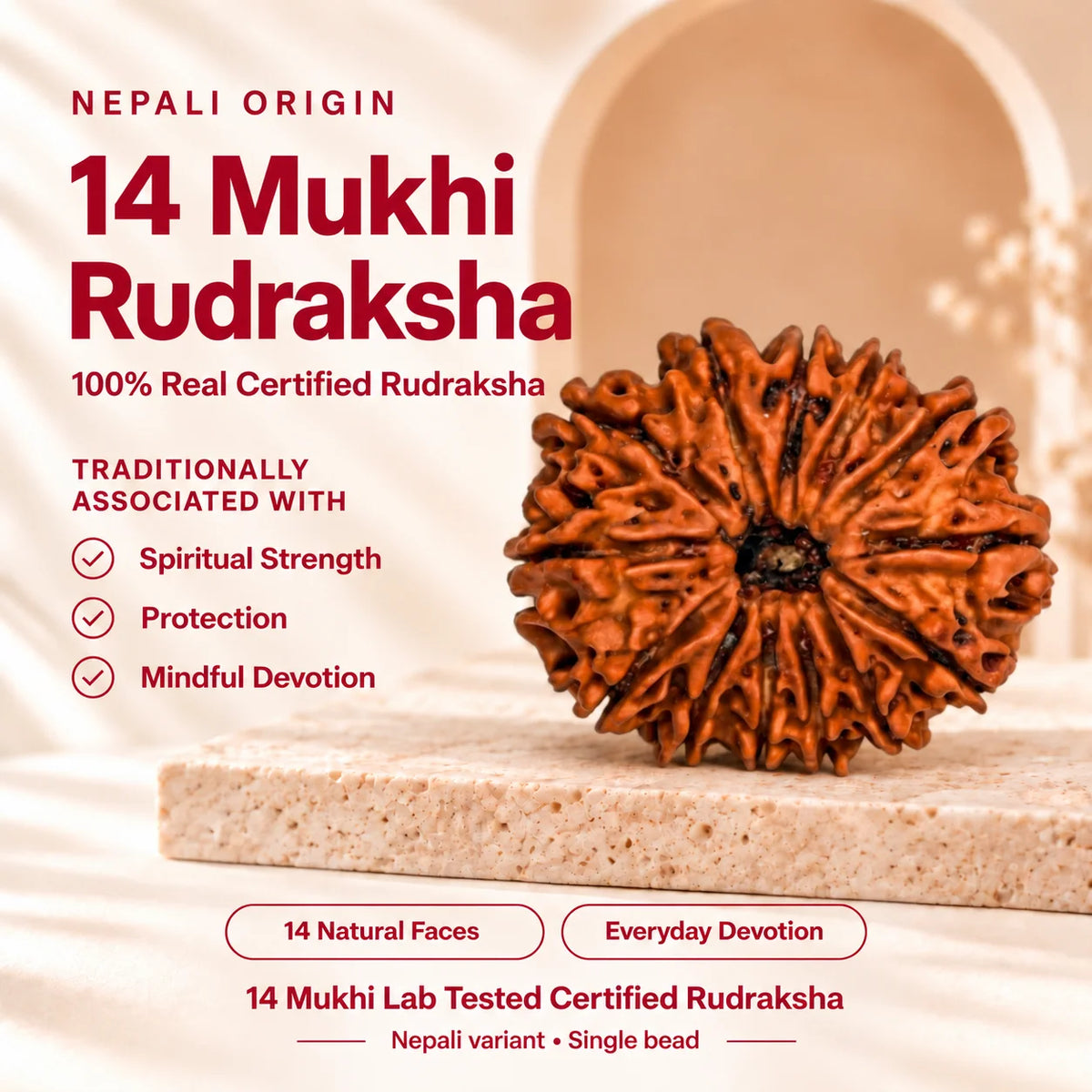
A Rudraksha lab certificate states the bead's origin, its mukhi count established by X-ray or CT scan of the internal seed chambers, that it is natural and untreated, and its weight and size, under a report number. The X-ray is the deciding test; the water, copper coin and boiling tests are not reliable.
The Divine Hindu App is here.
Chat with astrologers, generate your Kundli, book temple Puja and Chadhava, and check today's Panchang — all in one app.
What a Rudraksha lab certificate states
A Rudraksha is a seed, and a seed cannot be opened to count its chambers without destroying it. The lab certificate answers, without cutting, the two questions every buyer has: how many mukhi does this bead really have, and has anything been done to it.
The laboratory photographs the bead, measures and weighs it, passes it through an X-ray or a CT scanner, and records what the scan shows against what the surface shows. The report carries a number that can be quoted to the issuing laboratory to confirm the record.
The certificate is a statement about the physical bead. It says nothing about who should wear it, when, or with what mantra; those are matters of tradition and of the chart, covered in the Nepali Rudraksha buying guide 2027. Divine Hindu Rudraksha is lab-certified, and the report accompanies each bead above the common mukhi.
How to read the certificate, field by field
| Field on the report | What it means | What to watch |
|---|---|---|
| Report number and date | The laboratory's own record of this bead | Confirm it with the issuing laboratory; a certificate without a number is a leaflet |
| Species / origin | Elaeocarpus ganitrus; Nepal or Indonesia (Java) | "Himalayan" or "natural origin" without a country is vague wording |
| Mukhi (faces) | Number of natural lines running pole to pole, confirmed by internal chambers | The mukhi count should be stated as scan-confirmed, not as "visual" |
| Internal structure / X-ray result | Number of seed chambers seen on the scan | Chambers should equal the mukhi count; a mismatch means added or missing lines |
| Treatment | Natural, untreated; or carved, filled, dyed, polished, oiled | Anything other than "natural, untreated" lowers the bead to decorative |
| Weight | In grams or carats | Used with the size to spot resin and wood imitations, which weigh differently |
| Dimensions | Length and width in millimetres | Decides whether the bead suits a pendant, a mala or a shelf |
| Photograph and scan image | The bead as tested | Match the photograph to the bead in your hand, line for line |
The mukhi line and the internal-structure line are the heart of the document; if the certificate has only one of them, ask why.
Why the X-ray is the deciding test
Every natural Rudraksha has a seed chamber (a locule) behind each mukhi line. The lines on the surface are where the segments of the fruit met; the chambers inside are where the seeds formed. A 5 mukhi bead has five lines and five chambers; a 14 mukhi has fourteen of each.
A carver can add lines to a bead with a fine tool and make a 5 mukhi look like a 7 mukhi, but no carver can add chambers inside a seed. That is why the X-ray (or, for higher mukhi and for round 1 mukhi beads, a CT scan) is the test that settles the count: it shows the chambers, and the chambers do not lie.
It is also why the scan matters more as the mukhi rises. A 5 mukhi is the commonest seed the tree produces and is rarely faked; a 14 mukhi or a round 1 mukhi is rare enough to be worth faking, so each of those should come with its own scan rather than a batch report. The rarest beads, from 15 mukhi upward, are discussed in 15 to 21 mukhi Rudraksha explained.
The home tests, and why they are not reliable
Several tests are passed from buyer to buyer as proof of a real bead. None of them tells you what the X-ray tells you, and some of them pass fakes and fail genuine beads.
| Home test | The claim | Why it does not settle anything |
|---|---|---|
| Water test | A real bead sinks; a fake floats | Sinking depends on density and dryness. A well-dried natural bead can float; a wooden fake soaked in oil sinks. It says nothing about the mukhi count. |
| Copper coin test | A real bead rotates when held between two coins | Any rough-surfaced object moves between two coins under a steady hand. The movement is a property of friction, not of the seed. |
| Boiling test | A fake loses colour or cracks in boiling water | Boiling can crack a genuine bead and will not reveal an added line. It damages the thing it is meant to test. |
| Cutting a sample bead | Cut one bead from the lot to see the chambers | Only proves the bead that was cut. Higher-mukhi beads are sold singly, and nobody cuts the one they are selling. |
| Magnifying-glass check | Look for the natural groove inside each line | Useful as a first look, and it catches crude carving, but a fine carver leaves a groove too. It is a screen, not a verdict. |
Fakes, carved beads and bhadraksha
The faking of Rudraksha follows the rarity. A carved bead: a lower-mukhi natural seed with extra lines cut into it, sometimes finished with a thin coat of resin so the new lines look weathered; the X-ray shows the original chambers and the count does not match. A glued bead: two or more beads joined to pass as a Gauri Shankar (a naturally joined pair) or a Trijuti, the join hidden under a metal cap, which is why a cap should never cover a pole.
A betel-nut or wood carving: areca nut and some hardwoods take a carved line well and are sold as round 1 mukhi, the bead buyers most want and nature least often gives; this is why the round Nepali 1 mukhi is treated with care in 1 mukhi round Nepali vs Indonesian half-moon and in the 1 mukhi Nepali Rudraksha guide 2027. A resin cast: a moulded copy of a real bead, light in the hand, with no chambers on the scan.
Bhadraksha is a different matter. It is a bead from a related tree, with a thorny or warty surface rather than clean lines, and its segments are not separated by true mukhi grooves. It is not a fake in the sense of a carving, but it is not Rudraksha, and the tradition does not wear it as one. A certificate from a testing laboratory names the species, which is the plain way to tell the two apart.
What the certificate cannot tell you
A laboratory grades the bead as a physical object. It will not say whether a 7 mukhi is the right bead for a Vrishabha (Taurus) native whose Sade Sati begins on 3 Jun 2027; that is the work of tradition and of the chart, set out in Rudraksha for Sade Sati 2027. It will not say whether a Nepali bead or an Indonesian bead suits the use you have in mind; the differences are in Nepali vs Indonesian Rudraksha.
And a higher laboratory grade, which reflects line clarity and surface, is not a spiritual grade; a plain 5 mukhi is the bead worn by most householders in every generation. The things that move the cost of a bead (mukhi, size, line clarity, certification) are explained without numbers in what drives the cost of a Rudraksha, and the size decision in the Nepali Rudraksha size chart.
A buyer's routine in five steps
First, ask for the certificate before paying and read the mukhi line against the internal-structure line. Second, confirm the report number with the issuing laboratory. Third, when the bead arrives, match it to the photograph on the report and check that no cap covers a pole. Fourth, look along each line with a magnifier for an unbroken natural groove. Fifth, keep the certificate with the bead; it is the bead's record.
Frequently Asked Questions
What does a Rudraksha lab certificate contain?
The species and origin, the mukhi count, the internal chamber count seen on X-ray or CT, a treatment statement (natural, untreated), weight, dimensions in millimetres, a photograph and a report number that can be confirmed with the issuing laboratory.
Is the X-ray test of a Rudraksha reliable?
Yes. Each natural mukhi line has a seed chamber behind it, and the scan shows the chambers. Lines can be carved onto a surface; chambers cannot be added inside a seed, so the scan settles the count.
Does a real Rudraksha sink in water?
Not reliably. Sinking depends on density and how dry the bead is; a genuine dry bead can float and an oiled wooden fake can sink. The water test is not a proof of a real Rudraksha.
What is the copper coin test for Rudraksha?
The belief that a real bead turns when held between two copper coins. Any rough bead moves under a steady hand because of friction, so the test does not separate real beads from carved ones.
What is bhadraksha and how is it different from Rudraksha?
Bhadraksha is a bead from a related tree with a thorny, warty surface and no true mukhi grooves. It is not worn as Rudraksha in tradition. A laboratory report names the species and settles the question.
How are fake Rudraksha made?
Most often by carving extra lines into a lower-mukhi seed, gluing beads together to pass as a Gauri Shankar, carving areca nut or wood into a round 1 mukhi, or casting resin. The X-ray exposes all four because none has the matching chambers.
Does the certificate tell me which Rudraksha to wear?
No. The certificate describes the bead as an object. Which mukhi suits a person is a matter of tradition and of the chart, and a Rudraksha recommendation report or an astrologer answers that question.
Buy Certified Rudraksha, and Choose the Mukhi from Your Chart
Every bead in the Nepali Rudraksha collection is lab-certified; the 14 Mukhi Rudraksha and the 1 Mukhi Rudraksha ship with their individual scan reports. If you are not sure which mukhi is yours for 2027, the Rudraksha recommendation report reads your chart and the year's transits and names the bead, the day and the mantra.
This article describes traditional Vedic astrology and is intended for guidance and self-reflection only; it does not guarantee any outcome. Spiritual products are worn as a matter of faith and tradition and are not a medical treatment.


