 Cow Shelter/Donation

Chhath Puja 2026: Date, Vidhi & Four-Day Rituals
July 18, 2026
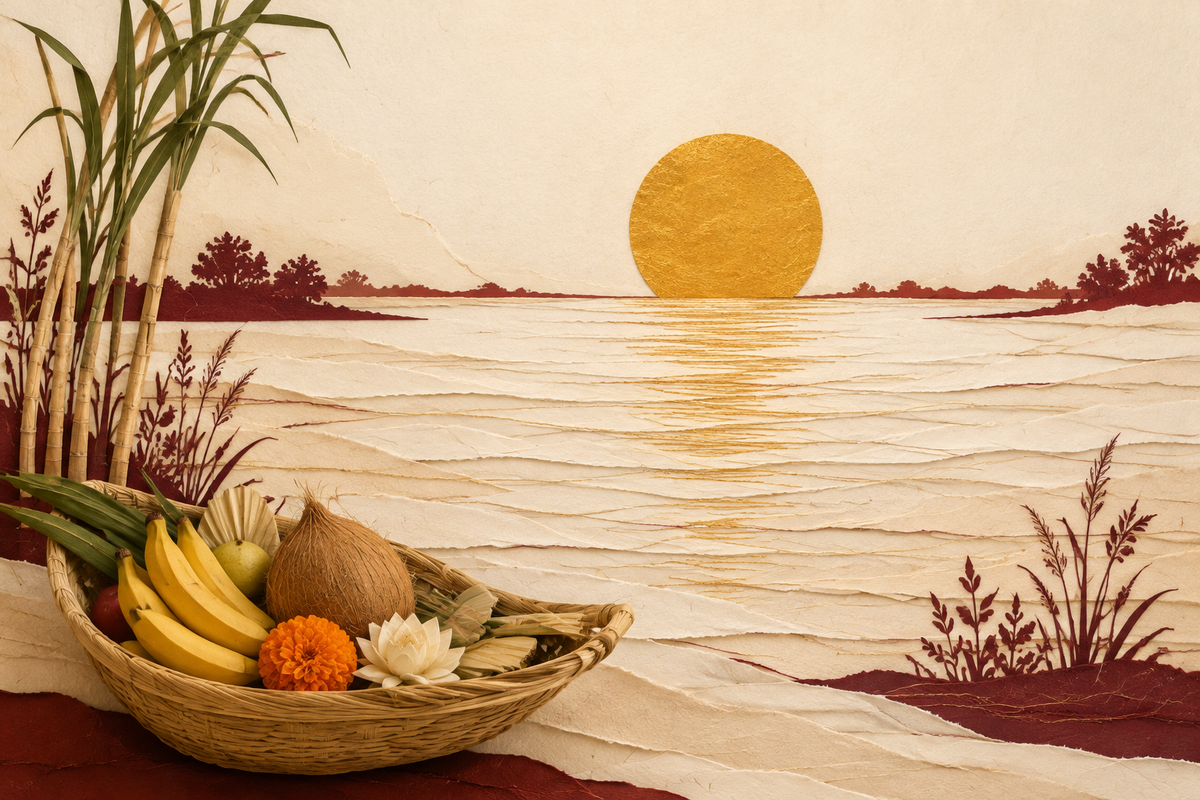
Understanding the Chhath Puja date and vidhi is essential for the millions of devotees who observe this ancient festival dedicated to Surya Dev (the Sun God) and Chhathi Maiya. Chhath Puja 2026 is observed from Friday, 13 November to Monday, 16 November 2026, with the main Sandhya Arghya (evening offering) on Sunday, 15 November and the Usha Arghya (morning offering) on Monday, 16 November. Celebrated mainly in Bihar, Jharkhand, Uttar Pradesh and Nepal, Chhath is a festival of gratitude, purity and unwavering faith.
Prepare your reusable Chhath puja pieces
Compare lamps and a thali for your home preparation area alongside your family’s offering list. Arrange fresh produce, soop or daura and the ghat ceremony locally; check each product’s included pieces before choosing.
Compare Chhath preparation choices →
For Panchang and app services, visit Divine Hindu on Google Play.
Chhath Puja 2026 Date and Four-Day Schedule
Chhath Puja is a four-day festival beginning on Kartik Shukla Chaturthi. Here is the day-wise schedule for Chhath Puja 2026.
| Day | Date | Ritual |
|---|---|---|
| Day 1 – Nahay Khay | Friday, 13 November 2026 | Holy bath and a single satvik meal to begin the fast |
| Day 2 – Kharna (Lohanda) | Saturday, 14 November 2026 | Day-long fast broken at dusk with kheer and roti; 36-hour nirjala fast begins |
| Day 3 – Sandhya Arghya | Sunday, 15 November 2026 | Offering (arghya) to the setting Sun at the riverbank — confirm sunset time with a current panchang |
| Day 4 – Usha Arghya (Parana) | Monday, 16 November 2026 | Offering to the rising Sun, followed by breaking the fast |
The Sandhya Arghya and Usha Arghya are tied to sunset and sunrise timings, which vary by location. Please confirm the exact sunrise and sunset muhurat with an updated panchang for your city.
In panchang terms the festival runs from Kartik Shukla Chaturthi to Kartik Shukla Saptami: Nahay Khay on Chaturthi, Kharna on Panchami, Sandhya Arghya on Shashthi — the tithi that gives the festival its other name, Surya Shashthi — and Usha Arghya on Saptami. Chhath conventionally follows a few days after Diwali, which in 2026 falls on 8 November. Because a tithi is set by the moon and not the clock, the calendar date it maps to can shift by a day depending on your city's sunrise. Confirm the dates and the arghya timings against a current panchang for your own location before you begin the vrat.
The Four Days of Chhath Puja, Day by Day
Day 1 — Nahay Khay (Friday, 13 November 2026)
The Vratti bathes in a river, pond or with clean water at home, puts on fresh clothes, and the house is cleaned from the kitchen outward. Only one satvik meal is eaten — traditionally arwa (unpolished) rice, chana dal and a lauki (bottle gourd) sabzi cooked without onion, garlic or ordinary table salt, sendha namak being used instead. The family usually eats the same food, and the Vratti eats last. From this day the kitchen is kept ritually pure and outside food is not brought into it.
Day 2 — Kharna or Lohanda (Saturday, 14 November 2026)
The Vratti fasts through the day without water and breaks it only after sunset, once the puja is complete — traditionally with kheer made from jaggery and arwa rice, roti or puri, and a banana, offered first to Surya Dev and Chhathi Maiya. Family and neighbours are invited to share the prasad. The moment the Vratti finishes this meal, the 36-hour nirjala fast begins: no food and no water until the arghya on the fourth morning.
Day 3 — Sandhya Arghya (Sunday, 15 November 2026)
The main day. The morning goes into making thekua and arranging the offerings; by afternoon the family carries the loaded soop and daura to the ghat, often balanced on the head. That basket is called a dala across much of Bihar and eastern Uttar Pradesh, and the festival takes another of its common names — Dala Chhath, or Dala Puja — from it. The Vratti stands in the water facing west and offers arghya — water and milk poured from a lota — to the setting Sun, holding up the soop of fruit and prasad. Confirm the local sunset time with a current panchang. At night many families perform Kosi bharai, lighting earthen lamps under a canopy of sugarcane stalks, and keep a vigil singing Chhath geet.
Day 4 — Usha Arghya and Parana (Monday, 16 November 2026)
The family returns to the ghat before dawn. The Vratti stands in the water facing east and offers arghya to the rising Sun, closing the circle begun the evening before. Prayers are made for the health and long life of children and family, prasad is distributed, and the Vratti breaks the 36-hour fast — the Parana — usually with ginger, water and a little prasad rather than a heavy meal. Sunrise timings vary by city, so check a current panchang.
Significance of Chhath Puja
The significance behind the Chhath Puja date and vidhi lies in expressing gratitude to Surya Dev, the source of all life and energy, and to Chhathi Maiya, who is believed to protect children and grant health, prosperity and progeny. Chhath is among the most physically demanding vratas, involving a 36-hour nirjala (waterless) fast, standing in water and offering arghya to both the setting and rising Sun — a rare tribute that honours the Sun in all its phases. This is a physically demanding vrat; those who are pregnant, elderly, unwell, or on medication should consult a doctor before undertaking the nirjala fast, and may observe the festival with modified rituals instead.
The festival is also celebrated for its emphasis on purity, discipline and eco-friendliness. Offerings such as thekua, fruits, sugarcane and coconut are prepared in scrupulously clean surroundings, and devotees observe strict cleanliness throughout.
Why arghya is offered to Surya Dev and Chhathi Maiya
Surya Dev is worshipped here as the visible, daily source of light, warmth and food — the one deity a household can actually see — and Chhath is essentially a thanksgiving to him rather than a request. Chhathi Maiya is traditionally identified with Shashthi Devi, worshipped on the sixth day after a child's birth, and in folk tradition is described as Surya's sister and the protector of children; most Chhath prayers are made for the health and long life of children and family. In Bhojpuri and Magahi speech her name is commonly said as Chhatti, which is why a great many families call these four days Chatti Puja rather than Chhath Puja — the same festival, on the same tithi. The origins are told in several ways: that Karna, the son of Surya, stood in water each day to offer arghya; that Draupadi and the Pandavas observed the vrat; that Rama and Sita kept it after returning to Ayodhya; and that King Priyavrat and Queen Malini received their child through the grace of Shashthi Devi. These are traditional accounts handed down through the community rather than fixed historical record.
The Chhath Vrat: How Strict the Fast Is
Chhath is among the strictest vratas still widely kept. Once Kharna ends, the Vratti takes no food and no water for roughly 36 hours, through two nights and a full day, and stands in cold water twice to offer arghya. Alongside the fast the household keeps a set of purity rules: the Vratti sleeps on the floor on a blanket rather than a bed; cooking is done in a scrubbed kitchen, often on a mud chulha fired with mango wood; onion, garlic and ordinary salt are avoided; nobody tastes the prasad while it is being made; vessels are new or reserved for the puja; and everyone at the ghat goes barefoot. Where a wish is believed to have been fulfilled, many Vrattis cover the last stretch to the ghat performing dandvat pranam, prostrating full-length at every step.
A plain caution: speak to your doctor before fasting if you are pregnant, elderly, unwell, diabetic or on any medication. A waterless fast of this length is genuinely demanding. Many families observe a shortened or fruit-and-water vrat instead, or let a family member complete the arghya on their behalf, and the tradition makes room for it.
Who Observes Chhath and the Role of the Vratti
The person keeping the fast is called the Vratti (or parvaitin). Most Vrattis are women — often the mother or the senior woman of the household — but men observe Chhath in large numbers too. The vrat is frequently taken as a vow for a particular reason and then continued for life or passed to the next generation. Everyone else in the house takes a supporting role: grinding the wheat, shaping thekua, carrying the daura to the ghat, guarding the lamps through the night. Notably, Chhath needs no priest and no prescribed mantra at any stage — unusual among major Hindu festivals, and part of why it is so often described as a people's festival.
Rules and Etiquette at the Chhath Ghat
The ghat on the evening of Sandhya Arghya is crowded, wet and covered in offerings laid out on the ground. A handful of conventions are observed almost everywhere, and keeping them is the simplest courtesy you can offer another family's vrat.
- Go barefoot from the point where the ghat begins, and leave leather behind entirely — shoes, belts and bags.
- Watch where you step. Soop, daura, sugarcane and fruit are placed directly on the ground. Walk around them, never across or over them.
- Do not touch another family's offerings, soop or lota, and do not taste any prasad before the arghya is complete — including in your own kitchen while it is being made.
- Keep the water clean. No soap, shampoo or oil in the river or pond, and no plastic, thermocol or synthetic wrapping among the offerings. Carry your waste back with you.
- Arrive early to claim and clean your family's patch of the ghat, and set out the sugarcane and lamps before the crowd builds.
- Stay in shallow water. Arghya is offered standing at most waist-deep. River beds shift between years and currents are stronger than they look; children should never be in the water unsupervised.
- Follow the barricades and volunteers. Most municipal bodies now mark safe zones, deep-water limits and entry lanes at major ghats. Those markings exist because of past accidents — treat them as binding.
- Dress modestly and traditionally. The Vratti's clothes are often new and, by custom, unstitched. Keep phones, photography and loud music away from families mid-arghya.
Where no river is at hand, a clean pond, tank, rooftop drum or even a filled tub at home is widely accepted, and the same rules of cleanliness apply. In the tradition it is the devotion and not the size of the water body that is weighed.
What a First-Time Vratti Should Know
Chhath is not a vrat to attempt casually. It is usually taken as a vow, and once taken it is traditionally continued year after year or passed down within the family — so the decision matters as much as the preparation. If this is your first year, this is what experienced families tell newcomers.
- Speak to your doctor first. Roughly 36 hours without food or water, plus long spells standing in cold water, is genuinely demanding. If you are pregnant, breastfeeding, elderly, diabetic, hypertensive, prone to fainting or on regular medication, get medical advice before you commit — and follow it.
- You do not have to keep the strictest version. Many families observe a shortened vrat, a fruit-and-water vrat, or have a relative complete the arghya on their behalf. The tradition makes room for this, and a vrat kept within your capacity is not a lesser vrat.
- Do not do it alone the first year. Learn the sequence beside someone who has kept it before. Chhath has no priest and no prescribed mantra, so the knowledge passes by watching rather than from a book.
- Prepare the kitchen days ahead. Scrub it before Nahay Khay, set aside new or puja-only vessels, stock sendha namak, arwa rice and jaggery, and keep outside food out once the vrat begins.
- Arrange your helpers early. Someone has to shape and fry the thekua, carry the daura to the ghat and mind the lamps. The Vratti should not be doing the heavy lifting on an empty stomach.
- Practise the load. A full soop is heavier than it looks and is raised overhead during arghya.
- Plan for the cold. Kartik mornings are cold and the water is colder. Carry a dry change of clothes and something warm for straight after Usha Arghya.
- Break the fast gently. Parana is traditionally ginger, water and a little prasad rather than a heavy meal. Rehydrate slowly.
- Stop if your body tells you to. Dizziness, chest pain, confusion or fainting are reasons to break the fast and seek medical help immediately. No tradition asks for harm.
Keep the basics ready well in advance rather than on the day itself: diyas and lamps, a pooja thali, kalash and lota, dhoop and agarbatti, and the bamboo soop and daura from your local market.
Chhath Puja Vidhi and Preparations
Follow this traditional Chhath Puja vidhi to observe the vrat with devotion.
| Step | Ritual |
|---|---|
| 1 | On Nahay Khay, clean the home, bathe in a river or with clean water, and eat one satvik meal |
| 2 | On Kharna, observe a day fast and break it at dusk with kheer, roti and fruit |
| 3 | Prepare prasad — thekua, laddoo, seasonal fruits, sugarcane and coconut — in a pure kitchen |
| 4 | On the third evening, arrange offerings in a soop (bamboo tray) and offer arghya to the setting Sun standing in water |
| 5 | Light diyas and keep a vigil; sing Chhath geet through the night |
| 6 | On the fourth morning, offer arghya to the rising Sun and break the fast with prasad |
Lighting diyas is central to the arghya rituals; understand this tradition better with our diya and lamp significance guide, and keep a clean pooja thali ready for the offerings. For daily worship essentials beyond Chhath, browse our Bhakti collection and Daily Essentials collection.
Chhath Puja Samagri List
Most Chhath samagri — the bamboo items and the produce especially — is bought fresh from the local market in the days before Nahay Khay. Use this as a preparation checklist and order only what you do not already have at home.
| Item | What it is for |
|---|---|
| Soop and daura / dauri | The bamboo winnowing fan and carrying basket that hold the offerings and are raised during arghya; the basket is also called a dala, and some families use a brass soop |
| Thekua | The signature prasad — wheat flour, jaggery and ghee, hand-moulded and fried |
| Sugarcane with leaves | Whole stalks for the arghya and for the Kosi canopy on the third night |
| Seasonal fruit | Banana (often a whole kanwa bunch), coconut, sweet lime, custard apple, water chestnut (singhara), radish and fresh turmeric with its leaves |
| Diyas and wicks | Earthen or brass diyas and lamps for the ghat, the Kosi and the home mandir |
| Kalash, lota and thali | Kalash and puja accessories for pouring arghya, a pooja thali to carry offerings, and brass vessels if you keep separate puja utensils |
| Sindoor and suhaag items | Orange sindoor, traditionally applied by married women from the nose to the hair parting — with bangles, kajal and other daily puja essentials |
| Dhoop, agarbatti and camphor | Agarbatti and dhoop for the ghat puja and the home mandir |
| Other samagri | Akshat, paan, supari, honey, ghee, milk for the arghya, and new clothes for the Vratti — traditionally unstitched |
| For the home mandir | A clean chowki and fresh cloth, a shankh, and bhakti essentials for the days of the vrat |
| If you cannot travel home | Book an online puja or a pooja seva, or make an offering through our donation page |
Nothing on this list is required for the vrat to count — Chhath is famously a festival where devotion matters far more than expense, and many families use the same brass soop and lota for generations. Planning the wider season? See our Hindu Festival Calendar 2026.
Traditional Chhath Prasad
Thekua, a wheat-and-jaggery sweet, is the signature Chhath prasad. Along with sugarcane, bananas, coconut, and seasonal produce, it is offered to Surya Dev and shared among family and community. To plan the whole festive season, refer to our Hindu festival calendar.
Where Chhath Is Observed Beyond Bihar
Chhath is most closely associated with Bihar, Jharkhand and eastern Uttar Pradesh, where ghats are prepared by the district administration weeks in advance, and it is equally central to the Madhesh and Terai regions of Nepal. Migration has carried it much further: the Yamuna and canal ghats of Delhi NCR, artificial ponds and sea-facing ghats in Mumbai, Kolkata and other parts of West Bengal, Chandigarh, Surat and Ahmedabad, Chhattisgarh and Odisha. Communities of Indian origin in Mauritius, Trinidad and Tobago, Guyana, Suriname, Fiji, the United States, the United Kingdom and the Gulf observe it as well, often using a pond, tank or pool where no river is at hand.
Chhath Closes the Kartik Festive Season
Chhath is the last of the great Kartik festivals — the run that opens with Dhanteras and ends when the Vratti breaks the fast on Saptami morning. Seen together, the 2026 sequence looks like this.
| Festival | 2026 date | Typically kept ready |
|---|---|---|
| Dhanteras | Friday, 6 November 2026 | Dhanteras collection, hallmarked silver and brass vessels |
| Diwali | Sunday, 8 November 2026 | Lakshmi idols, Ganesha idols and diyas and lamps |
| Govardhan Puja | Tuesday, 10 November 2026 | Idols and kalash and puja accessories |
| Bhai Dooj | Wednesday, 11 November 2026 | Pooja thali and divine combo gift sets |
| Chhath Puja | Friday 13 – Monday 16 November 2026 | Soop, daura, thekua and sugarcane from the local market, with diyas and a kalash |
Once the Vratti has broken the fast, most of what the household gathered stays in use — the lamps, the thali, the brass, the shankh. That is where the Daily Essentials and Bhakti collections take over for the rest of the year. Many families also mark the close of the season with a gau daan offering through our donation page. Every date above is a tithi-to-date mapping that can shift by a day with your city's sunrise, so confirm each against a current panchang. The full year is laid out in our Hindu Festival Calendar 2026, with fasting days in the Ekadashi 2026 guide and the Purnima and Amavasya 2026 list.
Frequently Asked Questions
When is Chhath Puja in 2026?
Chhath Puja 2026 is observed from Friday, 13 November to Monday, 16 November, with the main Sandhya Arghya on 15 November and Usha Arghya on 16 November. The festival runs from Kartik Shukla Chaturthi to Saptami. Because a tithi can map to a different calendar date depending on your city's sunrise, confirm the dates and arghya timings with a current panchang for your location.
What are the four days of Chhath Puja?
The four days are Nahay Khay, Kharna (Lohanda), Sandhya Arghya (evening offering) and Usha Arghya (morning offering and Parana).
What is offered during Chhath Puja?
Devotees offer thekua, fruits, sugarcane, coconut and water (arghya) to the setting and rising Sun in a bamboo soop tray.
Why is arghya offered to both the setting and rising Sun?
It honours Surya Dev in all phases, expressing gratitude for life and energy, and symbolises faith through both endings and new beginnings.
How long is the Chhath fast?
The main vrat is a rigorous 36-hour nirjala (waterless) fast, beginning after Kharna and ending after the Usha Arghya on the final morning. This is physically demanding; pregnant women, the elderly, and anyone with a medical condition should consult a doctor and may adapt the fast as advised.
What should a first-time Vratti know before keeping the Chhath vrat?
Speak to your doctor before you commit, particularly if you are pregnant, breastfeeding, elderly, diabetic, hypertensive or on regular medication. You do not have to keep the strictest version; a shortened or fruit-and-water vrat is accepted, and a relative may complete the arghya on your behalf. Do not attempt it alone in your first year, since Chhath has no priest or prescribed mantra and the sequence is learned by watching. Prepare the kitchen and puja-only vessels days ahead, arrange helpers for the thekua and the daura, carry dry clothes for the cold morning, break the fast gently with ginger, water and a little prasad, and stop immediately and seek medical help if you feel dizzy, confused or unwell.
What are the rules to follow at the Chhath ghat?
Go barefoot from where the ghat begins and leave leather behind. Walk around offerings laid on the ground rather than over them, and do not touch another family's soop, daura or prasad. Keep the water clean, with no soap, oil or plastic, and carry your waste back. Arrive early to claim and clean your patch, stay in shallow water, keep children supervised, and follow the barricades and volunteers that most municipal bodies place at major ghats. Dress modestly and keep photography away from families mid-arghya. Where no river is available, a clean pond, tank, rooftop drum or filled tub at home is widely accepted.
What is the full Chhath Puja samagri list?
The core samagri is a soop (bamboo winnowing fan) and a daura or basket for the offerings, thekua, whole sugarcane stalks with leaves, seasonal fruit such as banana, coconut, sweet lime, custard apple, water chestnut, radish and fresh turmeric, earthen or brass diyas, a kalash and lota for pouring arghya, a pooja thali, sindoor, dhoop, akshat, honey, ghee and new clothes for the Vratti. Most produce and bamboo items are bought fresh from the local market.
Who is the Vratti, and can men observe Chhath?
The Vratti, also called parvaitin, is the person who keeps the fast. Most Vrattis are women, often the mother or senior woman of the household, but men observe Chhath in large numbers too. The vrat is frequently taken as a vow for a particular reason and then continued for life or passed down the family. Everyone else supports the Vratti. Chhath requires no priest and no prescribed mantra, which is one reason it is described as a people's festival.
Where is Chhath Puja celebrated apart from Bihar?
Beyond Bihar, Jharkhand and eastern Uttar Pradesh, Chhath is central to the Madhesh and Terai regions of Nepal. Migration has carried it to Delhi NCR, Mumbai, Kolkata and West Bengal, Chandigarh, Gujarat, Chhattisgarh and Odisha, and to communities of Indian origin in Mauritius, Trinidad and Tobago, Guyana, Suriname, Fiji, the United States, the United Kingdom and the Gulf, where devotees often use a pond, tank or pool when no river is available.
Observe Chhath Puja 2026 with purity and devotion. Explore our handcrafted Pooja Thali collection, our Bhakti collection and our Daily Essentials collection to prepare a clean, complete setup for offering arghya to Surya Dev and Chhathi Maiya.
This guide is for educational and devotional purposes and reflects traditional practice. Tithi-to-date mapping shifts with sunrise and location, so please confirm the 2026 dates and the exact arghya muhurat with a current panchang for your city before observing the vrat.


