 Cow Shelter/Donation


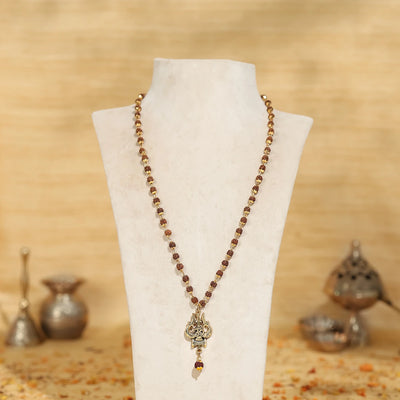
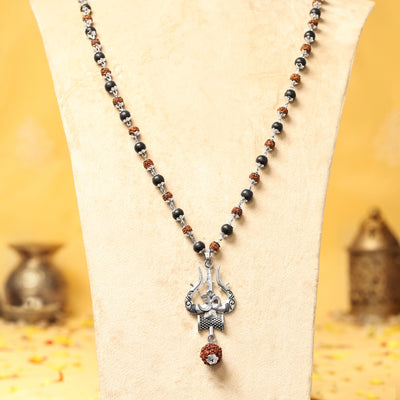 54 Beads


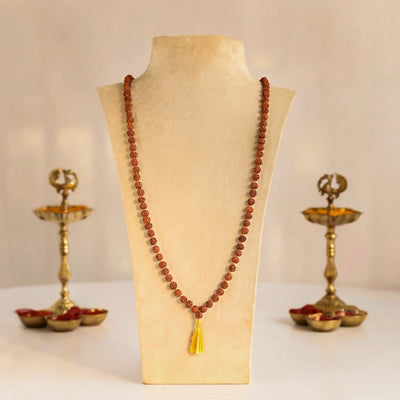
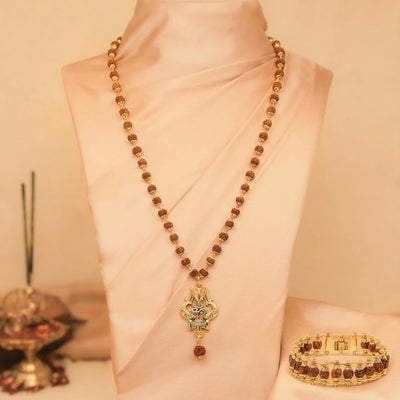
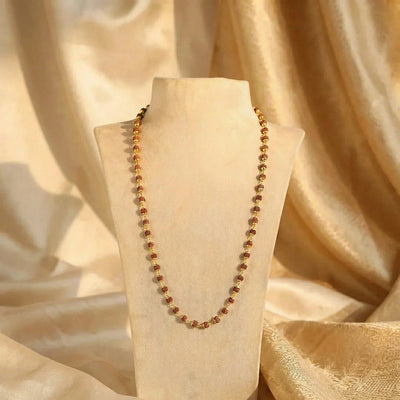

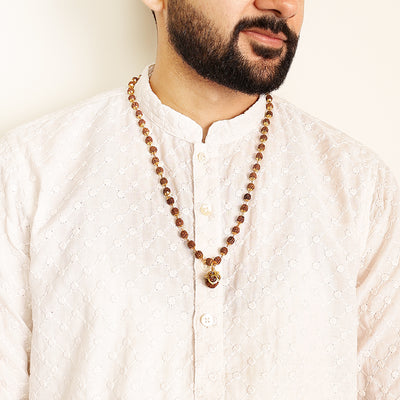
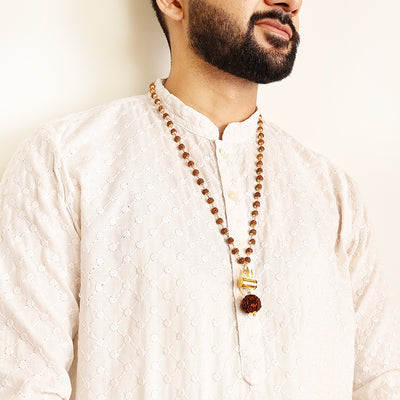

 Gold Cap / 54 Beads
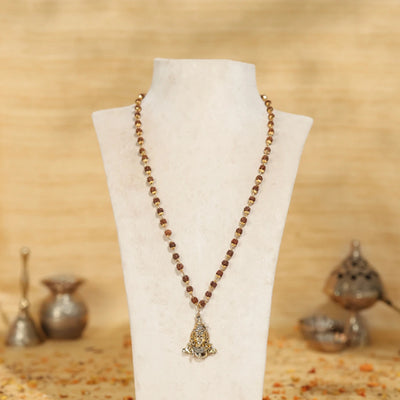
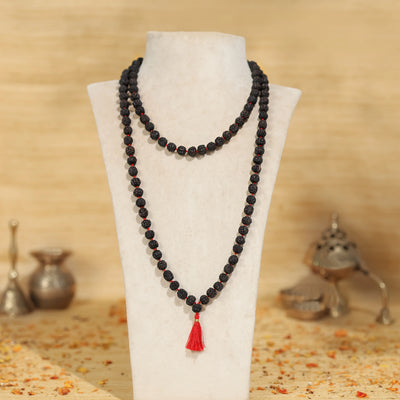
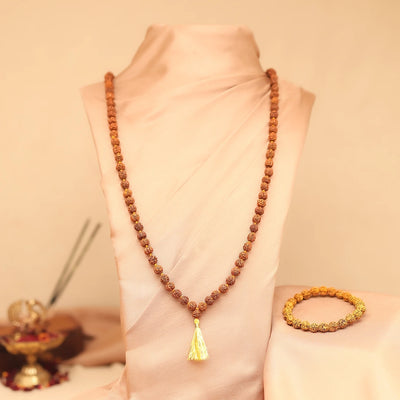

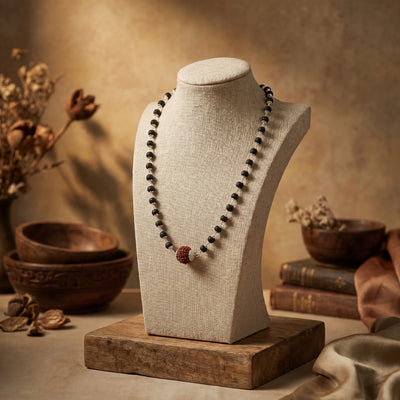
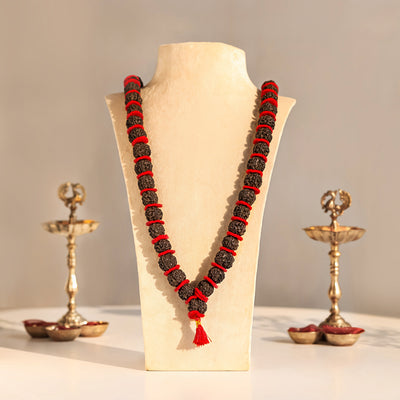 Black
Black
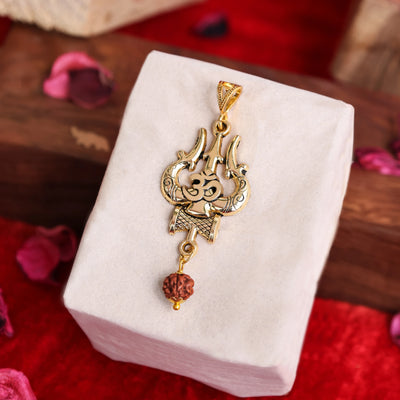
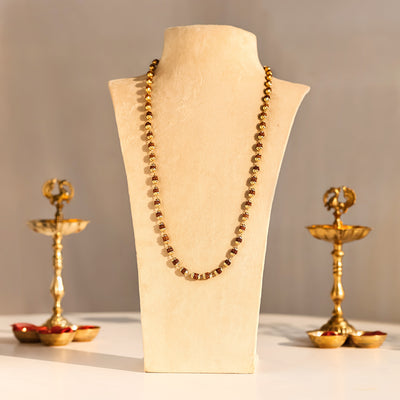


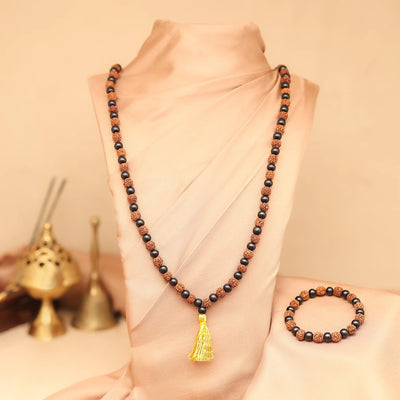

Top picks for you
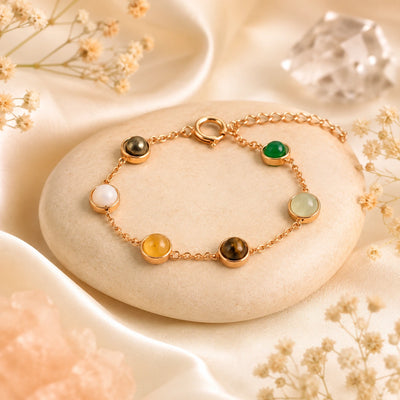
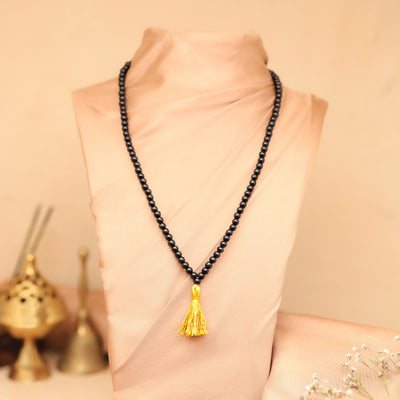 6mm
6mm
 54 Beads
 8mm
8mm
Rudraksha Necklaces and Kanthi Malas
A Rudraksha necklace, or kanthi mala, is worn close to the throat rather than looped like a japa mala — shorter, lighter and made to stay on all day. Traditionally associated with Lord Shiva, these necklaces are chosen for a sense of calm, focus and protection, and are worn equally by men and women who want something that sits quietly under a shirt or kurta.
The choice on this page is less about which mukhi and more about proportion: how long the strand is, how many beads it carries, how it is finished at the ends, and whether it takes a pendant. Get those four right and the necklace becomes something you stop noticing you are wearing.
Kanthi or Japa Mala — Two Different Objects
The words are used loosely in the market, so it is worth separating them.
A kanthi is a neck-worn strand. It fits close, has no counting function, and is meant for continuous wear. It usually finishes with metal caps or a knot rather than a guru bead, and it often carries a pendant.
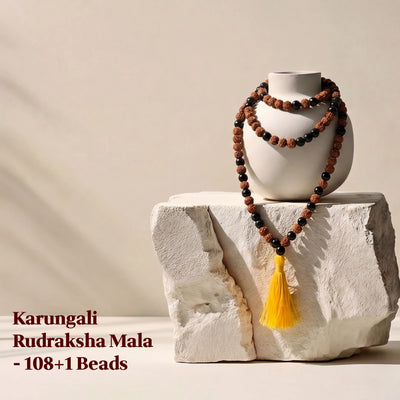
A japa mala is a counting instrument. It has 108 beads plus a sumeru or guru bead that marks the end of a round, and it hangs long enough to be held in the hand while you chant. Wearing it round the neck between sessions is common, but that is storage rather than its purpose. Dedicated counting strands are listed under jaap malas.
Plenty of pieces in this collection do both jobs. A 108-bead strand of small Java beads is short enough to wear all day and complete enough to count on. If you want one piece for both, that is the specification to look for.
Length, Bead Count and How It Sits
| Format | Roughly where it sits | Best for |
|---|---|---|
| Short kanthi, close-fitting | At the base of the throat | Continuous wear; invisible under a collar |
| 54-bead strand | At or just below the collarbone | Everyday wear with a pendant; two rounds complete a full japa cycle |
| 108-bead strand of small beads | Mid-chest | A single piece that works both as a necklace and for counting |
| 108-bead strand of large Nepali beads | Low on the chest, worn over clothing | Ritual and festival wear; visibly a mala |
| Single capped bead on a chain | Wherever the chain sets it | Wearers who want one specific mukhi rather than a strand |
The bead numbers are traditional rather than decorative. 108 is the full round; 54 is half of it, completing a cycle in two passes; 27 is a quarter. Many strands add one extra bead — a 108+1 — which is the sumeru, never counted, and the point at which you turn back rather than crossing over.
Bead diameter changes the character of a necklace more than length does. Small beads make a slim, almost discreet strand that disappears under a shirt. Large Nepali beads produce a heavy, deliberately visible piece that reads as devotional dress. Neither is more correct; decide first whether you want the necklace to be seen.
Caps, Pendants and Pairings
- Silver caps give an oxidised, traditional look, wear in rather than wear out, and are the more forgiving finish if the necklace is worn every day.
- Gold-plated caps are dressier and photograph beautifully, but plating is a surface. Keep it clear of water, sweat and perfume if you want it to hold its colour.
- Capping matters structurally, not just visually. The drill hole at each bead's crown is its weak point; a metal cap takes the strain of the thread and stops the crown splitting over years of wear.
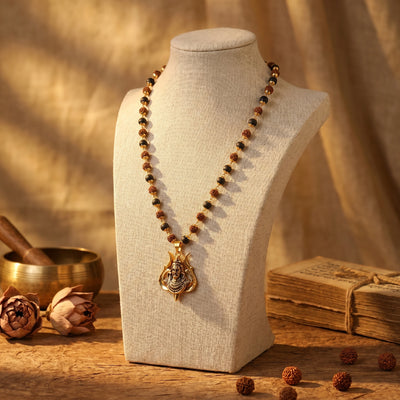
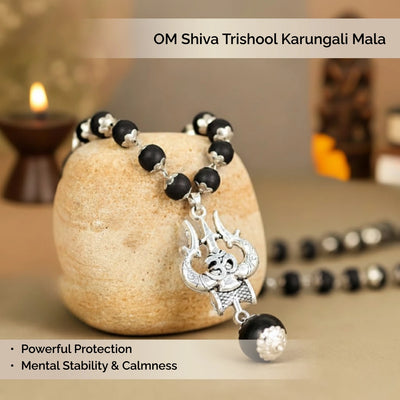
- Pendants let you match the necklace to your ishta devta rather than choosing by appearance — Shiva, Adiyogi, Trishul, Damru, Nandi and Om are the recurring motifs here.
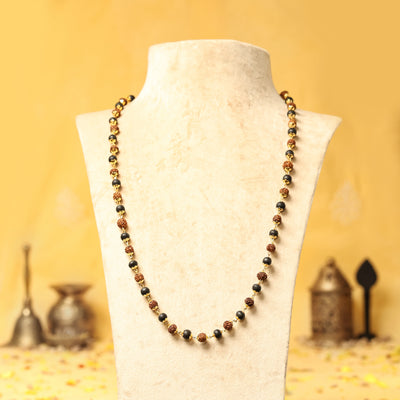
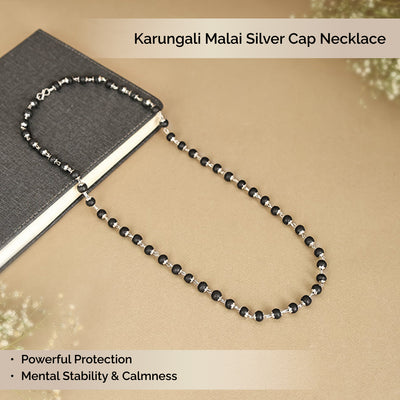
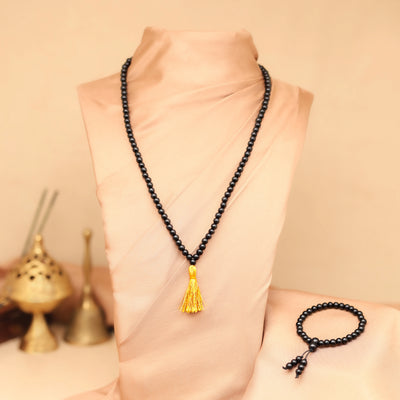
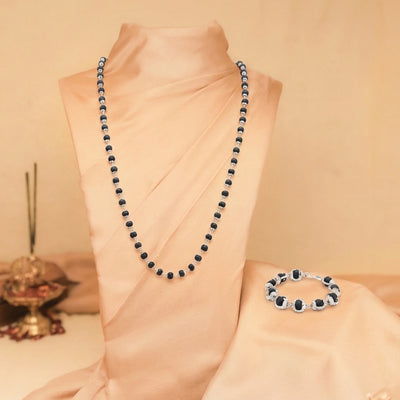
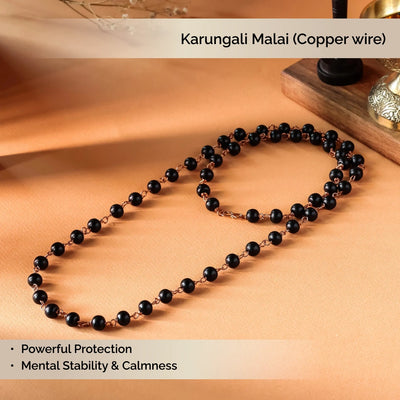
- Karungali pairings are among the most popular strands we make. The deep black of certified ebony wood against brown Rudraksha is a distinctly South Indian look; see the dedicated Karungali malai collection for the full range.
Which Mukhi for a Necklace?
Neck strands are overwhelmingly 5 Mukhi, for the practical reason that it is the only mukhi available in enough evenly matched beads to string 54 or 108 of them. Higher mukhi appear as a single feature bead or as a capped centrepiece.
| Strand | Traditionally associated with | Usually worn by |
|---|---|---|
| Plain 5 Mukhi kanthi | Kalagni Rudra, a form of Shiva | Anyone starting continuous daily wear |
| Rudraksha with a Shiva or Trishul pendant | Lord Shiva | Devotees choosing by ishta devta |
| Rudraksha and Karungali combination | Shiva, with ebony wood linked to Mars in tradition | Wearers in Tamil Nadu and the South |
| Rudraksha with sphatik | Clarity and stillness in practice | Those who meditate regularly |
| Higher-mukhi capped centrepiece | The deity of that mukhi | Wearers following a specific recommendation |
Making Sure the Beads Are Real
On a long strand you are trusting a hundred beads at once, so look for consistency of the right kind. Natural Rudraksha varies slightly bead to bead in shade, surface texture and the exact depth of its clefts. A strand where every bead is machine-identical has usually been moulded or heavily worked. At the same time, wildly mismatched beads suggest a strand assembled from whatever was to hand.
Follow the clefts on a few beads from the crown down to the base. Natural lines are continuous and change depth as they cross the seed's curve; cut grooves are flat-bottomed, evenly deep and often stop short. Under a capped strand you cannot see the crown, which is one reason capping is sometimes used to hide poor beads — buy capped strands only where the beads are certified.
The reliable test remains the internal one. Each genuine face corresponds to a compartment inside the seed, and an X-ray shows whether the internal count matches, and whether the cavity has been filled. Our beads are X-ray lab tested for exactly this reason. The float-in-water test circulating online is not a proof of anything: buoyancy depends on how dry the bead is and how much oil it has absorbed, and genuine beads routinely float.
Wearing and Caring for a Rudraksha Necklace
Custom favours beginning on a Monday, the day associated with Lord Shiva, though Shivratri and Sawan Mondays are also widely chosen. The traditional first-wear practice is a rinse in clean water, a wipe dry, an offering before Shiva and a round of Om Namah Shivaya; every necklace we dispatch is energised beforehand, so this is a matter of preference rather than requirement. Traditional sources place no bar on women wearing Rudraksha, and it is worn commonly by women; families follow their own customs about when to remove it. Some traditions ask for a vegetarian diet while wearing the bead and others do not — observe whichever your own tradition follows.
Neck-worn strands take more sweat and more friction than any other format, so care matters:
- Remove it before bathing, swimming and the gym. Chlorine and salt water are the worst offenders, and sweat salts left to dry will dull the surface.
- Apply perfume, deodorant and aftershave first, then put the necklace on — alcohol sprayed directly onto plated caps strips them quickly.
- Wipe it down with a dry, soft cloth at the end of a long day rather than washing it.
- Work a drop of mustard, olive or sandalwood oil over the beads every few weeks and blot away what is left on the surface.
- Restring before the thread frays. Cotton and silk stretch under the weight of a long strand, and the point where the thread passes through the sumeru wears first.
- Store it flat in a cloth pouch rather than hanging, which stretches the thread over time.
Rudraksha Necklace FAQs
What length should a Rudraksha necklace be?
If you want it hidden under a collar, choose a close-fitting kanthi. If you want it visible with a pendant, a 54-bead strand sitting at the collarbone is the usual choice. Check the length stated on each product page.
What is the difference between 54 and 108 beads?
108 is the complete traditional round; 54 is exactly half, so two passes complete the same cycle. For a piece worn purely as a necklace, choose by how it sits rather than by the count.
Can I sleep wearing a Rudraksha necklace?
Many wearers do and many remove it. Practically, a night's friction against a pillow is hard on thread and on plated caps, which is the main argument for taking it off.
Can women wear a Rudraksha kanthi?
Yes. Tradition places no restriction on women wearing Rudraksha. Household customs around when to remove it differ, and are best followed as practised at home.
Will the beads darken over time?
Yes, and that is expected. Contact with skin oils and regular oiling deepen the colour over months and years. It is a sign of a bead being worn, not of a defect.
Can I add a pendant to a plain strand later?
Usually, yes, though a capped strand may need a jeweller to open and reset the ends. It is simpler to buy the strand with the pendant already set.
Is a Rudraksha necklace suitable as a gift?
It is a common gift for birthdays, housewarmings and festivals. A 5 Mukhi strand is the safe choice when you do not know the recipient's preferences, since it is traditionally described as suitable for anyone to wear.
For wrist-worn alternatives see our Rudraksha bracelets, browse other spiritual necklaces, or explore the full Rudraksha mala and bead range.


